







Let’s be real for a second. December in the classroom feels like trying to herd caffeinated reindeer while wearing a Santa suit that’s three sizes too small. Your students are bouncing off the walls, dreaming about presents, you’re drowning in progress reports and holiday party planning, and somewhere between the winter concerts and pajama days, you’re wondering how on earth you’re going to make it to winter vacation with your sanity intact.
I see you, teacher friend. And I’m here to tell you that not only can you survive December—you can actually enjoy it. Yes, really. Even when all you want is hot cocoa and a seven-hour nap and here’s how to Keep Teaching Through December.
Why Teaching through December Hits Different?
Before we dive into survival strategies, let’s acknowledge why December feels like running a marathon in slow motion.
The Holiday Hype Is Real
Your students have one foot out the door and their minds on winter break from December 1st. The seasonal excitement disrupts even your best classroom management strategies, and behaviors that were solid in November suddenly crumble like gingerbread cookies.
Your Schedule Isn’t Actually Yours Anymore
Spirit weeks, holiday assemblies, concert rehearsals, class parties—suddenly, your carefully crafted lesson plans are interrupted every other day. The constant disruptions make it nearly impossible to maintain any sense of routine or momentum.
The End-of-Semester Crunch Hits Hard
December isn’t just about jingle bells. It’s report card season, progress monitoring assessments, parent-teacher conferences, and trying to squeeze in one more unit before break. The administrative tasks pile up faster than snow in a blizzard.
Everyone’s Getting Sick
Cold and flu season peaks right when you need every student present. Student absences disrupt your lesson flow, and you’re probably fighting off your own scratchy throat.
Teacher Burnout Peaks in December
The honeymoon phase of the school year is long gone. By December, many teachers experience heightened burnout symptoms, including emotional exhaustion, decreased motivation, and feelings of overwhelm. You’ve been going strong since August, and your reserves are running low just when the demands ramp up.
The Secret to December Survival: Work Smarter, Not Harder
Here’s the truth bomb you need to hear: December is not the month to reinvent the wheel. This is survival mode territory, and that’s okay. The key to making it through December without losing your mind is to embrace strategies that simplify, streamline, and keep you sane.
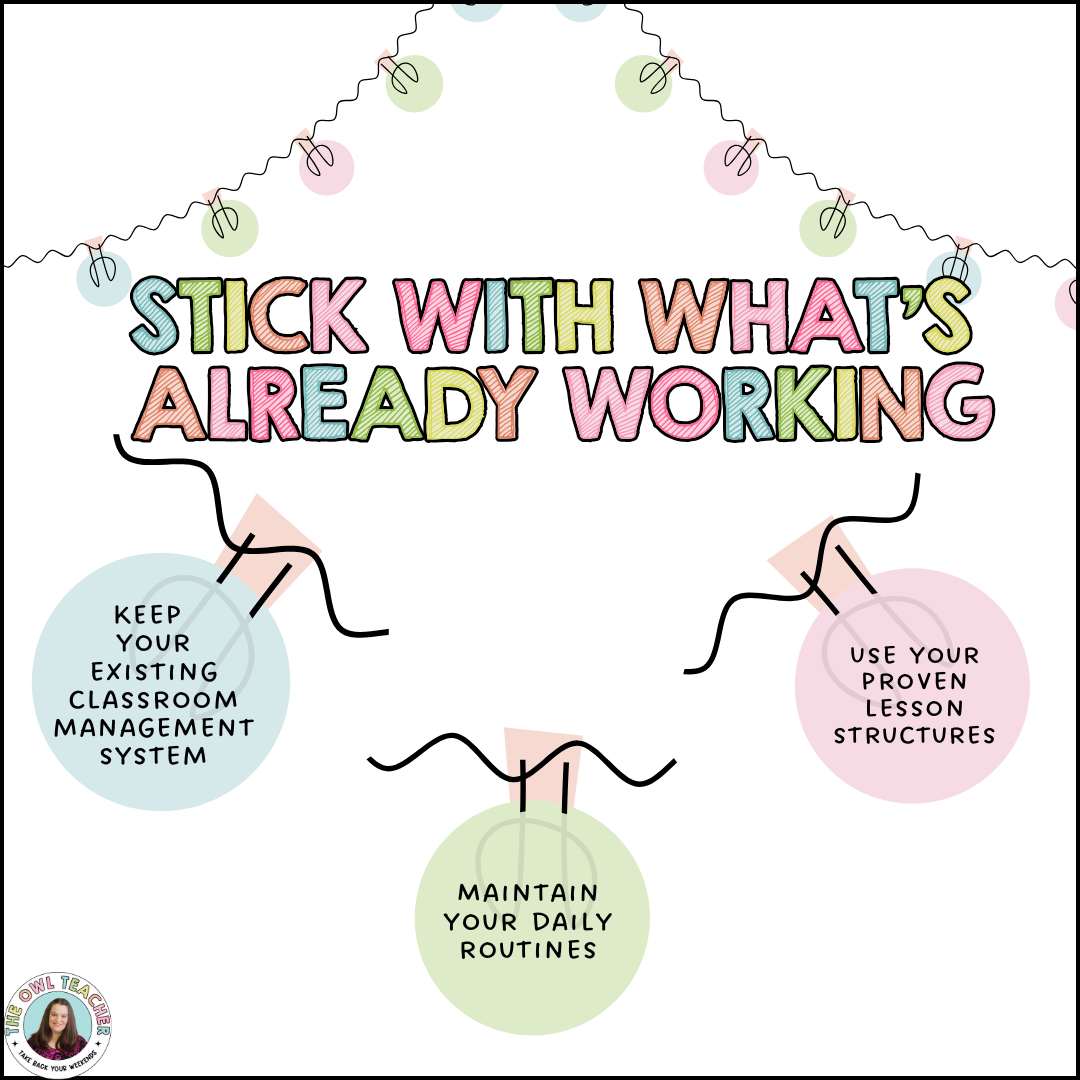
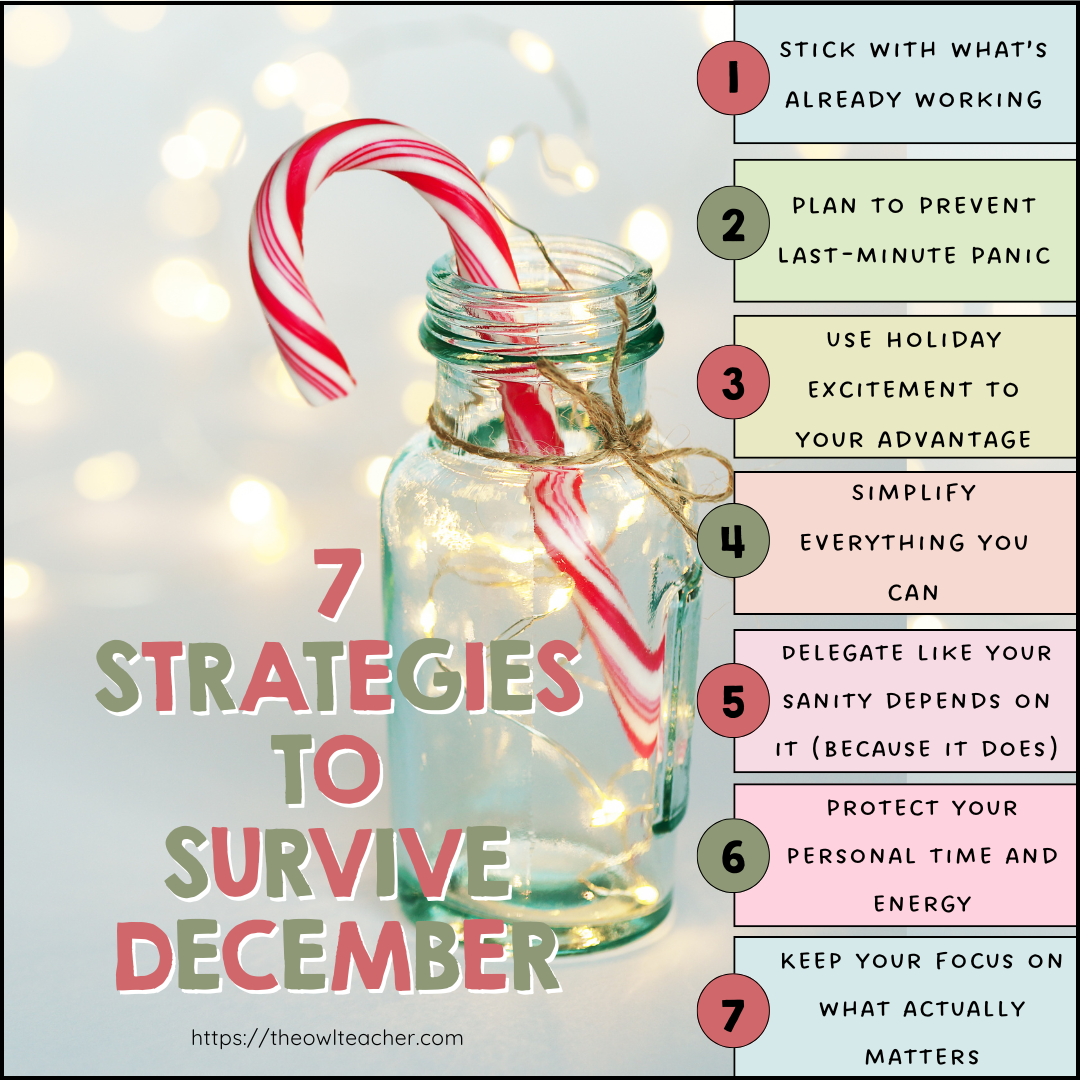
1. Stick with What’s Already Working
The biggest mistake teachers make in December is thinking they need something new and flashy to combat holiday chaos. Wrong. Your students are already overwhelmed with change and excitement. What they actually need is the comfort and security of familiar routines.
Keep Your Existing Classroom Management System
Whatever behavior charts, reward systems, or management strategies have worked since September should continue through December. I’ve written extensively about how to have your classroom manage itself, and December is when that consistency really pays off.
Don’t start something brand new that requires re-teaching. Instead, add festive touches to your existing systems. Use holiday-themed stickers on your behavior charts. Swap out your regular reward coupons for winter-themed ones. Create a whole-class incentive chart with a December twist, like earning ornaments toward a class party.
Consider using a Growth Mindset Behavior Clip Chart to maintain consistency while keeping the positive classroom culture you’ve built all year.
Maintain Your Daily Routines
Morning meetings, transition songs, classroom jobs, dismissal procedures—keep everything as consistent as possible. As research shows, maintaining routines creates stability during a chaotic season.
When your schedule gets disrupted by assemblies or special events, prepare students ahead of time. Set a reminder on your phone so you can calmly explain schedule changes before they happen.
Use Your Proven Lesson Structures
This isn’t the time to debut complex new activities. Stick with lesson structures your students know and can execute independently. Think read-alouds, station rotations, they’ve mastered, familiar review games, and tried-and-true activity formats.
If you need ideas for engaging students’ attention, pull from strategies you’ve used successfully before rather than introducing brand new hooks.
2. Plan to Prevent Last-Minute Panic
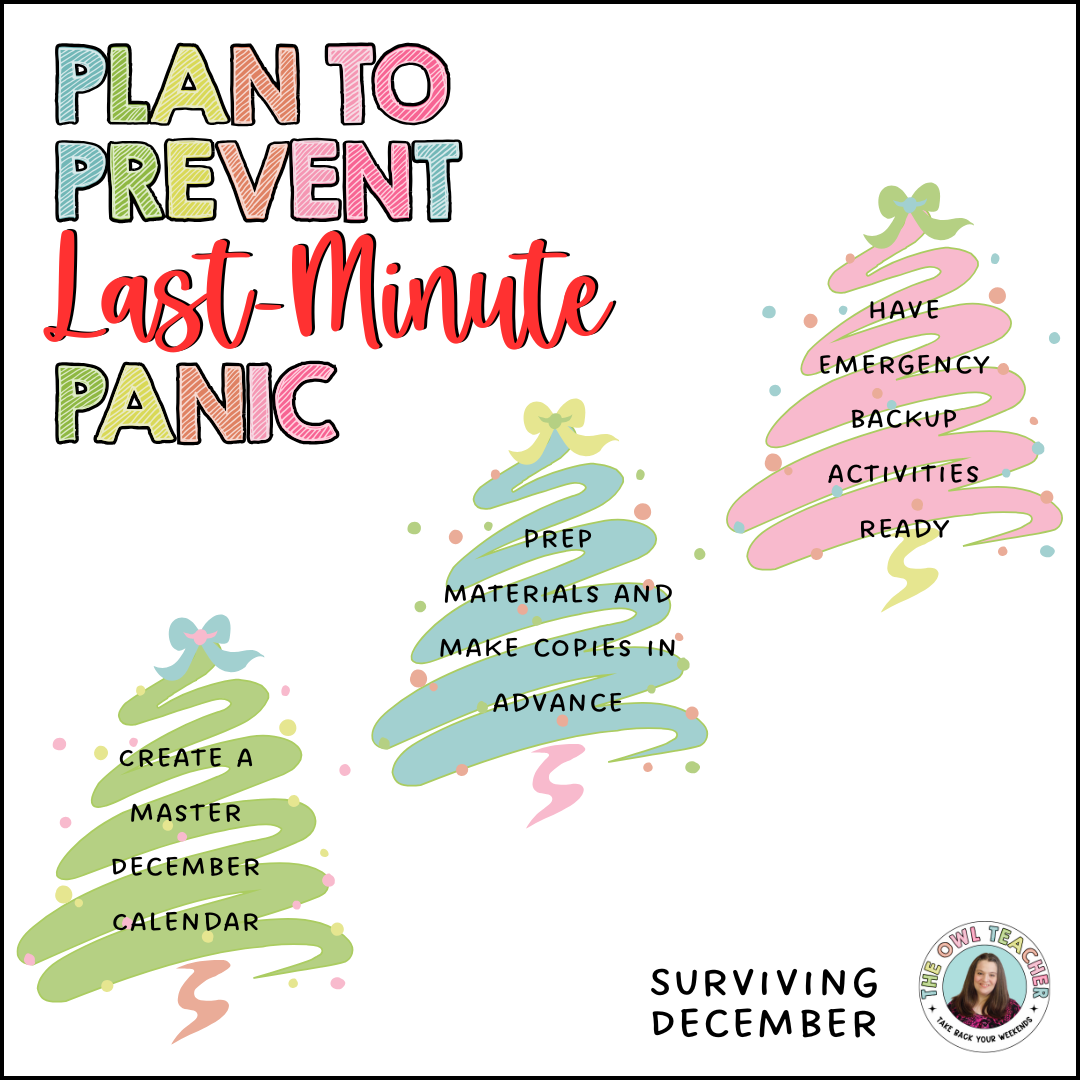
December chaos is predictable. You know the schedule will be interrupted. You know behaviors will escalate. The best defense is getting ahead of it all with strategic planning.
Create a Master December Calendar
Sit down at the beginning of December (or better yet, late November) and map out the entire month. Include every special event, holiday activity, assembly, party, and deadline you know about. Block out time for progress reports, grading, and end-of-semester tasks.
Having this bird’s-eye view helps you identify conflicts and spread out your workload instead of cramming everything into the last week. Teachers who plan ahead report significantly less stress during the holiday season.
Prep Materials and Make Copies in Advance
Batch prep your materials for the entire month during one or two planning sessions. Make all your copies at once. Gather resources ahead of time. Create stations and centers for multiple weeks.
Check out my DIY teacher hacks for budget-friendly ways to prepare materials that will last through December and beyond.
Have Emergency Backup Activities Ready
Create a December emergency file with low-prep, engaging activities you can pull out when schedules change. Include holiday-themed coloring sheets with academic skills, seasonal brain breaks, festive read-alouds, and simple STEM challenges.
My 20 math center ideas work perfectly as backup activities that require minimal prep but keep students engaged and learning.
3. Use Holiday Excitement to Your Advantage
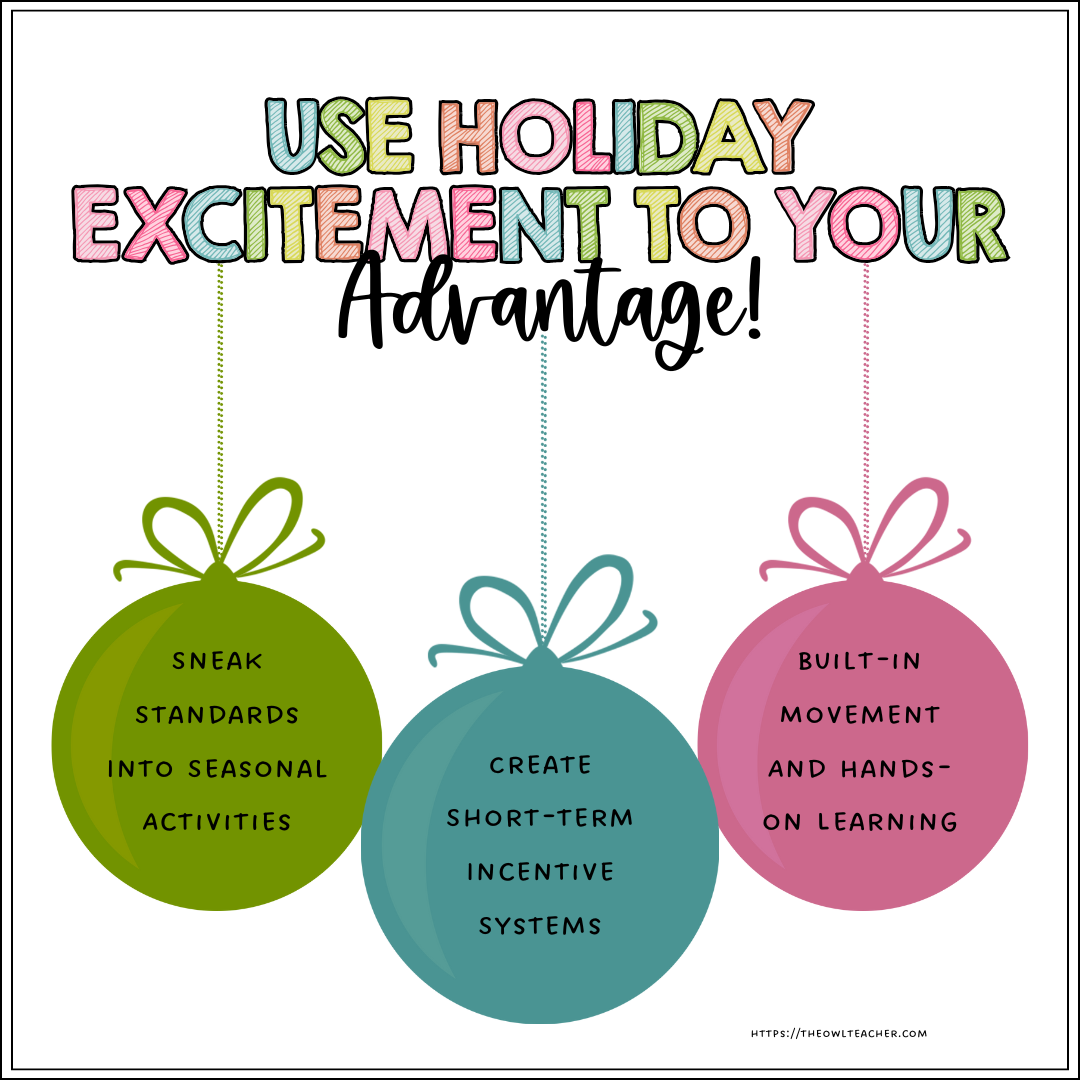
If you can’t beat them, join them, right? Instead of fighting against your students’ holiday enthusiasm, channel that energy into meaningful learning experiences.
Sneak Standards into Seasonal Activities
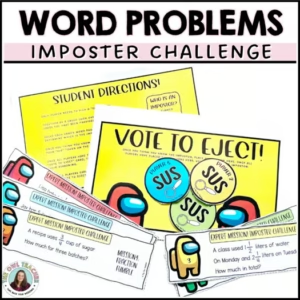
Every December activity doesn’t have to be pure fluff. You can absolutely teach curriculum while incorporating holiday themes. Write winter-themed word problems in math. Use holiday texts for reading comprehension. Study holiday traditions around the world in social studies.
For example, when teaching multi-digit multiplication, use examples about counting ornaments, calculating cookie recipes, or determining how many presents Santa delivers.
The key is making the curriculum relevant to what students are already thinking about. Their brains might be buzzing with holiday excitement, but that excitement becomes fuel for learning when you connect it to your content.
Create Short-Term Incentive Systems
December is perfect for short-term reward programs because students are naturally motivated by the season. Implement a two-week behavior system where students earn snowflakes, ornaments, or candy canes toward a class reward.
I’ve shared tips about reporting behavior in the classroom that work especially well during high-energy months like December.
Built-in Movement and Hands-On Learning
Your students physically cannot sit still for long periods in December, so don’t even try. Make movement part of your lessons instead of fighting against it. Use brain breaks every 15-20 minutes. Incorporate kinesthetic learning activities.
When I taught science experiments like my earthquake simulation, December was actually the perfect time because students’ energy worked for me rather than against me.
4. Simplify Everything You Can
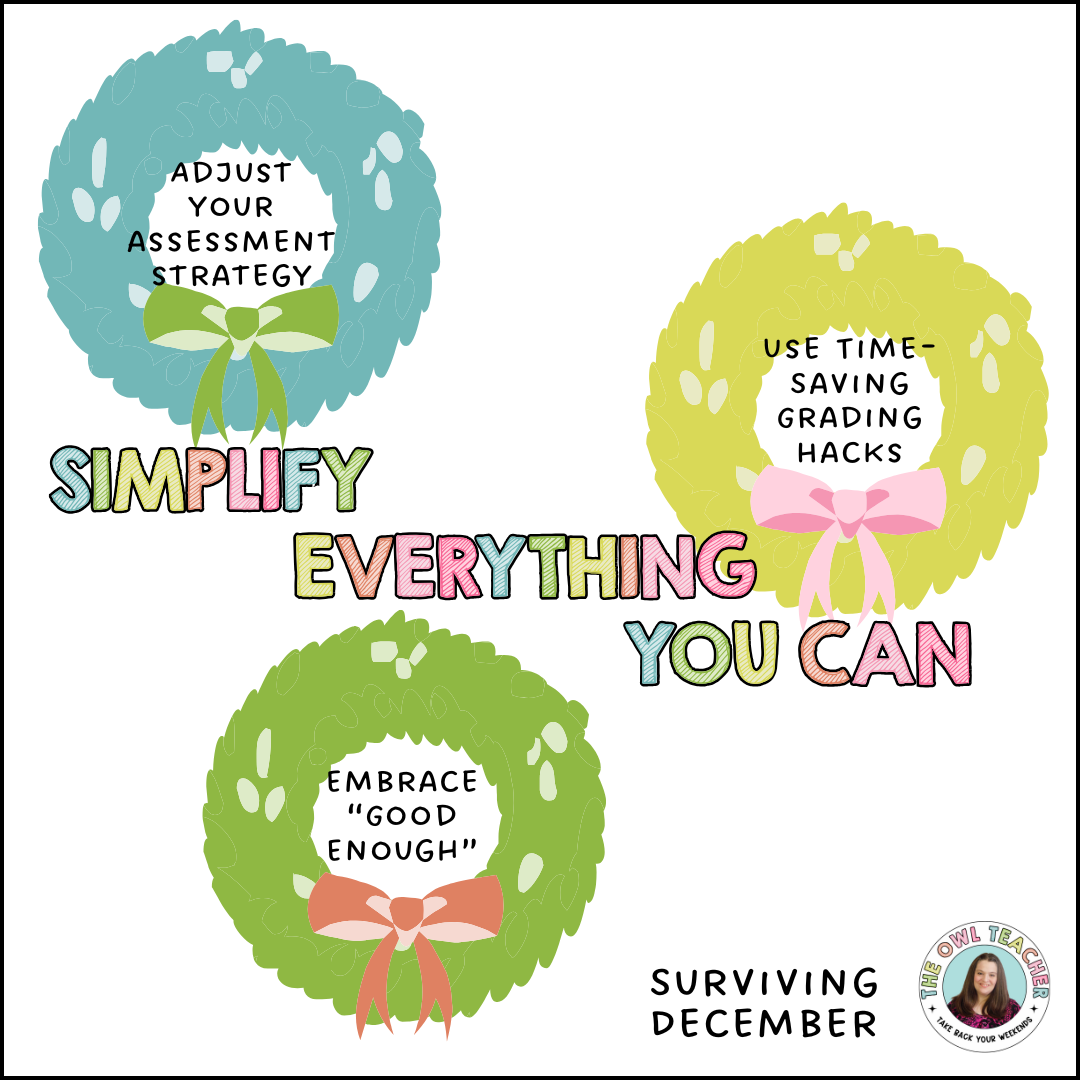
This is not the month to assign elaborate projects or anything that generates hours of grading. Keep academic tasks straightforward and completion-based.
Adjust Your Assessment Strategy
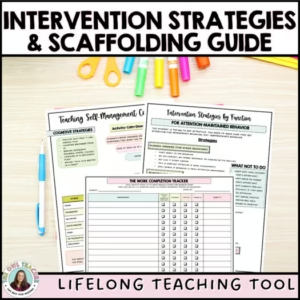
Switch to completion grades, self-assessments, and peer feedback for December assignments. Use quick checks for understanding, like exit tickets, thumbs up/thumbs down, or verbal responses.
When I need formal assessments, I love using my problem-solving strategies that double as both teaching tools and assessment opportunities without creating mountains of grading.
Save your energy for the assessments that truly matter for progress monitoring or report cards. Everything else can be streamlined.
Use Time-Saving Grading Hacks
If you must grade assignments, batch process similar tasks together. Confer with students and provide oral feedback instead of written comments. Have students complete self-reflections alongside their work that you can simply initial.
I talk more about efficiency strategies in my I Do, We Do, You Do post that can help you maximize instructional time while minimizing grading.
Embrace “Good Enough”
Perfectionism is the enemy of December survival. Your bulletin boards don’t need to be Pinterest-worthy. Your holiday craft doesn’t need 47 steps. Your lesson plan format can be bare bones.
Focus on what truly matters: keeping students safe, engaged, and learning. Everything else falls into the “good enough” category. As this teacher burnout guide reminds us, perfectionism contributes significantly to teacher stress.
5. Delegate Like Your Sanity Depends On It (Because It Does)
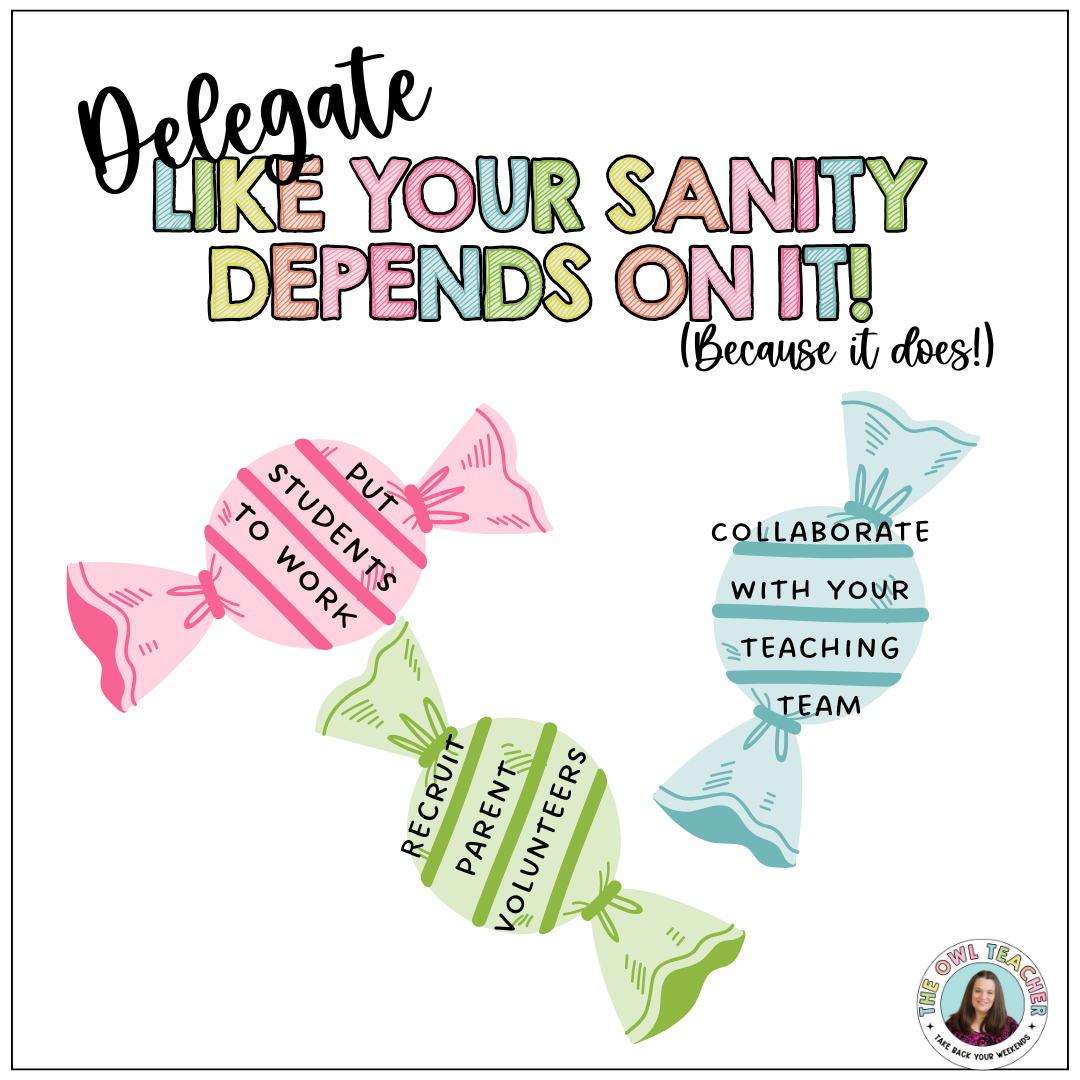
You cannot and should not do everything yourself. December is the perfect time to embrace delegation in every form possible.
Put Students to Work
Your students are capable of handling so many classroom tasks. Create classroom jobs for December: materials manager, attendance taker, line leader, board eraser, supply organizer, and more.
I’ve written about getting students organized, and these same principles apply to having students help with December prep and cleanup. Turn end-of-semester cleanup into stations where different groups tackle specific areas.
Collaborate with Your Teaching Team
If you have a grade-level team, now is the time to divide and conquer. Rotate shared tasks like making copies, choosing read-aloud books, creating station activities, and planning holiday events.
Share resources freely. Strategic collaboration significantly reduces everyone’s workload and prevents burnout. Don’t be afraid to reach out—most teachers are happy to share what’s working in their classrooms.
Recruit Parent Volunteers
Parents often want to help, especially during the holidays. Send out a specific request for volunteers to prep materials at home, donate supplies, help during class parties, or assist with special events.
Many parents don’t realize how much teachers spend out of pocket or how time-consuming classroom prep can be. Giving them concrete ways to contribute lightens your load and builds community.
6. Protect Your Personal Time and Energy
The only way to show up as your best teaching self in December is to prioritize your own well-being outside the classroom. This isn’t selfish—it’s essential.
Set Firm Work Boundaries
Decide on a specific time each day when you stop working, and actually stick to it. Pack up your things and leave at your designated time. Don’t check emails after hours. Don’t grade papers until midnight.
As education experts note, boundaries are critical for preventing burnout. Guard your weekends by designating one specific block of time for any necessary school tasks, then leave the rest free.
Take Care of Your Basic Needs
It sounds obvious, but teachers notoriously neglect basic self-care during busy seasons. Drink water throughout the day. Eat actual meals instead of surviving on vending machine snacks. Get adequate sleep each night.
When you’re hungry, tired, and dehydrated, everything feels harder. You have less patience, worse focus, and higher stress. Taking care of your physical needs isn’t optional if you want to survive December.
Do Something That Brings You Joy
Make time for activities that recharge your batteries and remind you who you are outside of teaching. Exercise, read for pleasure, spend time with loved ones, pursue hobbies, or simply sit in silence with your hot cocoa.
Schedule these joy-bringing activities into your calendar like appointments you can’t miss. They’re not luxuries—they’re necessities that fuel your resilience and prevent burnout.
Take a Mental Health Day If You Need It
If you’re feeling genuinely overwhelmed, stressed to the point of tears, or completely depleted, consider taking a personal day. Yes, writing sub plans feels like more work, but sometimes you desperately need a reset.
As this survival guide notes, it’s better to take one day to recover than to push through until you’re burnt out. Taking care of yourself benefits everyone, including your students.
7. Keep Your Focus on What Actually Matters
When December chaos threatens to overwhelm you, return to your core purpose as an educator.
Connection Over Curriculum
In December, relationships matter more than racing through content. Students will forget most of what you teach them this month, but they’ll remember how you made them feel.
Take time to recognize individual students’ progress. Have one-on-one conversations. Celebrate accomplishments. Write encouraging notes. These relationship-building moments are what students carry with them forever.
Progress Over Perfection
You don’t need to finish every single thing on your curriculum map before winter break. Teaching isn’t about covering content—it’s about student learning.
If you need to shift something to January, that’s okay. Focus on the standards that matter most and the skills students truly need. Everything else can be adjusted or simplified.
Joy Over Stress
Teaching should include moments of joy, especially in December. Don’t let stress rob you of the opportunity to enjoy this time with your students. Play music during work time. Read funny holiday books. Laugh at your students’ excitement instead of fighting it.
Build in moments of celebration and fun that you genuinely enjoy too. Choose events and traditions that light you up as a teacher, not just things you feel obligated to do.
Special Considerations for Different Teaching Situations: How to Keep Teaching Through December?
For Elementary Teachers
Create classroom jobs specific to December cleanup so students can help with end-of-semester tasks. Turn preparing your room for break into stations where small groups tackle different areas.
Consider using resources like my nonfiction integration strategies to keep academic rigor while incorporating seasonal topics.
For Upper Elementary and Middle School Teachers
Assign self-assessments and goal-setting reflections for students to complete about their semester progress. Have students create portfolio presentations showcasing their best work from the term.
Use December as an opportunity to teach reflection and planning skills. Help students identify areas of growth and set intentions for the new year. These life skills are valuable regardless of the content area.
For Teachers with Limited Resources
If you don’t have parent volunteers or teaching assistants, prioritize ruthlessly. Focus only on must-do tasks and let everything else go.
Check out resources on Teachers Pay Teachers—many educators (including myself!) offer free seasonal activities and resources. TPT is packed with trusted, high-quality materials created by actual classroom teachers.
For New Teachers
Remember that your first December will feel especially overwhelming. That’s completely normal. Lean on mentor teachers and experienced colleagues for advice and emotional support.
Focus on survival mode this year, and know that next December will feel more manageable because you’ll have systems in place and lessons you can reuse. Be gentle with yourself.
Creating December Traditions Worth Keeping
While simplifying is important, December also offers opportunities to create meaningful traditions that students look forward to year after year—without requiring excessive planning.
Low-Prep Holiday Read-Alouds
Reading holiday books aloud requires zero prep but creates cozy, memorable moments. Choose a few favorites to read each December. Students love the anticipation of hearing the same beloved stories year after year.
Kindness Challenges
Implement daily or weekly kindness challenges where students perform small acts of service for classmates, other staff members, or the broader school community. Students might write thank-you notes to custodians or wish office staff a happy day.
This creates positive behavior momentum while teaching empathy. It’s meaningful learning that requires minimal teacher prep and combats December selfishness.
Class Gratitude Practice
Dedicate a few minutes each day to sharing gratitude. Students might share one thing they’re thankful for, write notes to classmates about positive qualities they notice, or create a collective gratitude journal.
Research shows gratitude practices improve classroom climate, student well-being, and even academic performance. Plus, it shifts focus from “what I’m getting” to “what I appreciate.”
December Music and Movement
Play holiday music during transition times or work periods. Keep it instrumental if you’re concerned about religious inclusivity. The festive atmosphere makes mundane tasks more enjoyable.
Incorporate music-based brain breaks where students move to holiday songs. These cost nothing, require no planning, and give students necessary outlets for their extra energy.
The Last Day Before Break: Low-Key and Low-Stress
Let’s talk about that final day before winter break when you’re exhausted, students are checked out, and nobody’s actually learning anything new.
Embrace Low-Key Activities
Read holiday books. Play review games. Do puzzles together. Have students choose activities from a menu of options. This is about winding down and celebrating time together.
Consider collaborative activities like building with blocks, creating art projects, or solving brain teasers as teams. Get involved yourself—students love it when teachers participate alongside them.
Avoid Screen Time Marathons
While it’s tempting to throw on a movie and check out completely, students actually enjoy interactive activities more than passively watching screens. Research on engagement confirms that meaningful, low-key activities create better memories than movie marathons.
If you do show a movie, make it educational and provide a simple viewing guide so students stay engaged.
Celebrate Student Growth
Take time to recognize individual students and their accomplishments from the semester. Hand out simple awards or certificates that celebrate social-emotional growth, academic progress, or character traits.
Write each student a brief positive note they can take home over break. Even a sentence or two acknowledging something specific creates a lasting impact.
The Truth About December Teaching
Here’s what I want you to remember when December feels impossible: you’re not failing if December is hard. You’re not a bad teacher if you’re tired. You’re not wrong for wanting winter break to arrive already.
December in the classroom is legitimately challenging for completely valid reasons. Acknowledging this reality doesn’t make you weak—it makes you honest.
The teachers who thrive in December aren’t superheroes with magical time-management skills. They’re the ones who give themselves permission to do less, who simplify without guilt, who prioritize rest over perfection, and who remember that getting through December while maintaining their sanity is the real victory.
You have everything you need to not just survive December but to actually find moments of joy within it. Keep your routines consistent, plan ahead strategically, use holiday excitement to fuel engagement, simplify your workload, delegate shamelessly, protect your personal wellbeing, and stay focused on what truly matters.
And on those moments when it still feels overwhelming? Take a breath, make yourself some hot cocoa, remember that winter break is coming, and trust that you’re doing better than you think you are.
Your December Teaching Survival Checklist
✅ Week 1 of December:
- Create your master December calendar with all events and deadlines
- Batch prep materials and make copies for the entire month
- Set up your simplified grading system for December assignments
- Implement or refresh your short-term behavior incentive system
- Stock up on emergency backup activities
✅ Throughout December:
- Maintain existing routines and classroom management systems
- Build movement and hands-on learning into every day
- Incorporate holiday themes into the curriculum instead of treating them separately
- Check your work boundaries—leave at your designated time
- Stay hydrated, eat real food, and prioritize sleep
- Do at least one joy-bringing activity each week
✅ Final Week Before Break:
- Have students help with classroom cleanup and organization
- Focus on review, reflection, and relationship-building
- Plan low-key, engaging activities for the last few days
- Write positive notes or give simple awards recognizing student growth
- Tie up essential loose ends while letting go of non-critical tasks
✅ Last Day Before Break:
- Keep activities simple, interactive, and low-stress
- Participate alongside your students in fun
- Celebrate the semester with gratitude and positivity
- Leave school with your head held high, knowing you made it!
Final Thoughts: You’ve Got This
Every December, teachers everywhere wonder if they’ll make it to break with their sanity intact. And every December, they do. You will too.
This month won’t be perfect. Some lessons will flop. Some behaviors will test you. Some days will feel like pure survival mode. That’s all completely normal and okay.
What matters is that you show up for your students, you take care of yourself, and you remember that teaching through December is itself an achievement worth celebrating.
So brew that hot cocoa, take that nap when you can, and give yourself credit for navigating one of the toughest months in the teaching calendar. You’re doing important work under challenging circumstances, and you’re doing it better than you think.
Welcome to December teaching. You’ve got this, teacher friend. And when you walk out those school doors into winter break? You’ll have earned every single moment of rest that’s coming your way.
Now go enjoy that hot cocoa. You’ve earned it.
Want more teaching tips and resources? Check out my Teachers Pay Teachers store for time-saving lesson plans, activities, and classroom management tools. And don’t forget to follow me on Instagram for daily teaching inspiration!
What December teaching strategies work best for you? Share your survival tips in the comments below! And if you found this post helpful, pin it to save for next year when you need the reminder that you can absolutely make it through December with your sanity (mostly) intact.