









The Struggling Learners Guide for Teachers
$35.00
Pay over time — options available at checkout
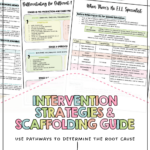
Stop guessing why students struggle. This comprehensive teacher intervention guide uses decision pathways to help you identify the root cause of academic, social, and behavioral challenges and apply targeted intervention strategies that actually work. Perfect for supporting struggling learners in upper elementary classrooms.
Description
Stop guessing why students struggle. This comprehensive teacher intervention guide uses decision pathways to help you identify the root cause of academic, social, and behavioral challenges and apply targeted intervention strategies that actually work. Perfect for supporting struggling learners in upper elementary classrooms.
Why do some students continue to struggle even after you’ve taught the skill clearly?
Most teachers have experienced this moment. You explain the concept, model the strategy, practice together, and yet a few students still seem completely stuck. The challenge is often not effort or attention; it’s just that the real learning barrier hasn’t been identified.
This Teacher Intervention Guide for Struggling Students helps educators move beyond trial-and-error strategies by identifying the root cause of student difficulties and providing research-based RTI targeted interventions that address the actual problem.
Instead of guessing which support might help, you can follow structured decision pathways to determine where learning is breaking down and which strategies are most likely to work.
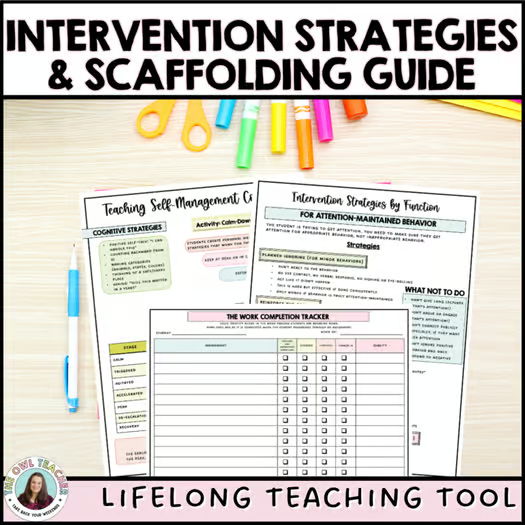
This guide functions as a professional classroom intervention handbook that you can return to throughout the school year when supporting struggling learners.
What This Intervention Guide Helps Teachers Do
This resource helps you:
- Identify the root cause of student learning challenges through decision pathways and informal assessments for diagnosing learning difficulties
- Understand why some strategies work for certain students but not others
- Choose targeted student support strategies instead of using trial-and-error
- Support struggling learners with greater clarity and confidence
- Reduce frustration for both teachers and students
When you understand why a student is struggling, interventions become more effective and meaningful.
Decision Pathways Included
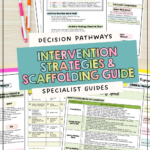
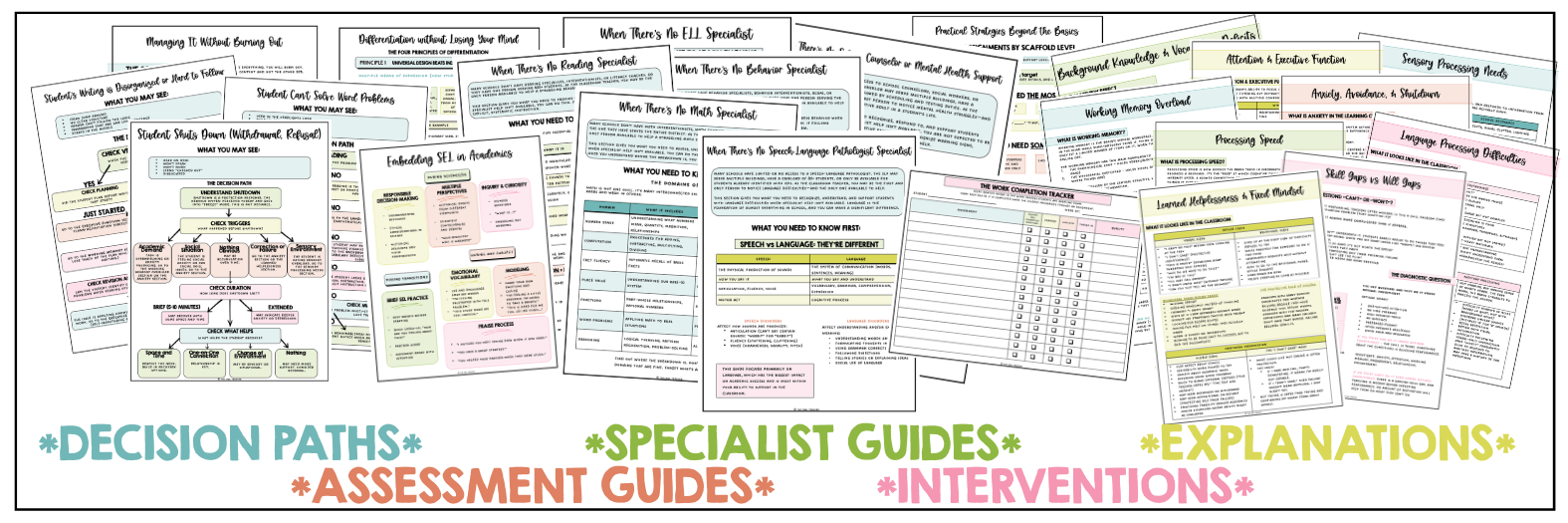
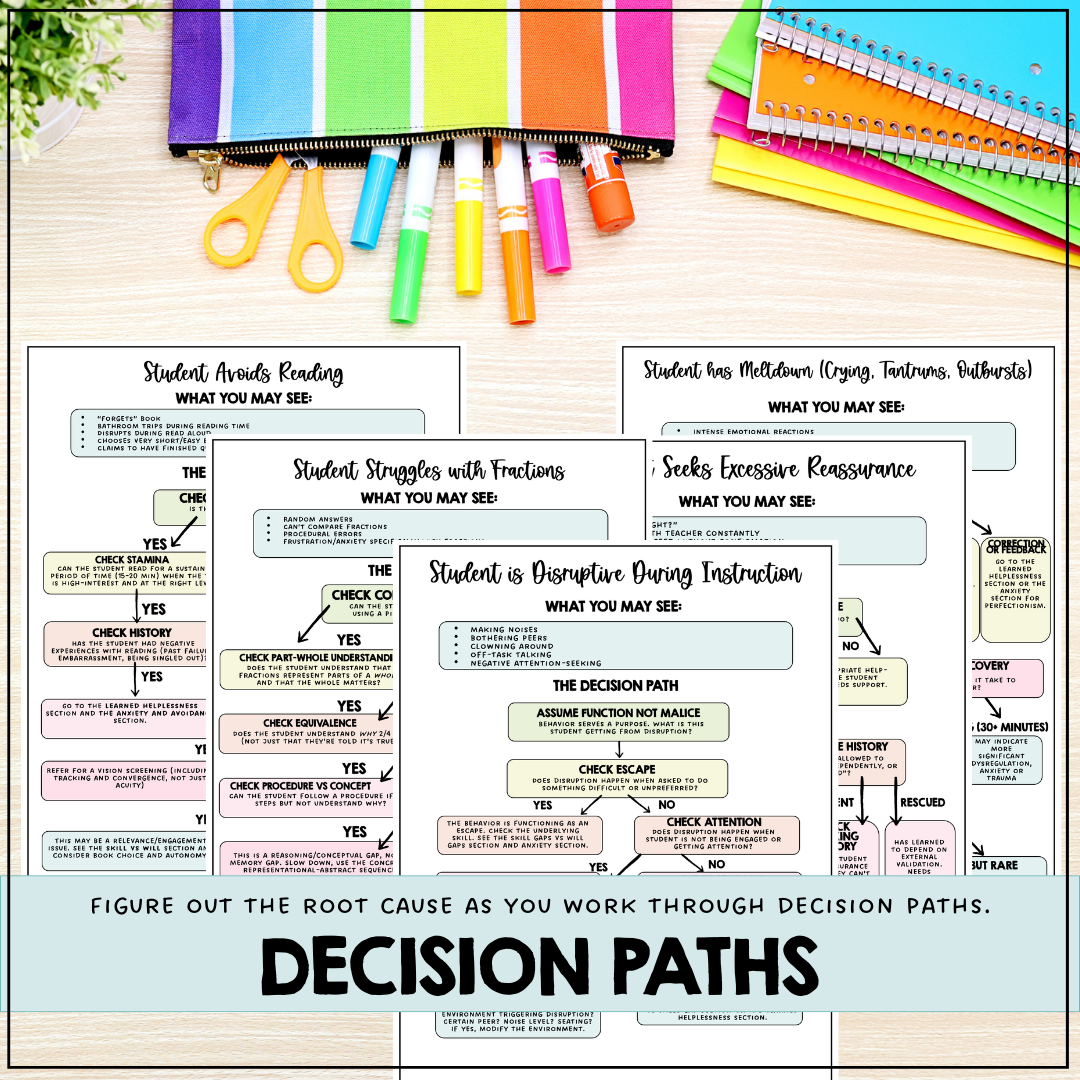
The Decision Pathways act as a diagnostic tool and roadmap for common academic and classroom challenges. You begin with observable behaviors and follow a series of guiding questions that narrow down the likely cause of the struggling learner’s difficulty.
Decision pathways address challenges covering behavior, social, reading, math, writing, and more, such as (but not limited to):
- Struggling with decoding, reading comprehension, and reading strategies
- Difficulty retelling or summarizing text
- Writing that is short, disorganized, or slow
- Frequent spelling or grammar errors
- Difficulty solving math word problems
- Trouble recalling math facts or completing calculations accurately
- Students who avoid starting work or frequently shut down
- Students who appear unmotivated or disengaged
- Students who struggle with organization or time management
- Emotional meltdowns, anxiety, learned helplessness, or task avoidance
These pathways help you pinpoint where learning is breaking down before choosing an intervention.
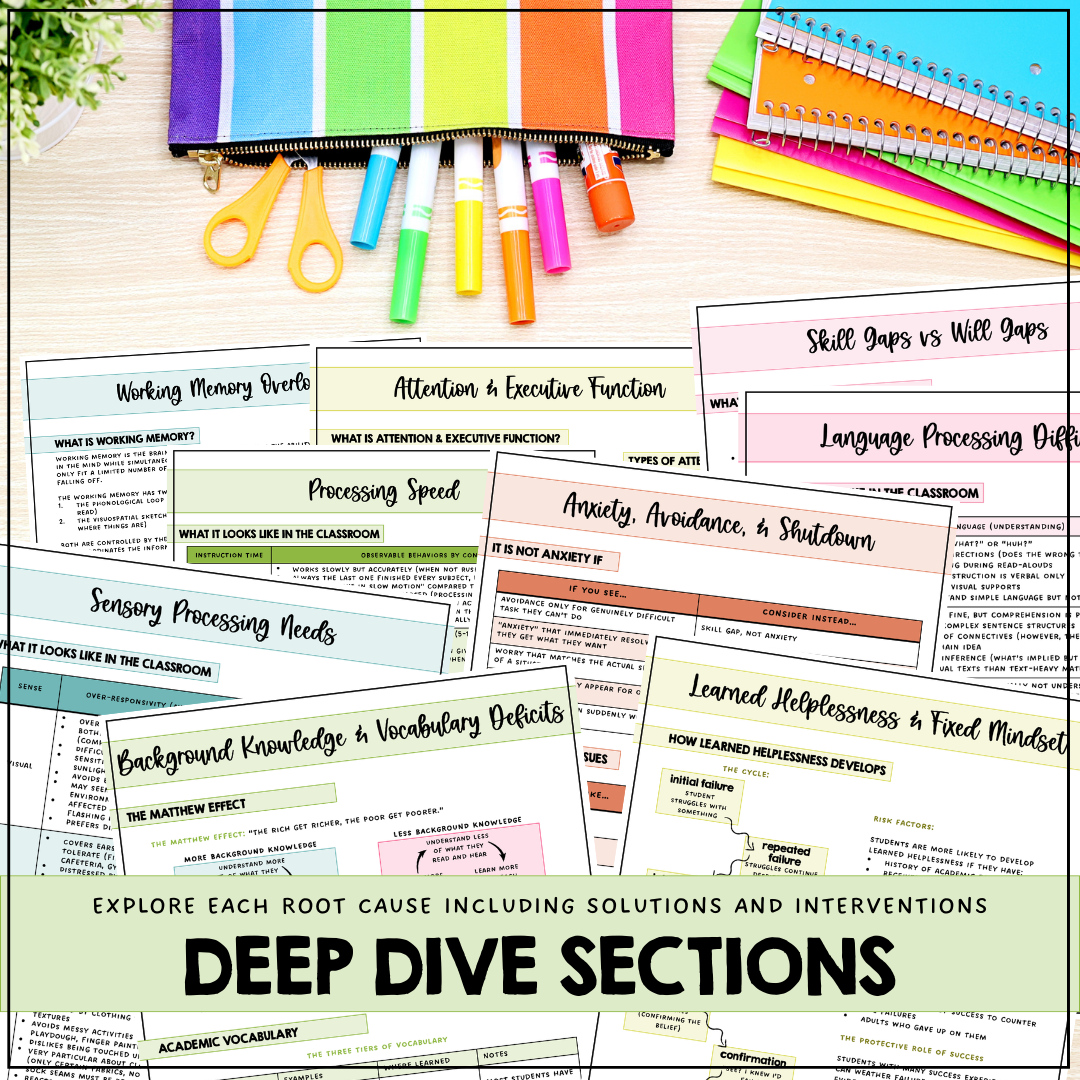
Root Cause Deep Dive Student Intervention Sections
Once a likely root cause has been identified, you can explore detailed sections that explain the learning challenge and provide targeted intervention strategies.
Each root cause section includes:
- Clear explanations written in teacher-friendly language
- Brain science behind the difficulty (explained simply)
- Observable classroom behaviors that you may notice
- What the difficulty may look like across subjects
- What the challenge is commonly mistaken for and misconceptions
- Informal classroom assessments to confirm the issue
- Tiered intervention strategies that you can implement immediately
- Suggestions on how to talk to parents and who and when to refer
- What to do and not to do
Root causes explored include areas such as:
- Working memory overload
- Processing speed difficulties
- Background knowledge and vocabulary deficits
- Language processing challenges
- Sensory processing needs
- Executive functioning difficulties
- Attention and focus challenges
- Anxiety, avoidance, and shutdown behaviors
- Learned helplessness and fixed mindset
- Skill gaps vs will gaps
These sections help you move beyond surface-level symptoms and address the real barrier preventing student success.
**While yes, there are basic strategies suggested, there are sections where strategies go beyond that.**
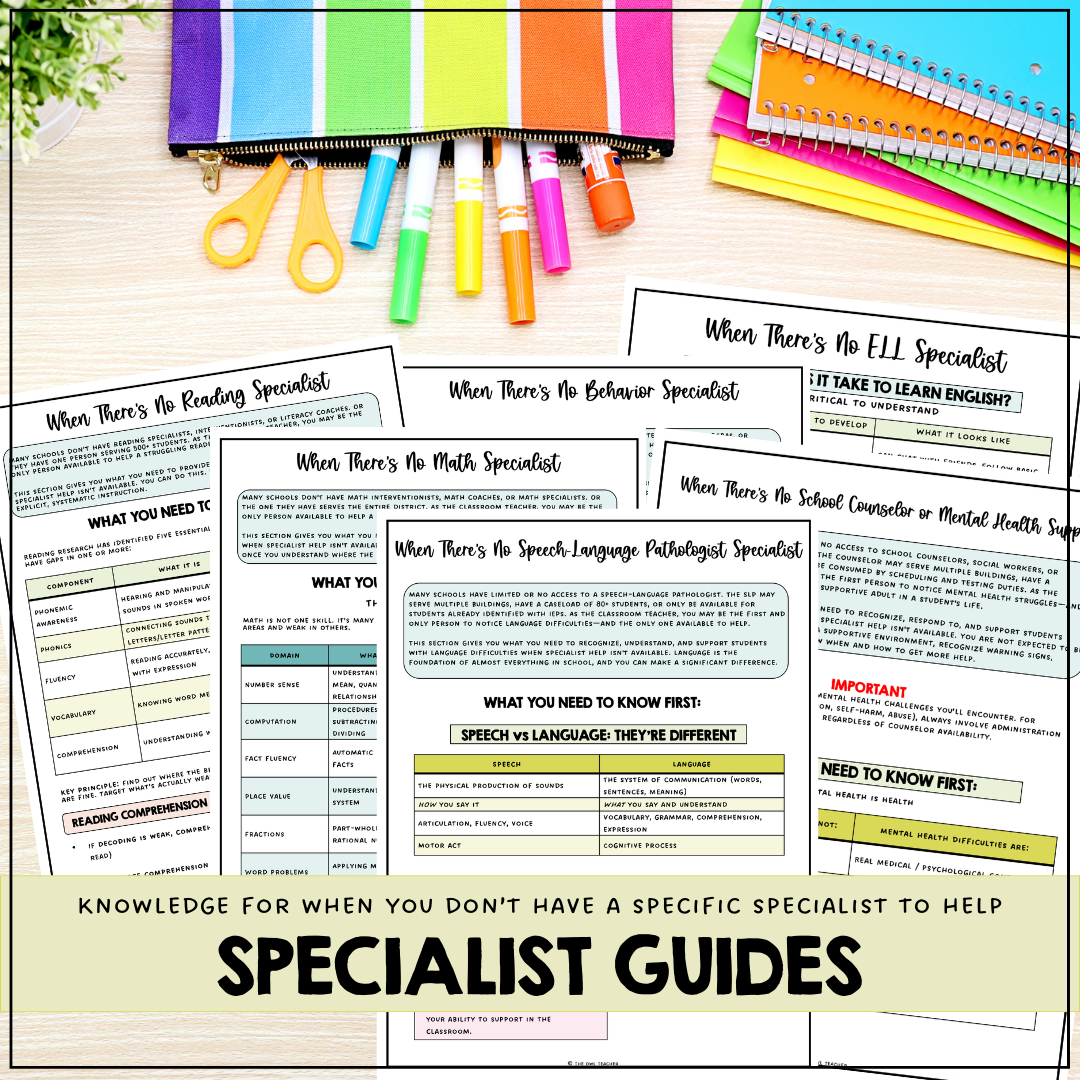
Specialist Support Guides
Some learning challenges may require additional insight or collaboration with specialists. The Specialist Guides provide helpful background information, and classroom supports for when you don’t have a specific specialist available when needed.
Specialist guides included:
- Reading Specialist
- Math Specialist
- Behavior Specialist
- Speech-Language Pathologist
- E.L.L. Specialist Guide
- School Counselor/Mental Health Support
While it is not a complete guide to their positions, it still provides enough guidance to help you better understand potential learning differences and how to support students more effectively in the classroom.
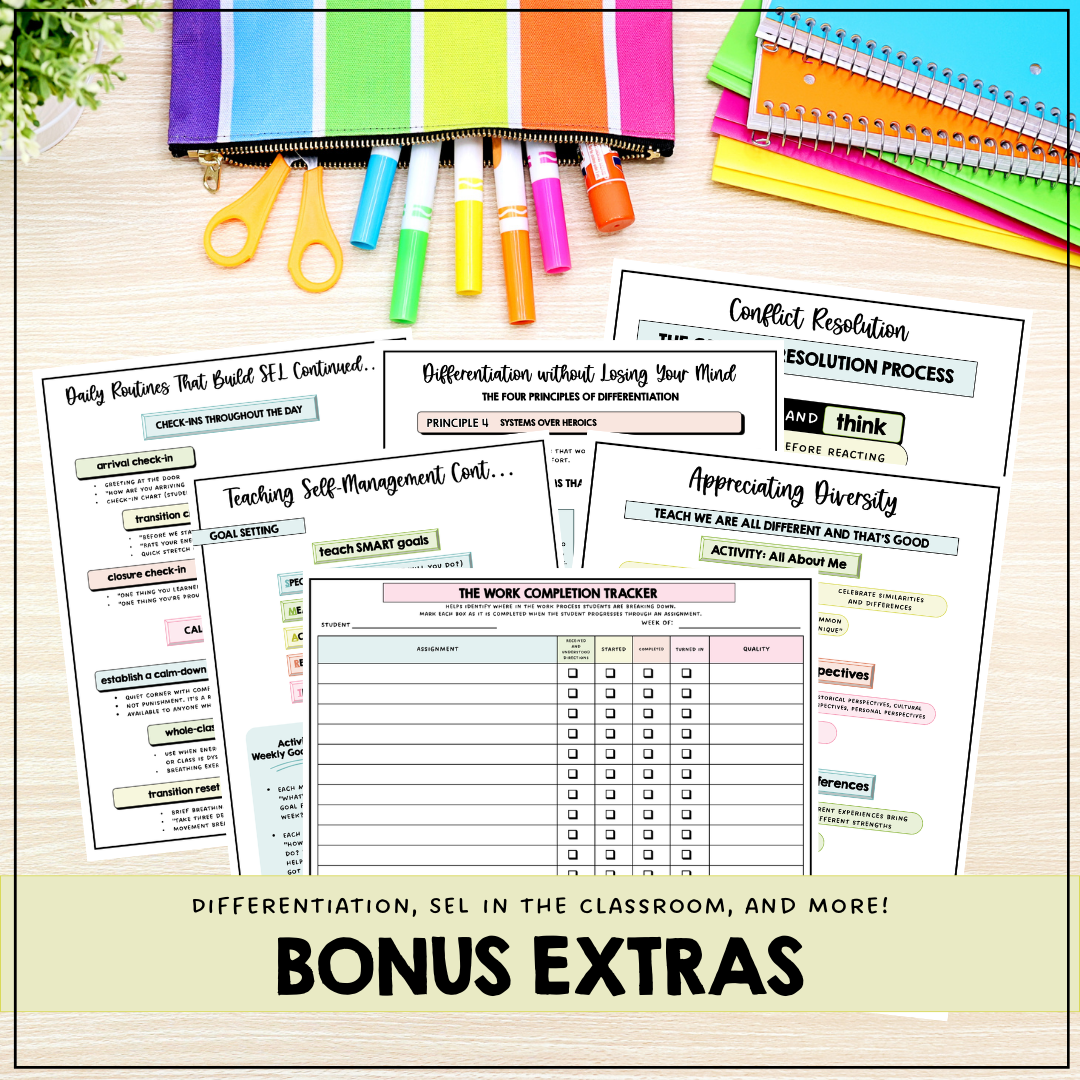
Bonus Teacher Tools Included
To support practical classroom implementation, this guide also includes bonus tools that help teachers apply intervention strategies effectively.
Bonus resources include:
- Teacher Self-Care
- Teaching SEL without a curriculum
- Differentiation Toolkit – the easy way
- Time Trackers
These resources help teachers translate understanding into meaningful classroom action.
Who This Resource Is For
This Teacher Intervention Guide for Struggling Students is especially helpful for:
- Upper elementary teachers
- Teachers working in mixed-ability classrooms
- Educators supporting students with academic, social, or behavioral challenges
- Teachers looking for structured, new RTI tier 1 and tier 2 intervention strategies
- Teachers who want to better understand why students struggle
- Buildings that do not have specialists
- Administrators who want to help their teachers
This resource was designed to function as a long-term reference tool, helping you better understand learning challenges and apply targeted strategies throughout the school year.
Note: This product is currently only in color pdf form. It prints fine in grayscale. No parts of it can be sold separately.
Related products
-
Area and Perimeter Worksheets Activities Lessons | Unit for Math Workshop
$10.80 Add to cart -
Plants Unit: Needs, Structures, Functions, Classification, and Life Cycle
$9.00 Add to cart -
New Years Resolution and Goals Flip Book (Updated Yearly)
$2.93 Add to cart -
Volcanoes Science Investigation Booklet Printable & Digital
$4.25 Add to cart