










Let’s face it! Every teacher has at least one student in his or her class that is a bit, shall we say, challenging. That challenging little guy or gal doesn’t mean to be. It’s all about your approach. Start by determining what the underlying reason is. Is it organization? Does the child struggle with turning things in because he or she is just unorganized? Is the precious little one simply forgetful? One of the ways I have successfully helped students remember their homework or improve their behavior is by utilizing an educational contract and parental reports. It’s all about reporting behavior and academics!
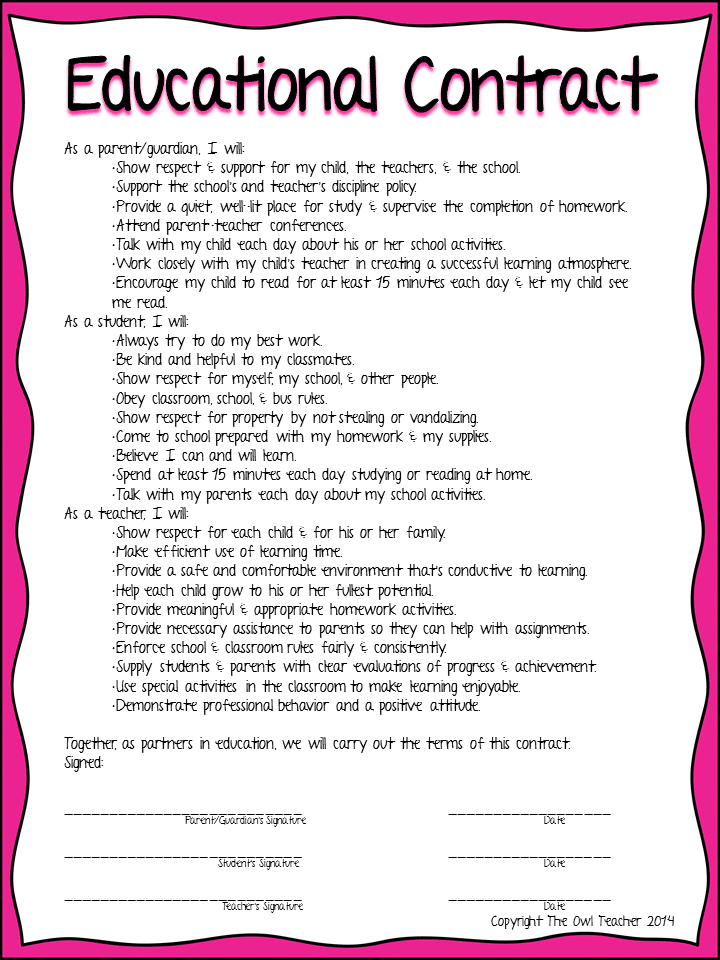
The Educational Contract
At the beginning of the year, I have my families and students sign an educational contract. Most people will be a bit more accountable if they have a “contract” to abide by.
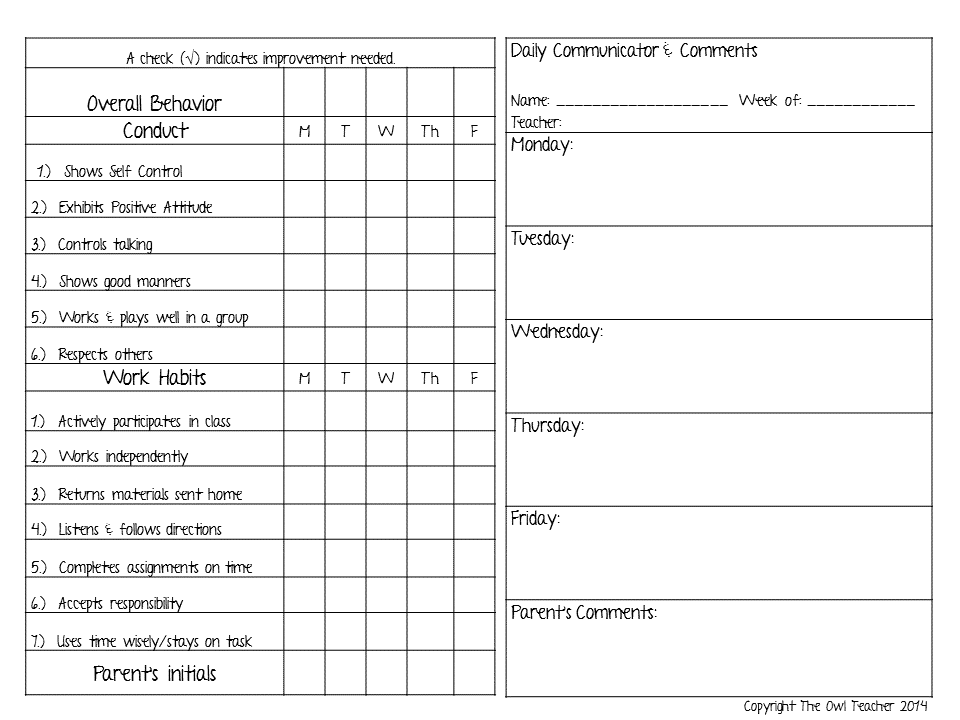
Reporting Behavior to Parents Daily
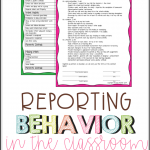
On the sheet below, I would place a check mark in the appropriate box to indicate what the student needed to improve upon that day. I would also write any comments in the daily box regarding what specifically was occurring, if needed. This would go home nightly for parents to initial stating they were aware of the behavior. I would collect it on Monday from the child and place it in his or her file for reference later. This sheet is also a great documenting tool for when you need it during your child studies. You can see if the child improved or not.
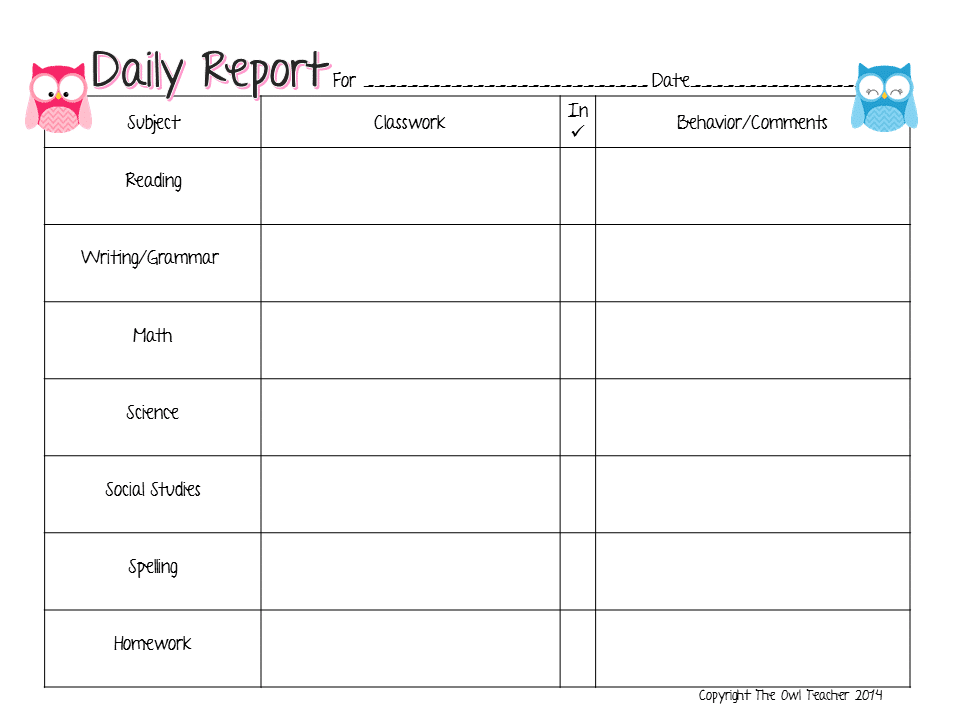
Reporting Behavior and Homework
I would use this daily report below to list what we were working on in each specific subject area during the day. I would then place a checkmark in the “In” box if it was completed and turned in. I could also add any comments or behavior issues (such as the student didn’t complete the work because he/she was off task). The students would then use the daily report to determine what was needed to be taken home to be finished. This report would need to be seen by the parent and initialed anywhere on the report. Then the next day I would use it to help the child see what was or was not turned in.
Reporting Behavior and Homework Weekly
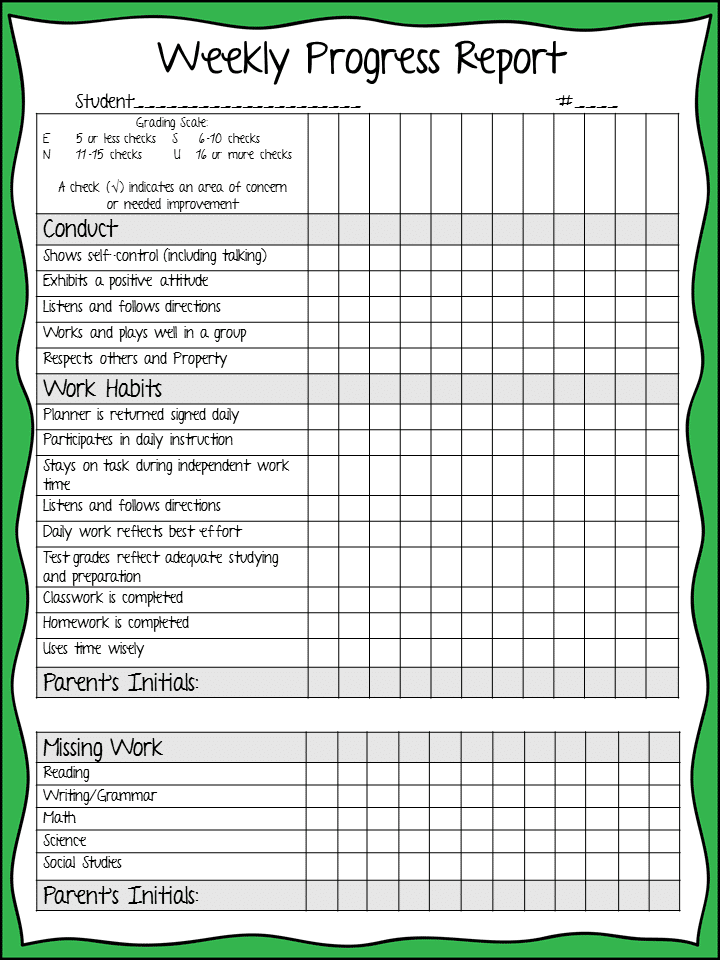
I like to send home Friday Folders each week with information regarding how each child behaved during the week and whether work is missing. I do this so parents are aware weekly and not shocked come conferences or report times. I staple this weekly progress report on the left inside each student’s folder. Then each week I just mark it. I write the date, place a check in any box a child struggled with that week, and highlight where a parent needs to initial. I give a checkmark for each occurrence. For example, the “shows self-control” box may have 2 checks in it for struggling with this twice that week. I also check off any subject area a student has missing work in. If a student has no checks, I place a sticker in each category. I count up the checkmarks at the end of the week and give a grade for that week according to the grading scale. I provide a grade for conduct and work habits. I do not give a missing work grade. Then at the end of a marking period, I use this to average out and determine what grade goes on the report card. You could easily convert the E to an A, S to a B, so on. I do this with all the students. My Friday Folders also contain graded work, my newsletter, and important school fliers. It returns every Monday.
How to Get the Behavior Forms for FREE:
To get these forms, you’ll be taken to a Dropbox Folder. You will need to have powerpoint to edit them. A version that is not editable is also included.

For more ideas on behavior, click HERE.



25 Responses
These are great documents! Thanks so much! 🙂
You are absolutely welcome!
I love the contract!! What a good idea 🙂 thank you for sharing!!
Alicia from Elementary Ali
Thank you for checking it out!
all of the resources are lovely! and even helpful
Thank you so much!! 🙂
I LOVE the weekly progress report!
Thank you so much!! 😉
Love this I will use at home for my children
That is great. I'm eventually going to redo it with editable text and a thinner border.
This is great! Thank you for sharing.
Absolutely! Thanks for checking it out!
Could you make an editable version of your Weekly Progress Report? I LOVE this document but I need to change a few things to make it fit my classroom standards.
Thank you!
Hi Jessica. I tried to reply to you through email, but I wasn't able. I did update this post with editable behavior forms. If there is still something here that isn't like you would like it, email me and I'll see what I can do for you! 🙂
You are so awesome! Thank you so much! I am so excited to use these forms this year!!!!
Thank you so much for the editable versions of the daily/weekly behavior reports!!
How did you make time to fill out these forms each day?!
Super Dooper Helpful! Thanks so much!
Thanks!!!!!!!!!!!!!!!! I love your stuff : )
This is so helpful! Always looking for ways to help my students behave better! Can't wait to share with other teachers! Thanks:)
These are great and still relevant. Thanks for sharing.
Thank you soo much for these forms. I would like to implement them next school year. I was wondering do you have an editable form of your educational contract. Our students are required to read 20 minutes a night.
Thank you!!!!!!!!!
I do not, but I can create one for you. Can you provide me with your email address and I’ll send it to you? Thanks! 🙂
Thank you so much for sharing, I love your forms, its exactly what I need! I was thinking they would come automatically once I signed up, but I haven’t seen them yet. Thanks again so much!!
Thanks for sharing! These will be so helpful!