






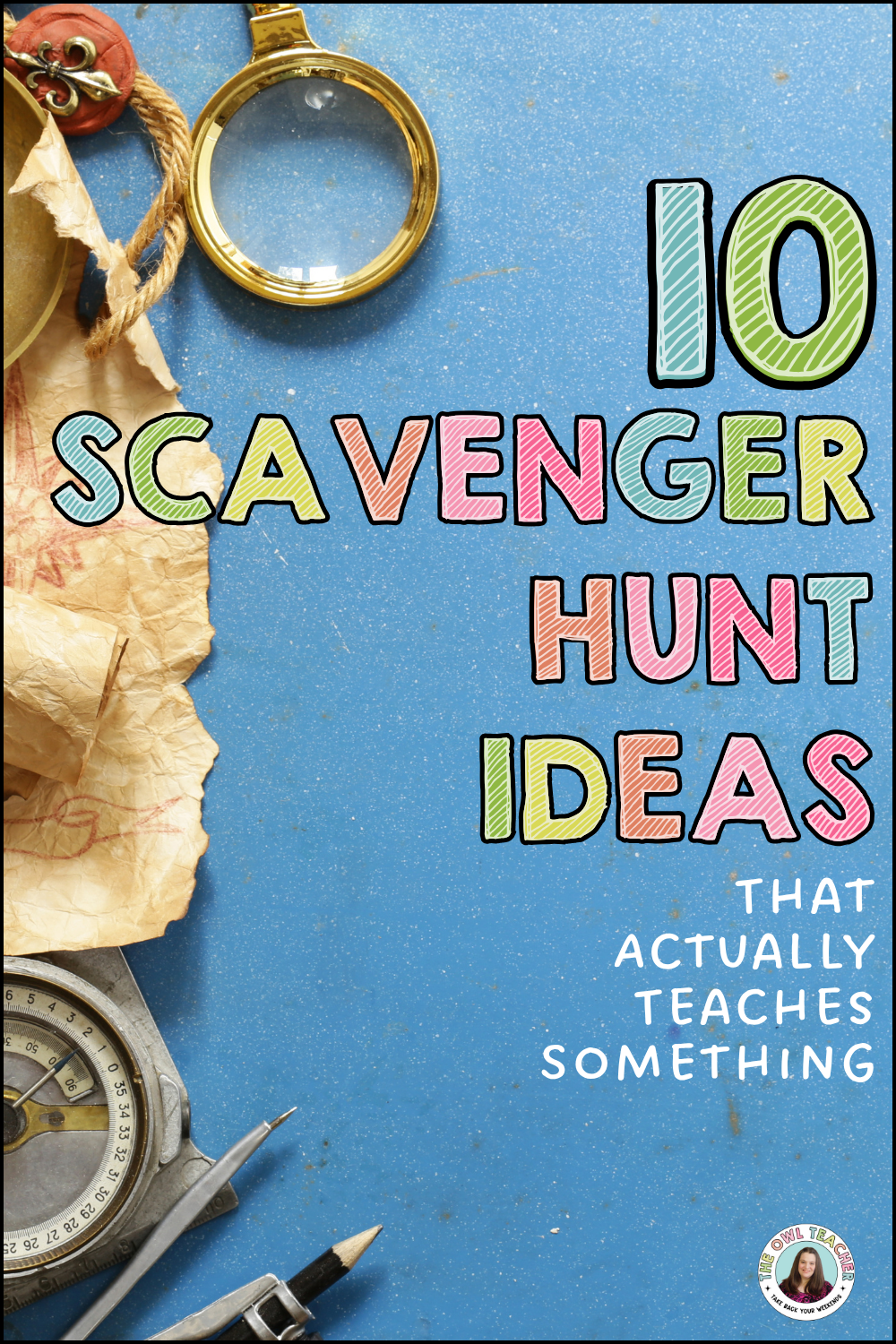
Sometimes the words ‘scavenger hunt’ immediately makes a teacher sigh. In theory, it sounds like such an exciting activity. In the real world, it feels like you could be wasting precious class time, dealing with chaos, and that it’s just not worth it.
But I’m here to tell you—it doesn’t have to be that way. Scavenger hunts can be magical when they’re structured right and created with intention. They’re one of my favorite ways to combine movement, engagement, and learning without a worksheet in sight.
So if you’ve tried a scavenger hunt before and decided you’d never do that again, let’s give it one more shot. If you haven’t tried it yet, pick one and master the structure before moving on. Below, I’m sharing 10 different types of scavenger hunts (not just content ideas!) that upper elementary teachers can plug into any subject area and finally feel like, “That was worth it.”
1. The Classic Answer Hunt
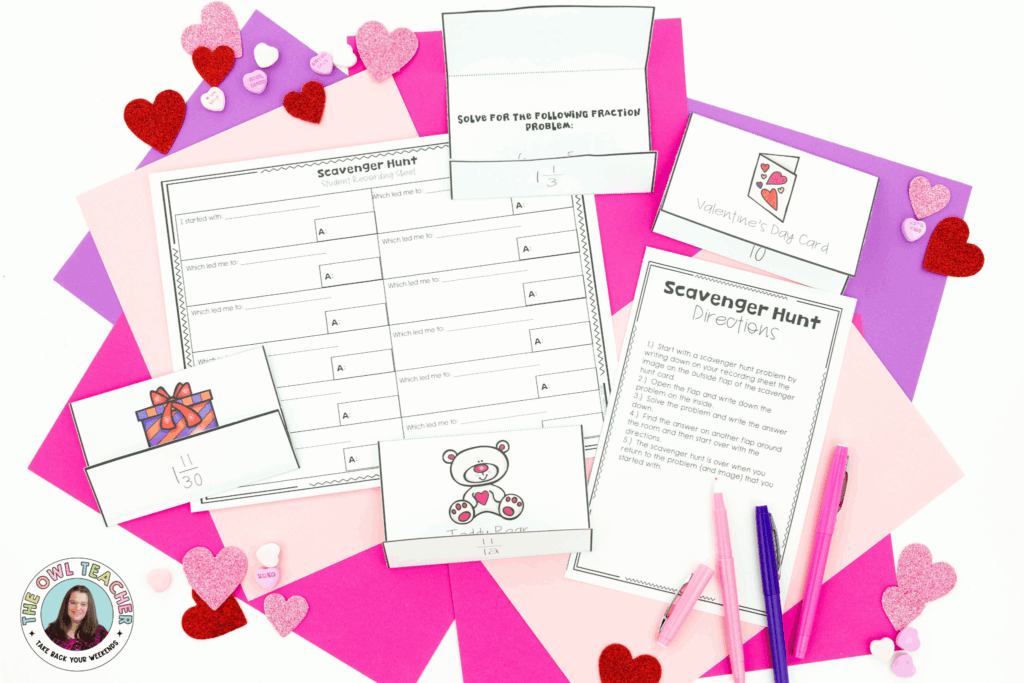
This is your traditional go-to: Each card has a problem, and students search for the answer somewhere else in the room. When they find it, they solve the next problem.
My Valentine’s Fraction Scavenger Hunt has students solve problems like (1/2 + 7/10), and then they have to find the card with the matching answer, continuing the loop until they return to the beginning. Because students can start anywhere, this will help with flow. This classic answer scavenger hunt is great for reviewing math, practicing vocabulary, and conducting a quick skill check.

2. The Clue-Based Hunt
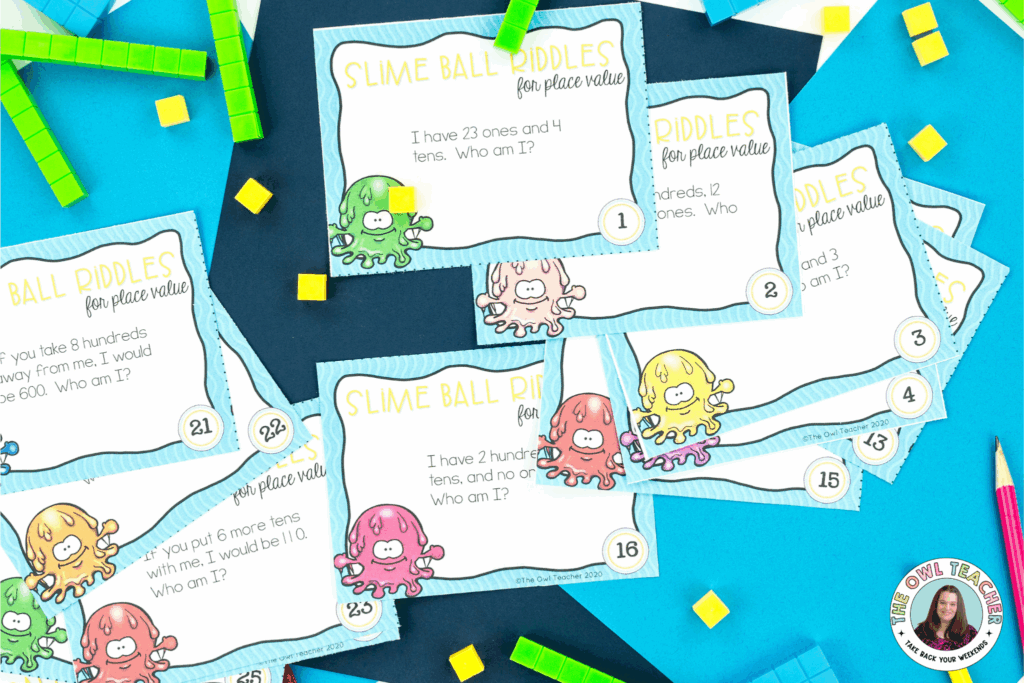
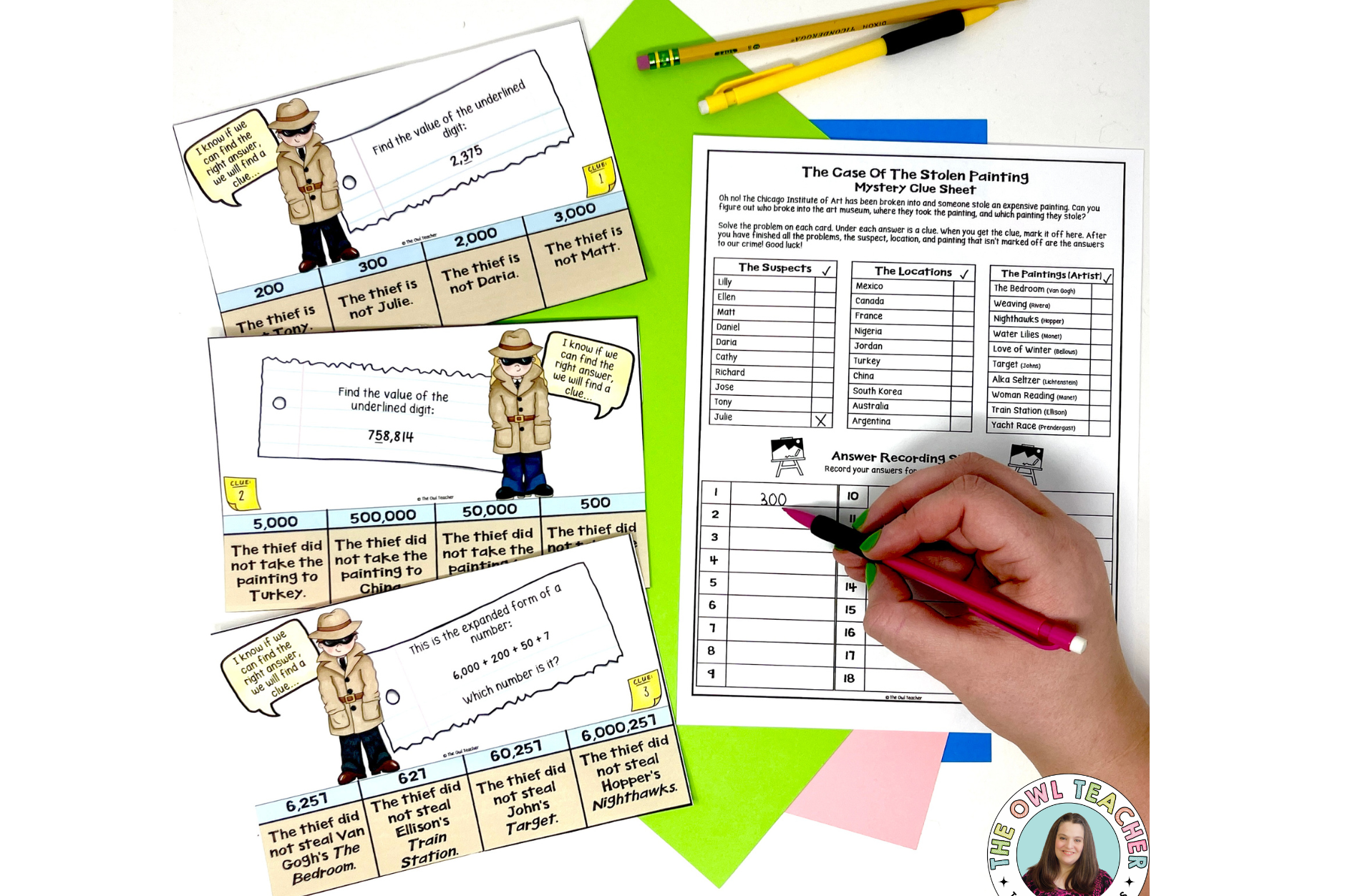
Instead of just solving and moving on, students get a riddle or clue that leads to the next card. It adds a layer of logic, inference, and reading comprehension. For example, a clue may say, “You’ll find me where a carnivore might roam—look near the apex predator’s home.”
This type of scavenger hunt is perfect for science units, ecosystems, geography, and even math! Below, you’ll see that my place value riddles provide clues that make place value fun but still educational. If you don’t feel like writing riddles, use AI to help you or have students create their own as an extension activity. To the right below is my math mysteries where students practice place value 10x to the right. This is a concept that is often overlooked. Students enjoy the hunt for the “criminal.”
3. The Visual Match Hunt
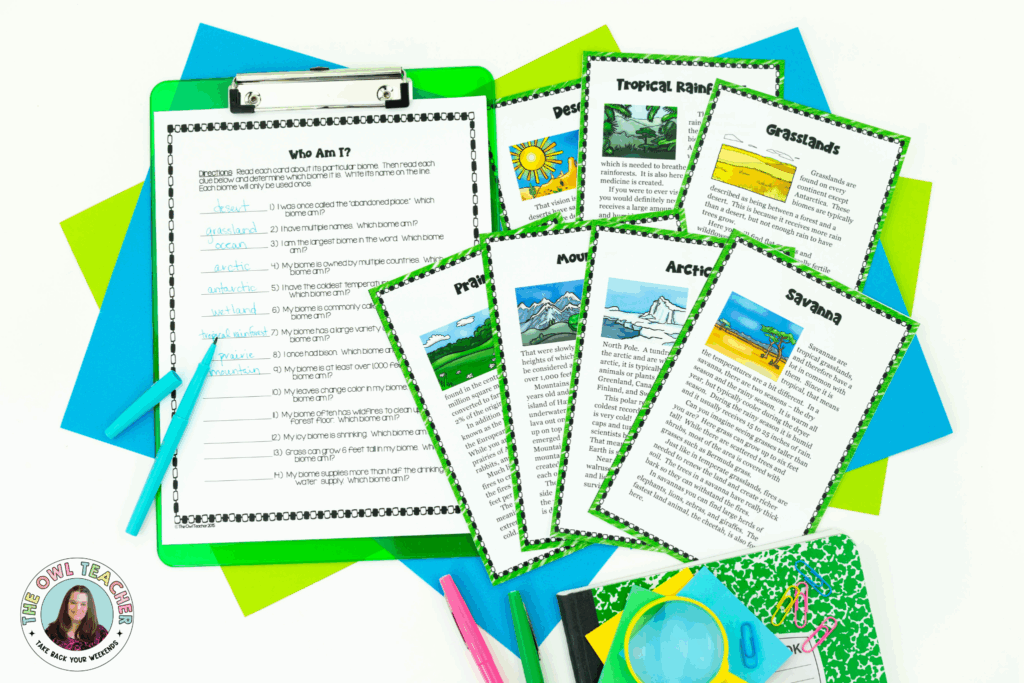
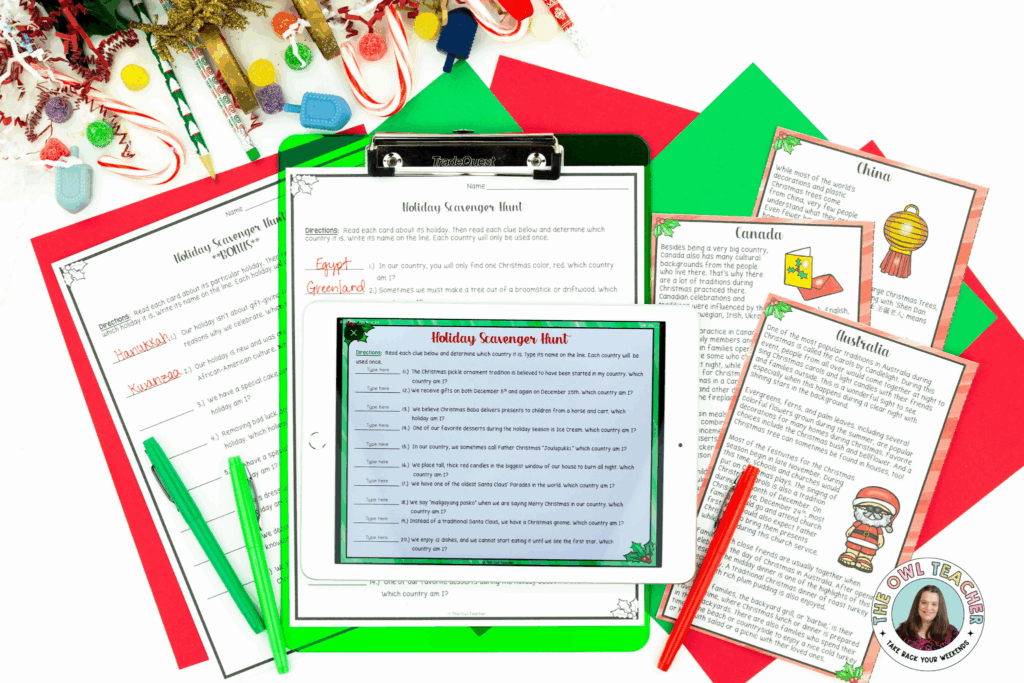
This scavenger hunt is perfect for science and social studies! Each card has an image or passage to read, and students must match the correct name, fact, or category to it. For instance, in my ecosystem scavenger hunt, students read passages about different ecosystems, identify the various habitats, and then match them to the correct ecosystem using critical thinking, not guessing. My holidays around the world scavenger hunt is also set up this way. This helps students when it is used with vocabulary-rich units or classification activities. And if you want to support ELLs or struggling learners, add more images to help.
4. The Puzzle Piece Hunt
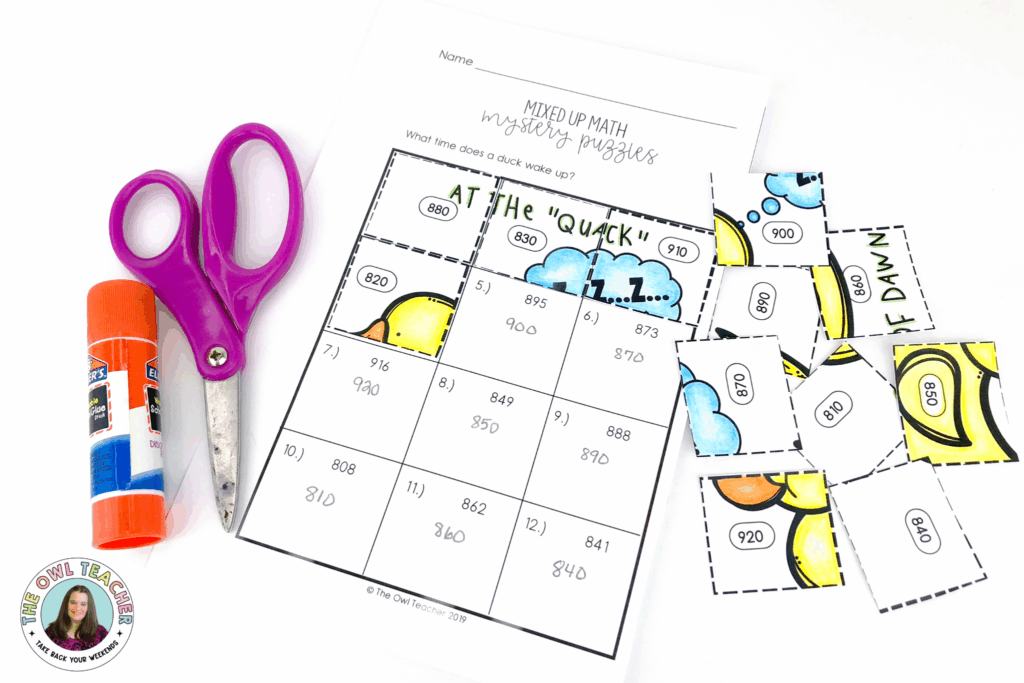
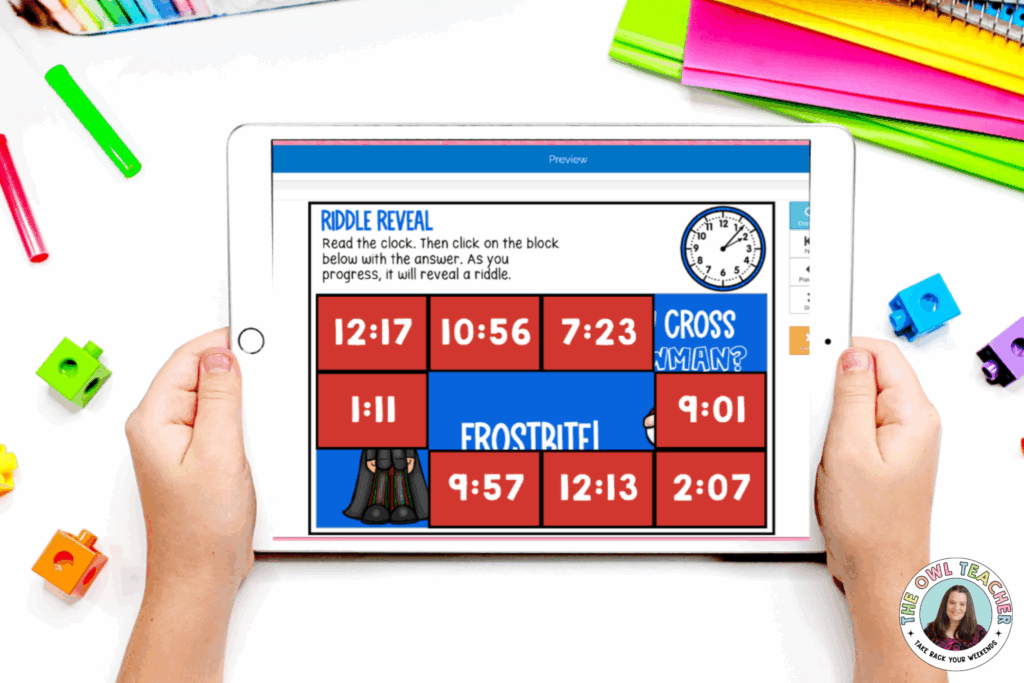
In a puzzle piece hunt, each “answer” reveals part of a hidden puzzle or picture, such as my mixed-up math puzzles. Below is my rounding puzzle. When the hunt is complete, students see the big picture—literally. This can be done for timeline pieces, fraction models, the photosynthesis cycle, and so much more. I have even used it with Boom Cards called Riddle Reveal. This puzzle helps students practice one problem at a time on the screen to prevent distraction. That’s perfect for students with ADHD. If you are teaching anything with sequencing or systems-based learning, this will be the hunt for you!
5. The Student-Created Hunt
I’ll be honest, I have not done this one, but if your students are capable of doing it, why not! Let students write problems, riddles, or facts and design a scavenger hunt for the class to solve. You’ll be shocked at their creativity. This can be used for early finishers, enrichment, or as a Friday wrap-up of the week. It helps students be silly, have fun, and have structure, and can be used as a mini-assessment of what they have learned.
6. The Movement-Free Hunt
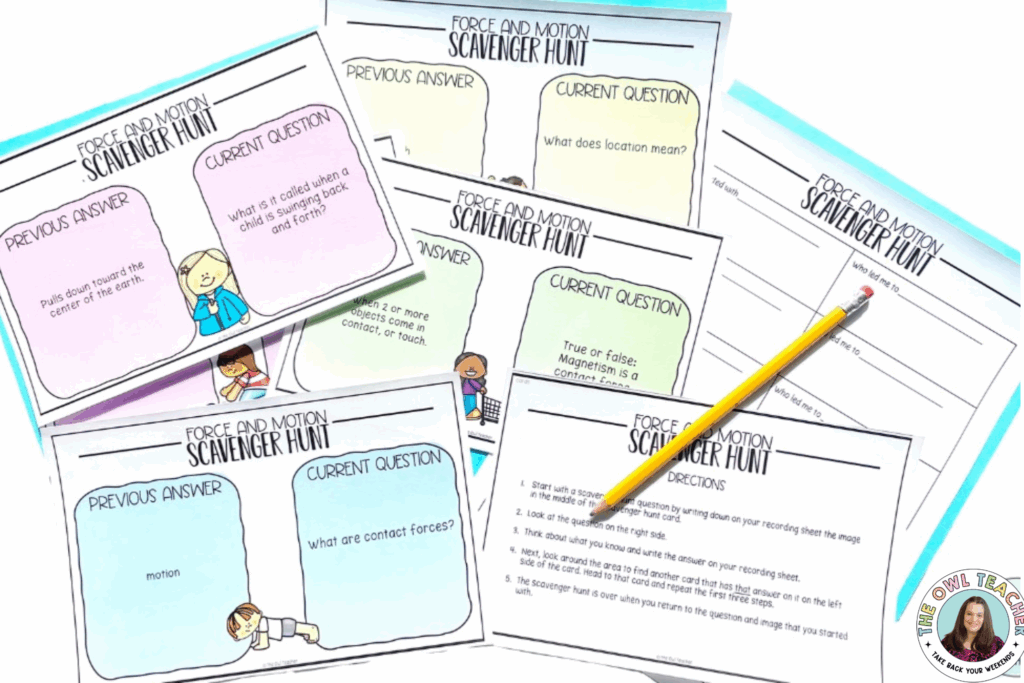
If you are looking for an option where students are not moving around your room, that’s no problem! Place all the cards on the desks, such as these force and motion scavenger hunt cards, and have them scoot. Another idea is to have students get into groups and complete a set together. Either way, you are letting students work through them seated. This is perfect when you have rainy days, students with mobility needs, or you need students to calm down, such as after lunch or recess. If you pair it with student choice, that’s even better!
7. The Tech-Integrated Hunt
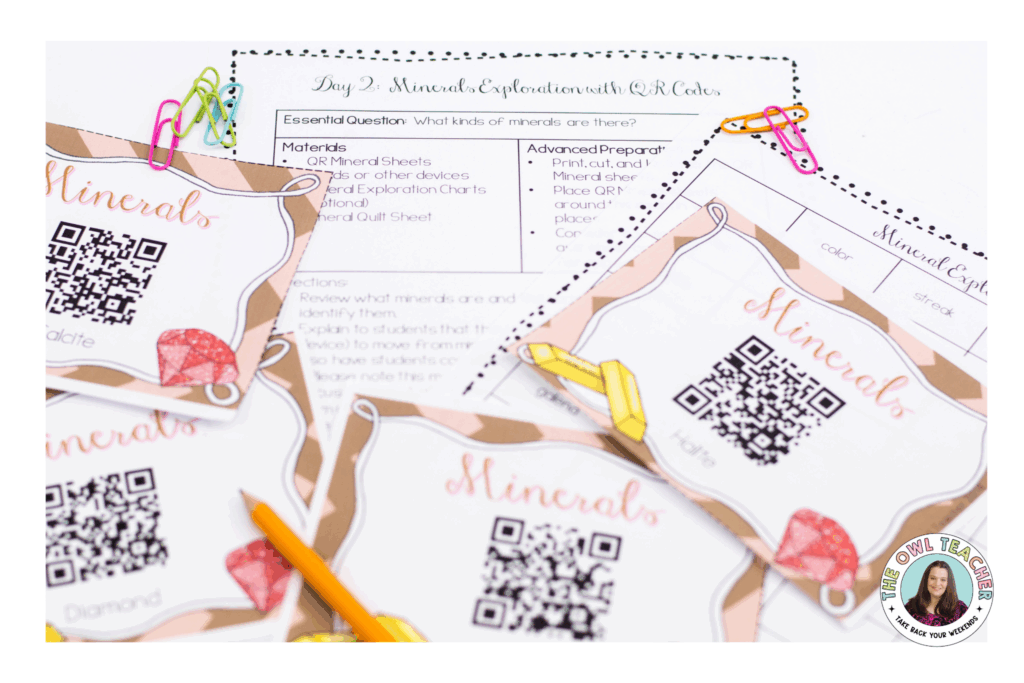
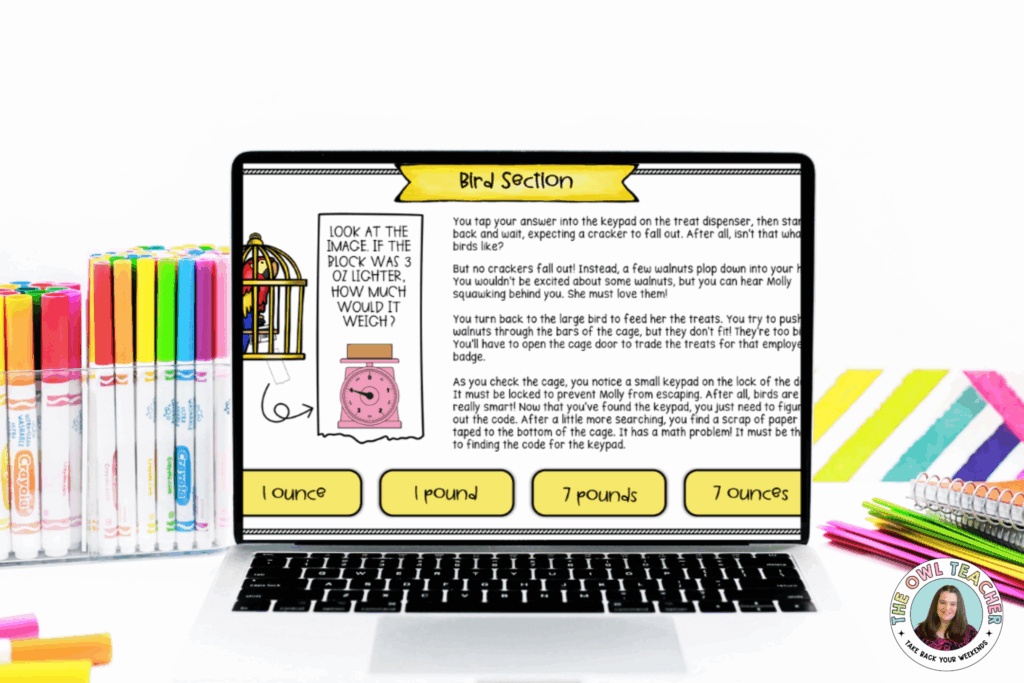
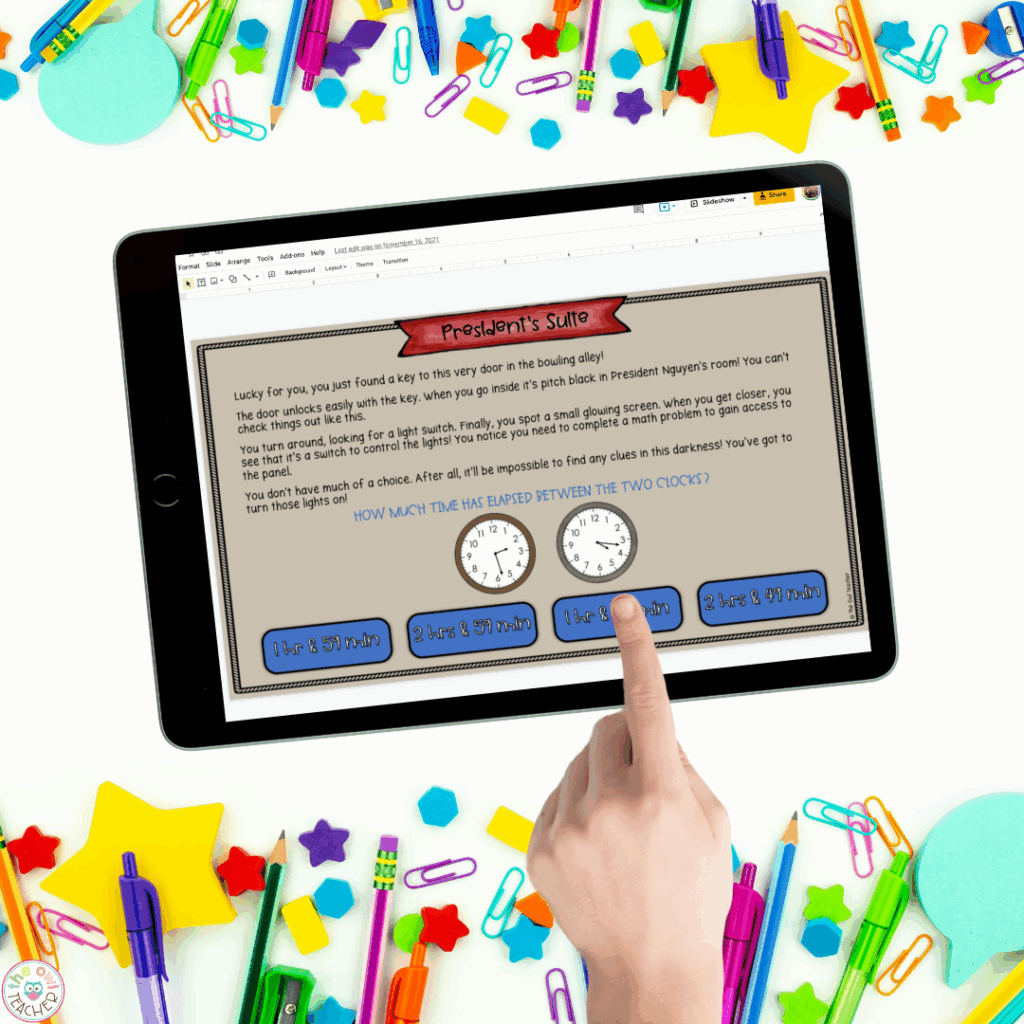
QR codes are not new. But did you know you could use them as a scavenger hunt, rather than just learning new information? You can use QR codes to deliver clues, link to videos, or pop up fun GIFs when they solve correctly. This is perfect for blended learning or your computer days. It’s easy to set up. Just turn paper hunts into QR code versions using free sites like QRStuff.com. Then, link to a Google Form that checks answers. You could also use Flip for short video clues. In my rocks and minerals unit, I have students hunt for minerals using QR codes and in my math quests (below right), students work through solving math problems in a ‘choose your own adventure’ style.
8. The Gamified Hunt
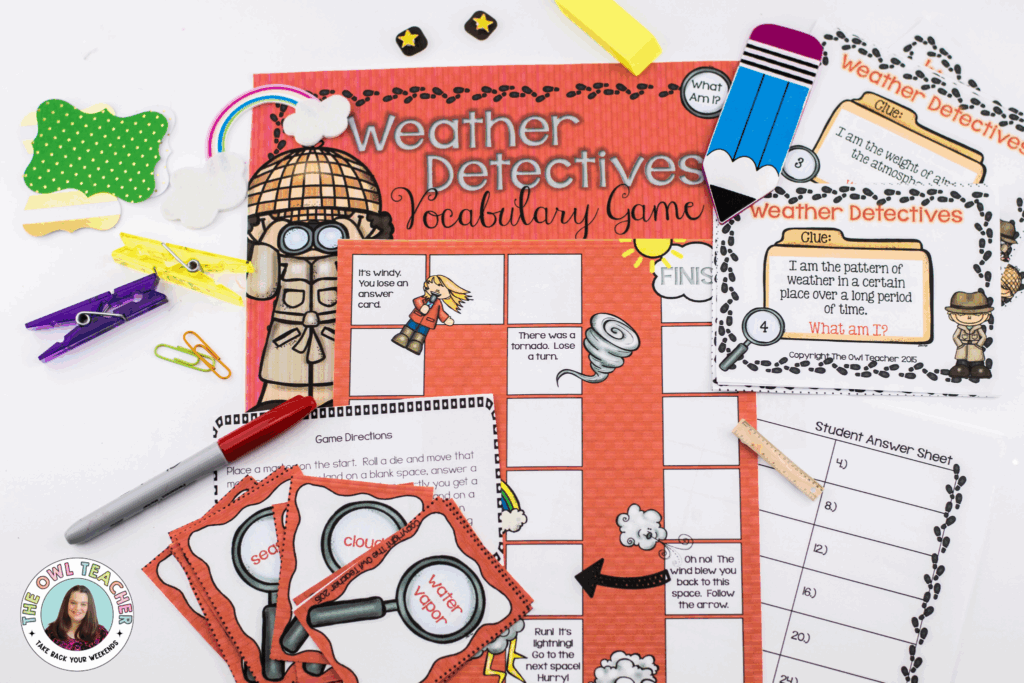
Turn your scavenger hunt into a board game, like my weather detectives vocabulary game, or a competition. Add dice, tokens, or reward cards for students to collect as they move or level up. You could have correct answers unlock superpowers or bonuses. The rewards don’t need to be anything grand, just stickers or extra recess. Keep it simple. You’ll love using this for a spiral review or an end-of-the-unit wrap-up.
9. The Peer-to-Peer Hunt
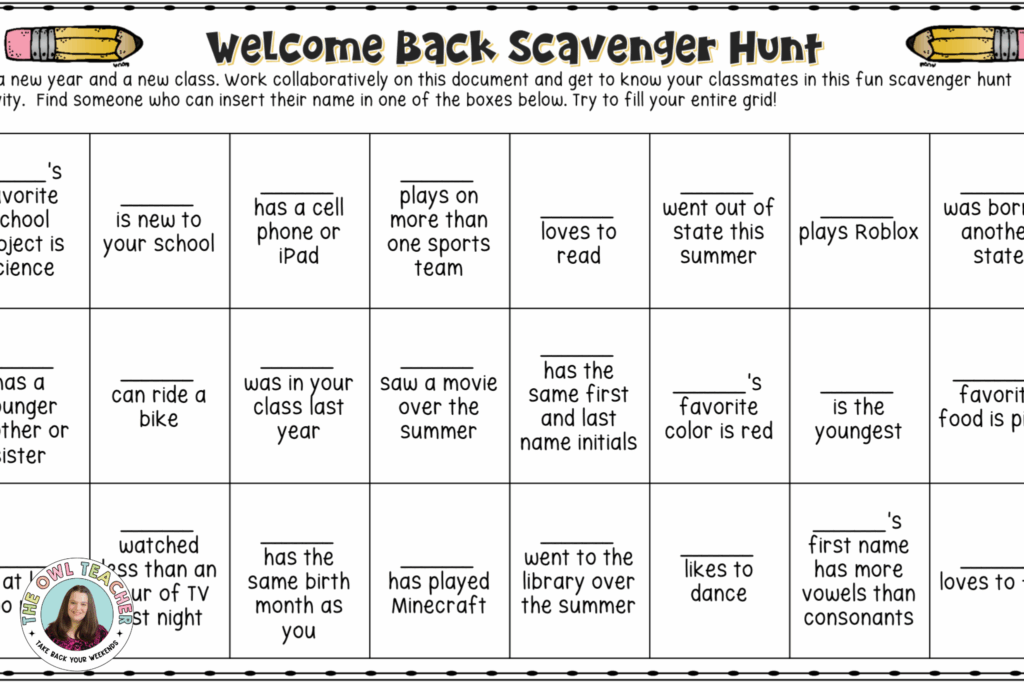
You have likely done this one before. It is often done early in the school year (as seen below in my back-to-school icebreaker packet) as a way to build classroom community, but why can’t it be used at other times, too? For instance, maybe move around the room and gather signatures of students who know the definitions of words, or give students cards with questions and answers that other students hold. They must interact, ask questions, and find matches. Why not even use it as a way to “pre-assess” their prior knowledge?
10. The Station-Based Hunt
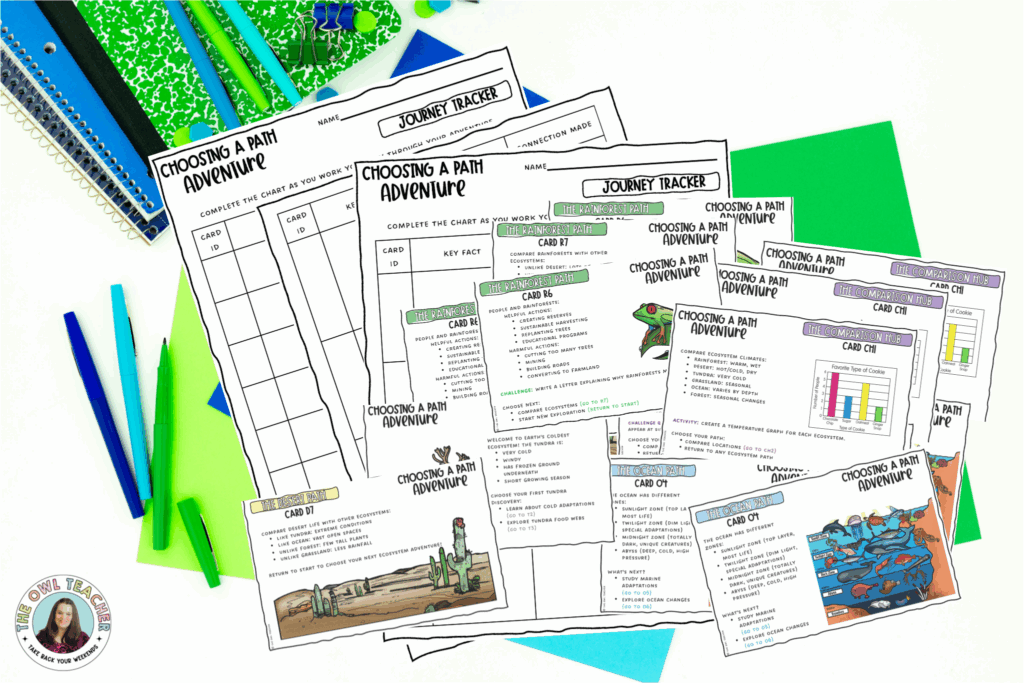
Lastly, instead of students walking from one card to another, break the hunt into themed stations. Each has a challenge that leads them to the next location. Below, in my ecosystem choosing a path adventure, students read the card and solve the task. Then they decide where to go next. This adventure takes them through various ecosystems while challenging their knowledge, providing critical thinking activities, and more. Additionally, station-based scavenger hunts work with multi-subject integration or PBL-style tasks. To anchor student thinking, label each station with a topic, such as “Fractions Café” or “Biome Basecamp.” This will also add a little fun to the adventure!
Tips to Make ANY Scavenger Hunt Run Smoothly
- Model it first—even just one round
- Let students start at any card to avoid bottlenecks
- Use a recording sheet to keep them accountable
- Make expectations clear: volume, movement, and pacing
- Build in a quick reflection at the end (exit ticket or discussion)
GRAB A FREE SCAVENGER HUNT
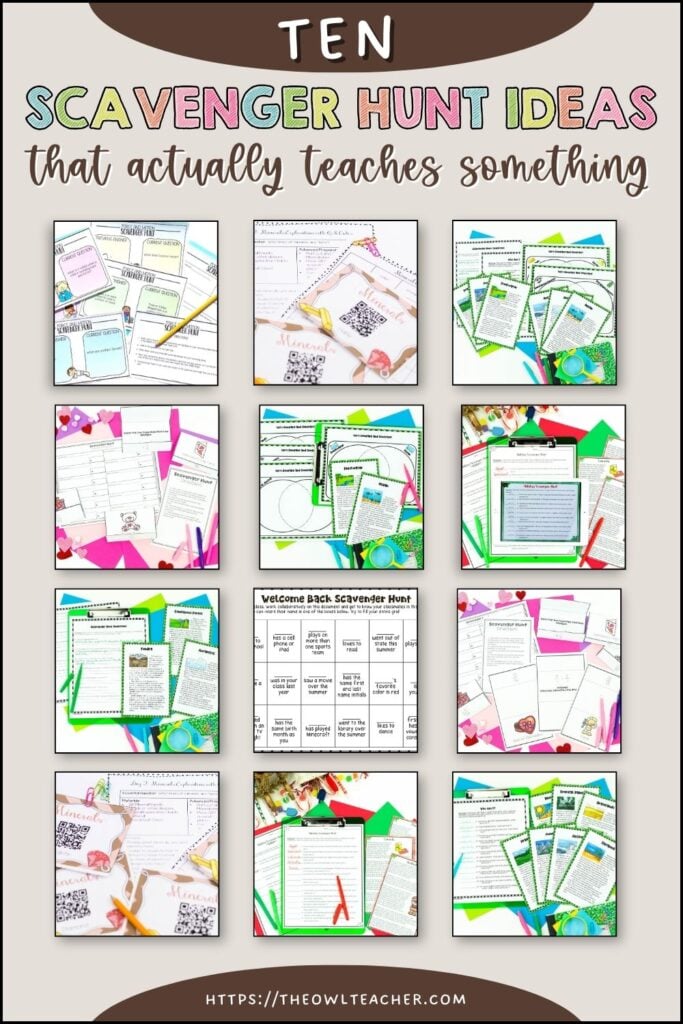
If you are anxious to try one right away, you can click on any of the images above, or you can try my elapsed time math quest for FREE. It is my elapsed time math quest. You’ll take your students on an adventure while developing their elapsed time skills. Students love creating their own story, while you will appreciate the educational value!
If you’re overwhelmed with classroom noise, disengaged learners, or the same old worksheets every day… scavenger hunts can be your secret weapon. And now that you’ve got 10 new ways to reinvent how you use them, you can finally ditch the chaos and bring back that spark of excitement (without losing your voice by the end of the day).
Let learning feel like a discovery again.