









It is incredibly exhausting when you have a student who is struggling in your upper-elementary classroom, and you just cannot pinpoint why. You watch them stare at a blank page, act out in math class, or shut down completely when asked to read aloud. As a dedicated teacher, you want to help every single child succeed, and it takes a massive emotional toll when you feel like you have no answers.
Teaching grades 3-5 comes with a highly specific set of hurdles. The sudden increase in academic language demands hits kids hard. At the same time, complex social dynamics begin to take shape, and the pressure of standardized testing looms over everything you do. Students who previously coasted through early elementary often hit a wall, leaving you to manage a wide spectrum of abilities and emotional needs all at once.
I am not here to add to the noise. I am here to make teaching just a little bit easier by giving you a roadmap for when you feel stuck. The Student Intervention Guide is the ultimate classroom-ready solution designed specifically to help you navigate these exact challenges.
In this comprehensive resource, you will discover exactly how to uncover the hidden reasons behind student struggles. We will explore how this guide uses Research-Based student Intervention strategies to save you massive amounts of time, what makes its diagnostic tools uniquely effective, and how it will help you reclaim your confidence to support every learner in your room.

The Reality of the Mixed-Ability Classroom
Every day, upper elementary teachers face an overwhelming variety of student needs. During a single lesson, you might support one student experiencing working memory overload, redirect another who is displaying task avoidance, and gently encourage a third who has shut down completely due to anxiety. Managing this dynamic requires constant pivoting.
When a student is not performing, it is incredibly easy to misdiagnose the problem. Teachers constantly have to ask themselves: is this a skill gap, where they simply cannot do the work? Or is it a will gap, where they are lacking the motivation to try? Misdiagnosing a student’s struggle inevitably leads to deep frustration for both the teacher and the child. If you treat a reading-processing delay as a behavioral issue, the pencil-throwing will not stop because the root cause was never addressed.
You do not need to be a specialist to make a profound difference in a child’s life. You simply need the right student intervention strategies at your fingertips. With a reliable framework to assess whether a student can complete a task under optimal conditions, you can quickly adjust your approach and get them back on track.
What is the Student Interventions Strategy Guide?
The Student Intervention Guide is a highly practical, diagnostic, and intervention toolkit specifically designed for upper elementary teachers. It bridges the gap between noticing a problem and knowing exactly how to solve it.
The core purpose of this guide is to help you move quickly from “what you see” to “what to do.” First, you identify the outward behavior or academic struggle. Next, the guide walks you through the process of uncovering the root cause. Finally, it provides the exact intervention needed to support that specific deficit.
Every single student intervention strategy included in this toolkit is built entirely on Research Based Interventions. This means the methods are proven to work in real classrooms with real students. By relying on evidence-based practices, you take all the guesswork out of your lesson planning and behavior management.
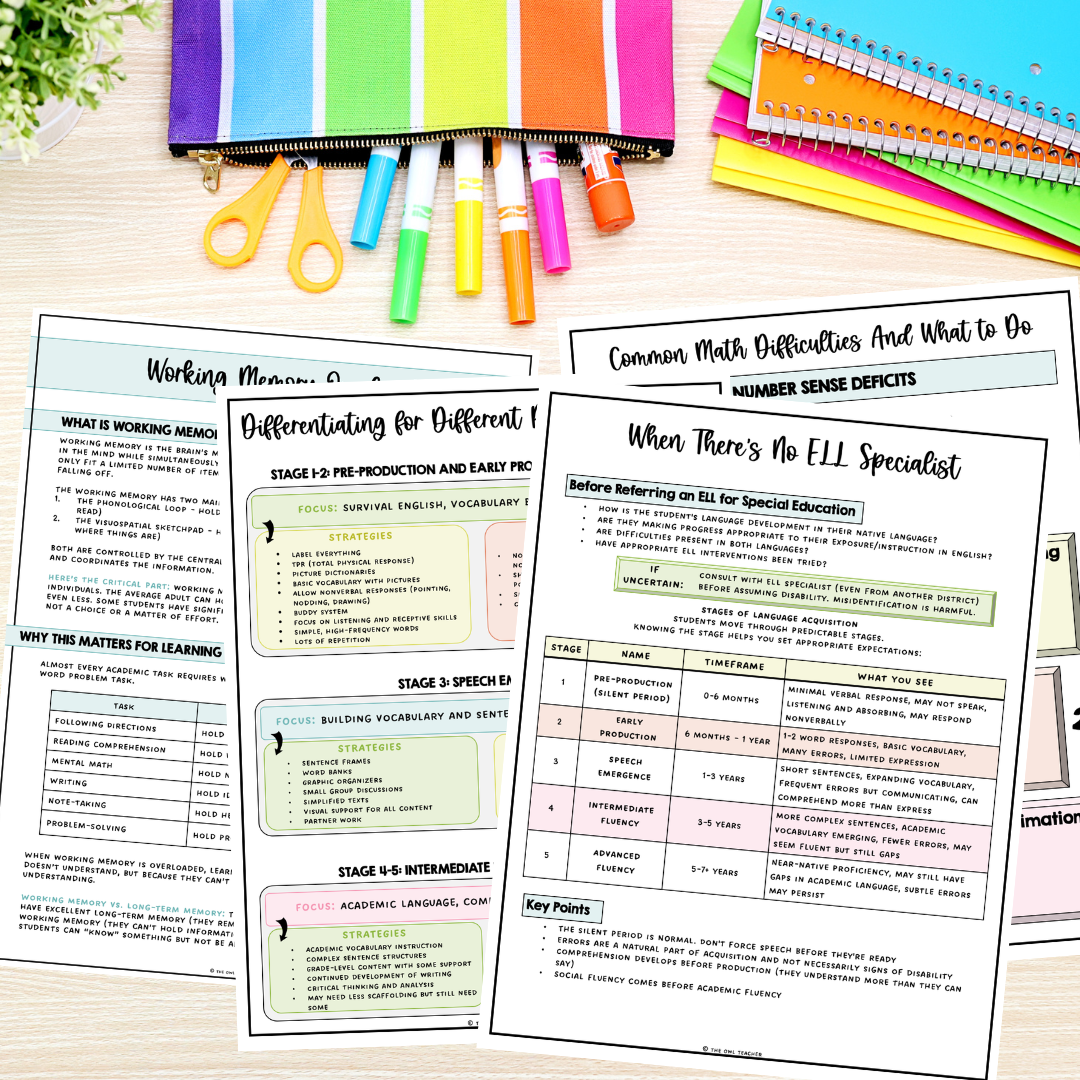
A Peek Inside: What’s Included in the Guide?
This comprehensive resource is packed with tools that are easy to understand and quick to implement. Here is exactly what you will find inside.
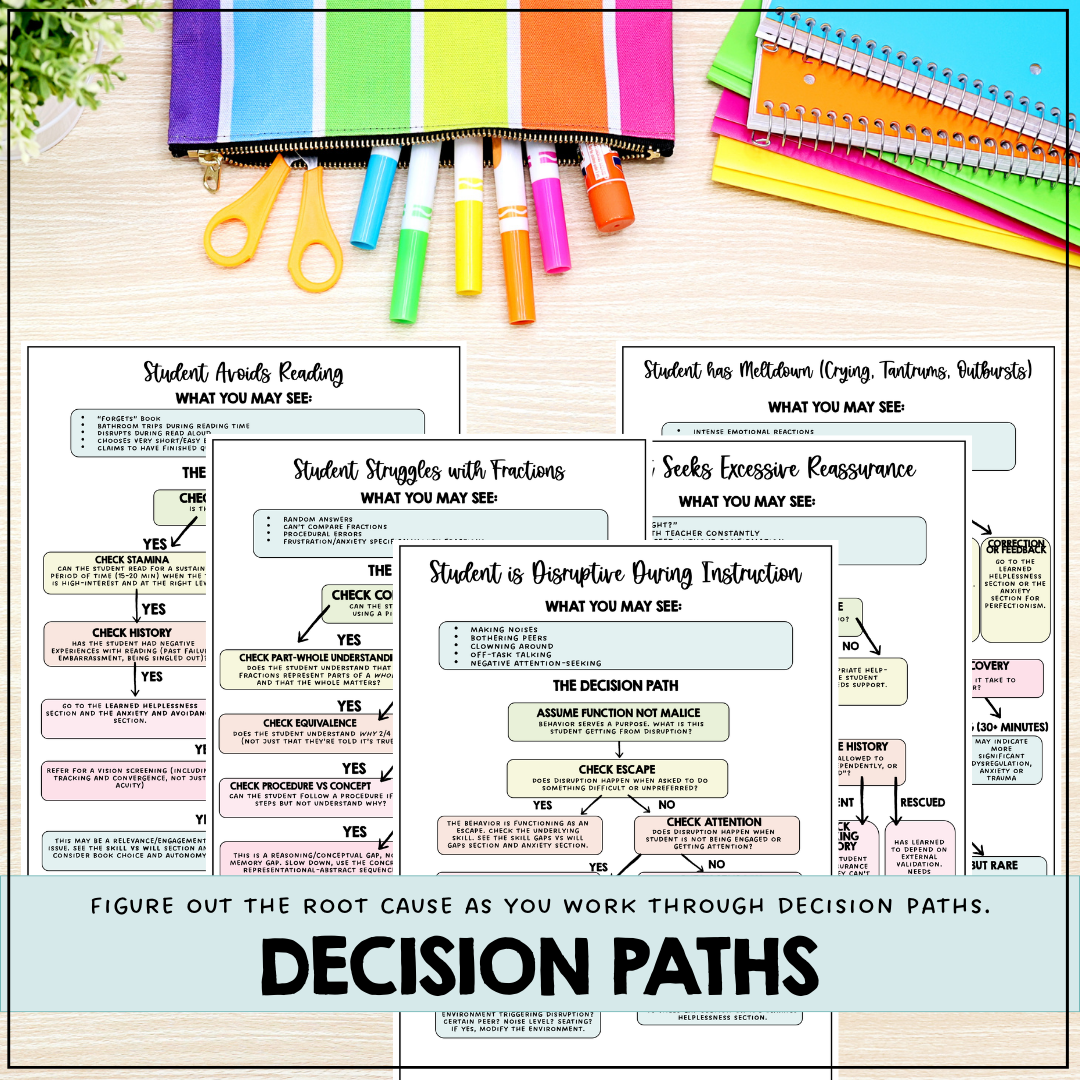
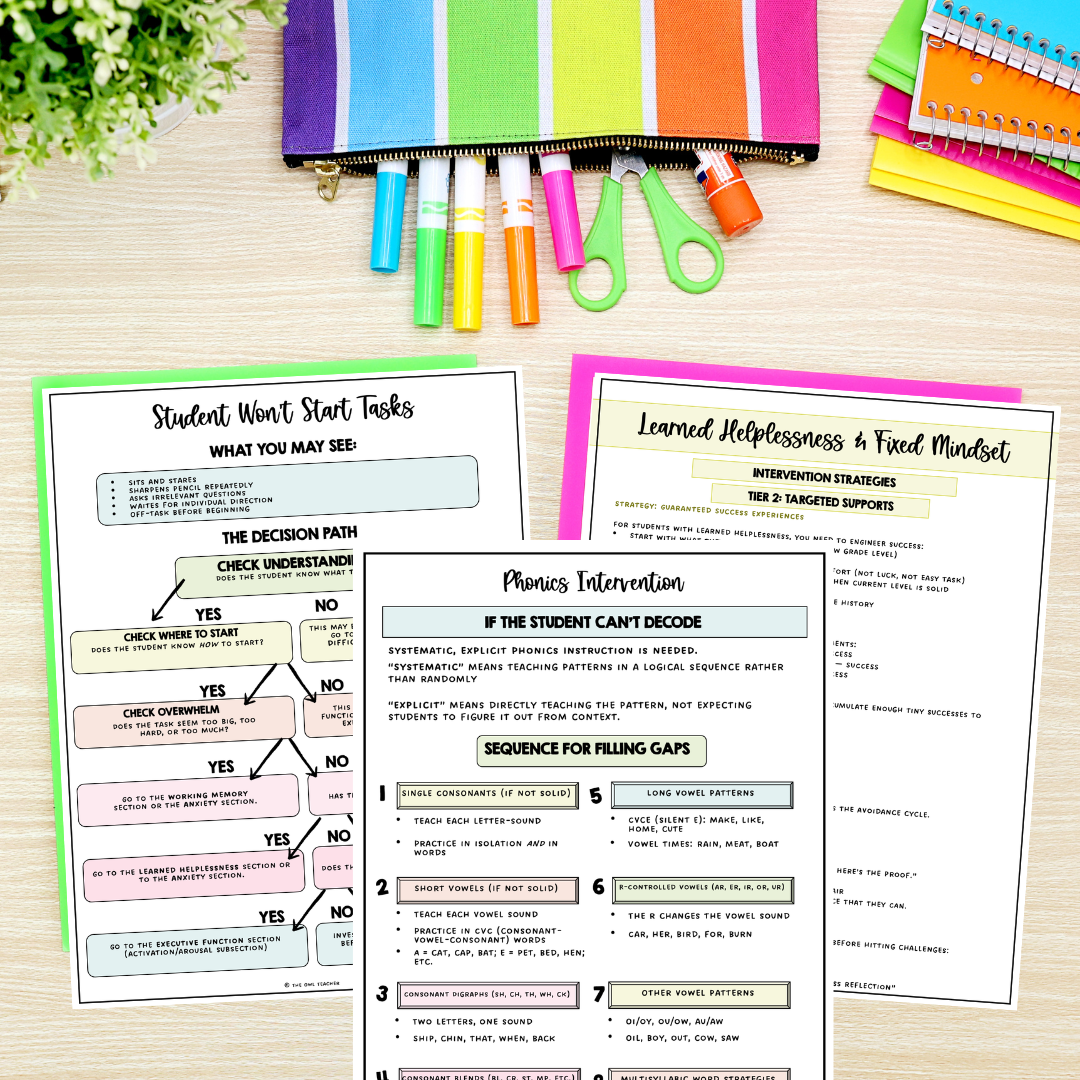
Quick-Reference Flowcharts (Decision Paths)
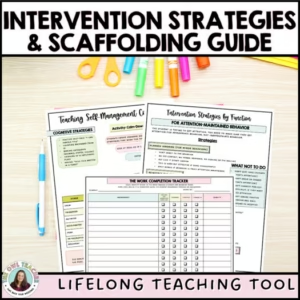
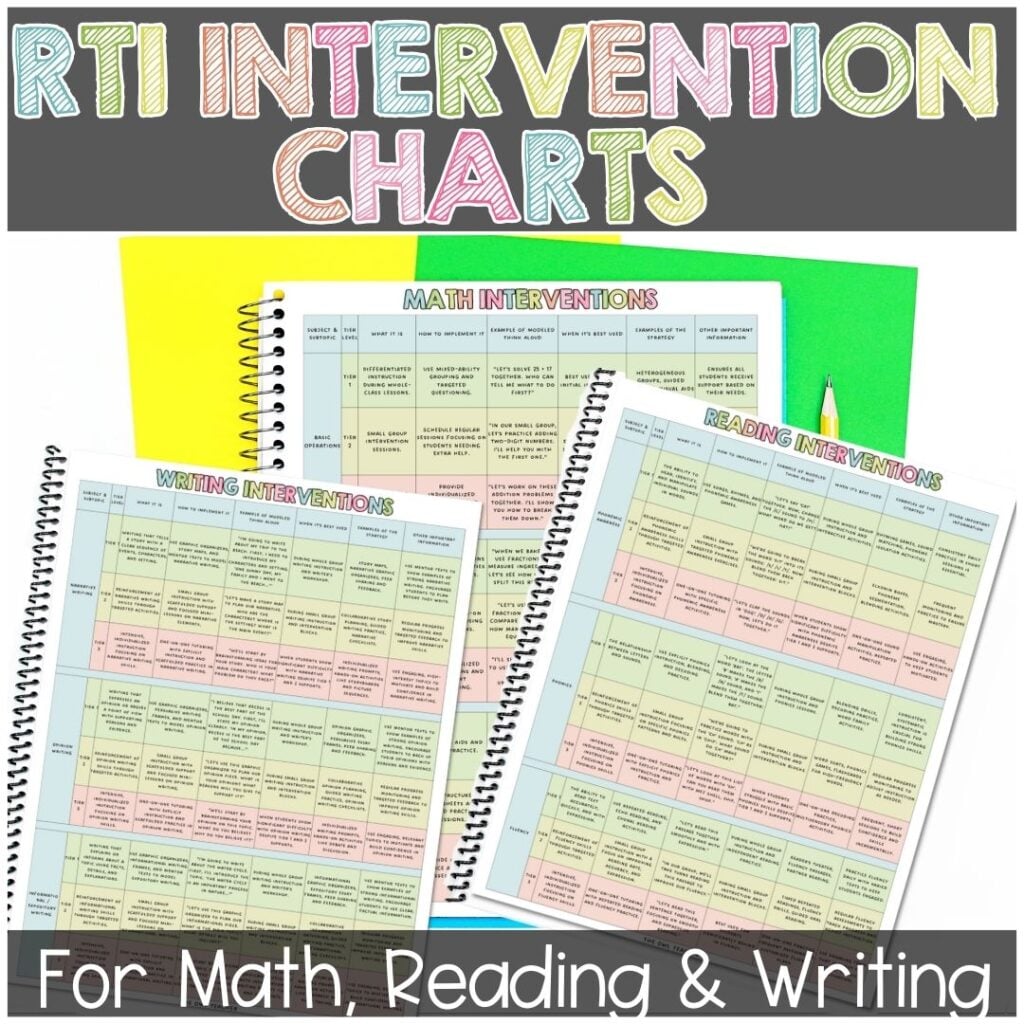
When you are in the middle of a busy school day, you do not have time to read chapters of educational theory. This guide uses highly visual flowcharts to help you diagnose problems in minutes. If a student reads a passage but does not understand it, you simply follow a decision path to identify if the issue stems from slow processing speed or a vocabulary deficit. The flowcharts cover everything from a student who cannot solve math word problems to a child who seems completely unmotivated to start their work.
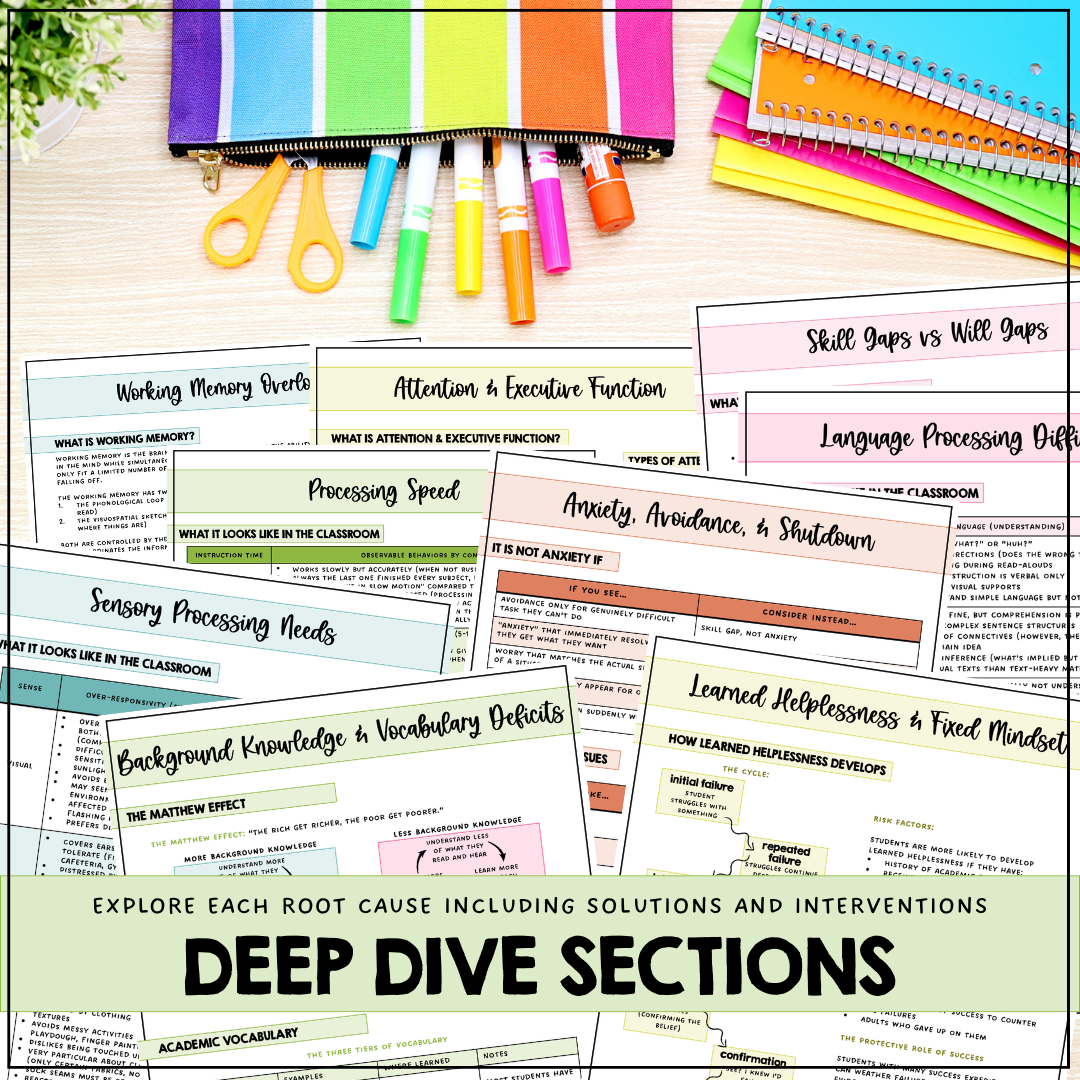
Root Cause and Specialist Sections
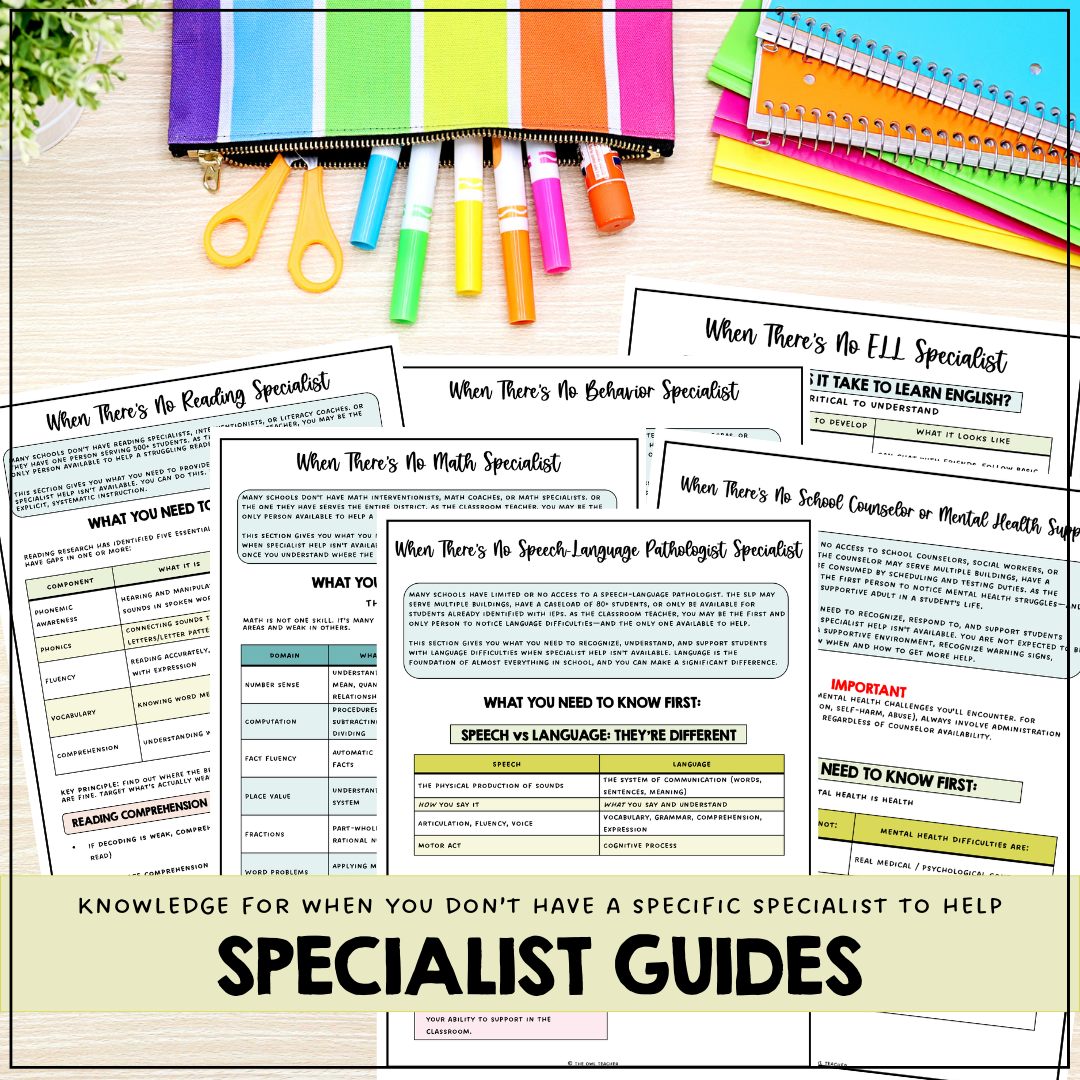
Understanding why a student struggles changes everything. The root cause sections provide deep coverage of critical areas like working memory, organization, time management, and social communication. Furthermore, the guide includes highly valuable Specialist Guides for Reading, Math, Behavior, and Speech-Language. When specialist help is not readily available at your school, these sections act as your personal expert, guiding you through language processing difficulties, pragmatic social language challenges, and sensory needs.
Ready-to-Use Assessment Tools and Trackers
Documenting student progress should not take up your entire planning period. The student intervention guide provides printable materials that save serious prep time. You get access to Informal Observation Checklists for attention and executive function, as well as Quick Classroom Assessments like the Quick Phonics Check and Math Computation Check. There are also simple ABC Data Collection trackers for monitoring behavior. These tools make documenting interventions simple and stress-free, which is especially helpful before referring a student for additional special education services.
How This Guide Empowers You and Saves Time
Your time is your most precious resource. This toolkit with research based interventions is designed to streamline your daily tasks so you can focus on actual teaching.
Differentiated Learning Made Easy
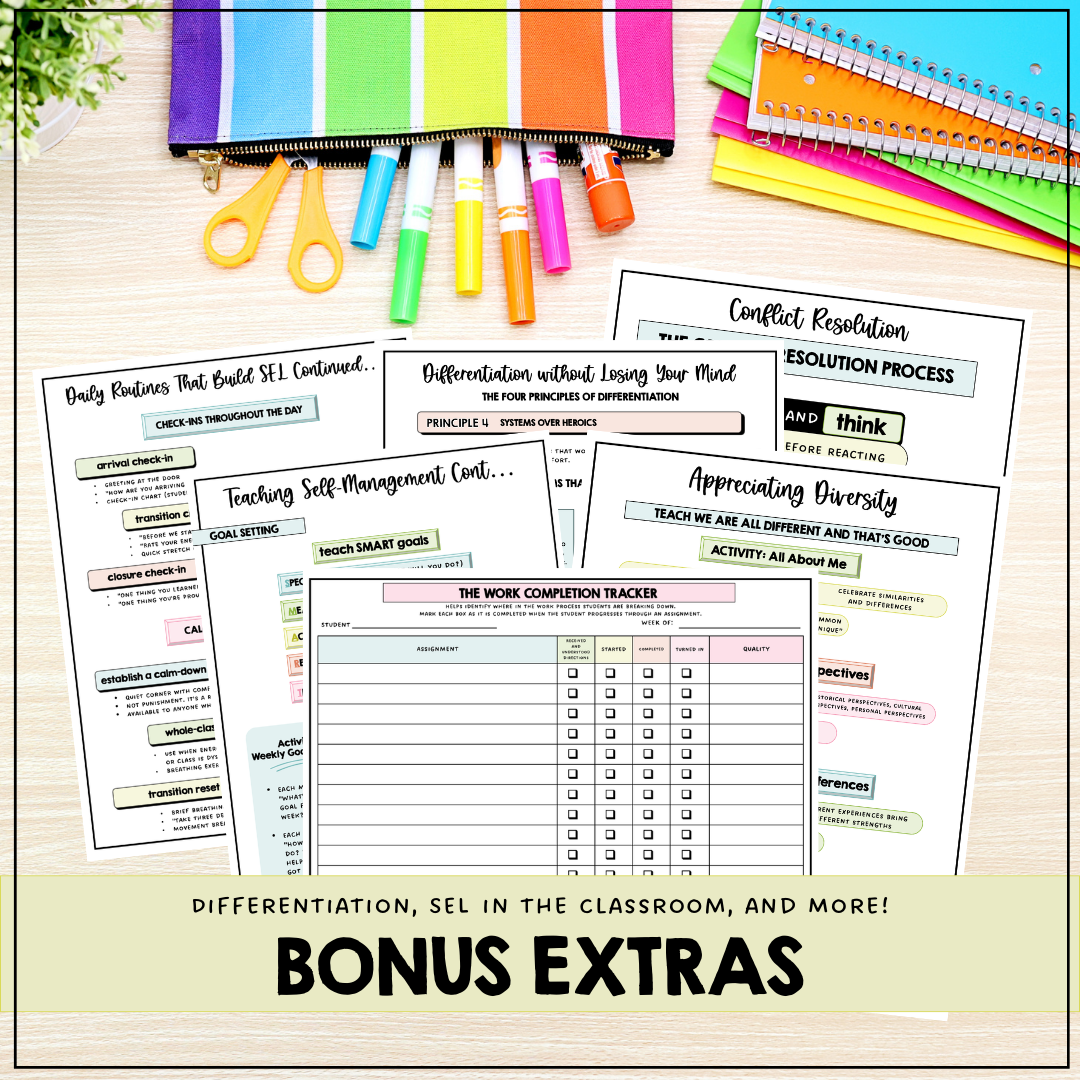
Creating customized materials for every learning level is exhausting. The Differentiation Toolbox includes tiered assignments organized by scaffold level and outlines the Four Principles of Differentiation. You will learn exactly how to provide accommodations, like pre-teaching vocabulary or providing fact charts, without writing three completely separate lesson plans.
Explicit Instruction Strategies
Sometimes students need concepts broken down into the smallest possible parts. The guide explains how to use the Explicit Instruction Routine to help students master difficult concepts. You will find actionable steps for specific content areas, allowing you to confidently teach math fact fluency and reading comprehension to students who have fallen behind grade level.
Ready-to-Use Scripts and Activities
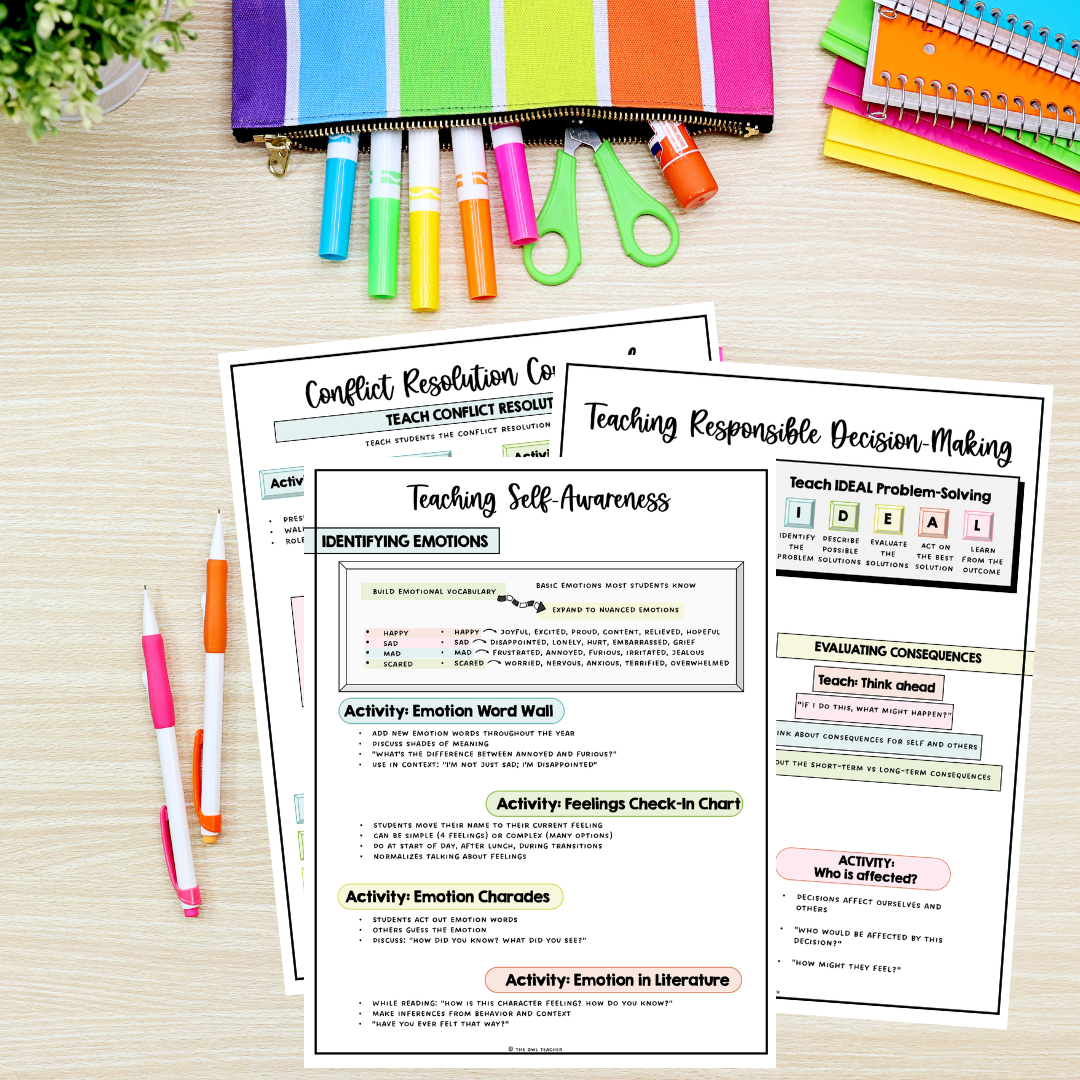
Handling emotional outbursts or social conflicts requires a delicate touch. The guide includes practical, time-saving features like word-for-word scripts for common social-emotional learning moments. You will also love the “Just One” approach for task avoidance. Instead of fighting a student to complete a whole worksheet, you suggest they “just try one problem” or “write just one sentence.” This immediately lowers the bar, reduces the perceived threat, and effectively breaks the avoidance cycle.
What Makes This Resource Truly Unique?
There are countless teaching resources available today, but the Student Intervention Guide stands out for several critical reasons.
Root Cause Focus
Most standard resources just treat the symptom, like handing out a sticker chart for poor homework completion. This guide stands out because it helps teachers uncover the ‘why’ behind the action. By differentiating between executive dysfunction and learned helplessness, you can match the intervention perfectly to the student’s actual internal hurdle.
Practical, Not Theoretical
This is not a dense college textbook. It is filled entirely with classroom-proven success strategies that you can use tomorrow morning. You will find clear explanations of high-impact routines like the “Must Do/May Do” board for organization, or Concrete-Representational-Abstract (CRA) math sequences to build genuine numerical understanding.
Covers Complex and “Invisible” Struggles
Many intervention programs completely ignore students who do not fit the typical mold. This guide includes unique coverage of twice-exceptional students who are gifted but also have a learning disability. It provides compassionate strategies for students with known trauma histories. It even addresses that highly frustrating scenario where a child struggles deeply at school, but their parents insist they “never have trouble at home.”
Want to know more? Check out this video.
Take Back Your Planning Time and Empower Your Students
Supporting a classroom full of diverse learners does not mean you have to work every single weekend. By using the Student Intervention Guide, you will significantly reduce your preparation time and see a noticeable improvement in student engagement. You will finally have the confidence to handle any academic or behavioral challenge that walks through your classroom door.
Think positive. I know this is easier said than done, but it is so important for your well-being. Stay focused on the students in front of you each day and the incredible blessings that you are providing to them. Having the right tools makes all the difference in maintaining that positive energy.
Transform your teaching practice, support your struggling learners, and finally get your planning periods back. Purchase the Student Intervention Guide today and bring classroom-proven success to your school.