



Hands-on has a bad reputation in upper elementary, especially when it comes to back-to-school activities, and it’s deserved.
Too much of what gets labeled hands-on is cutting, gluing, coloring, and crafts. Students are busy for 40 minutes and walk away with a cute folder and no new thinking. You’ve seen it.
And when we return to school, we create back-to-school activities that are often more icebreakers and hands-on, not thinking ones.
Real hands-on (including those back-to-school activities) do something different. Their hands are busy while their brain is working hard. That’s the whole test. If you can pull the scissors out of the activity and the thinking disappears with them, it wasn’t hands-on learning. It was a craft.
Here are 15 hands-on, thinking-based activities that are perfect for your back-to-school activities. I grouped them by how much prep they require because in August, your time is what you have the least of.
Back-to-School Activities Group 1: Stuff You Already Have (Zero Prep)
These need index cards, sticky notes, or nothing at all. You can run any of these hands-on, back-to-school activities tomorrow with no copying needed!
1. The Secret Sort
Give each group a stack of 10-12 index cards with words or numbers on them. Tell them to sort the cards into groups. Do not tell them the categories. Then have each group explain their sorting rule to another group. That explanation is where you learn the most. You’ll find out fast who understands the relationships and who’s guessing. This works well with vocabulary, fractions, states of matter, character traits, historical events, or even parts of speech.
2. Paper Chain Process
Have students write each step of a process on a strip of paper, then loop the strips together in order. One link per step. Another hands-on idea is to give one group a chain with a link out of order and have another group find the mistake. When they hang the chains around the room, you’ve got an anchor chart the whole class built. This could work with the water cycle, long division, the steps of the writing process, or how a bill becomes a law.
3. The Sticky Note Thinking Wall
Give each student three sticky notes. Have three designated spots on the wall labeled “One question,” “One thing they know,” and “One thing they’re still confused about.” They post their sticky notes under three headings on the wall after completing the prompts for each note. Then you read a few out loud. This is a classic; it helps you gain some understanding and gets them moving, something they need during back-to-school activities.
4. Build the Word
For this hands-on, back-to-school activity, pick a vocabulary word. Group students and give them 4 minutes to show what the word means using only classroom objects, such as perimeter with pencils or erosion with a stack of paper and a fan. Maybe compare and contrast with two shoes. It sounds silly, and it works, because they have to strip the word down to its meaning before they can be hands-on and build it.
5. Human Number Line
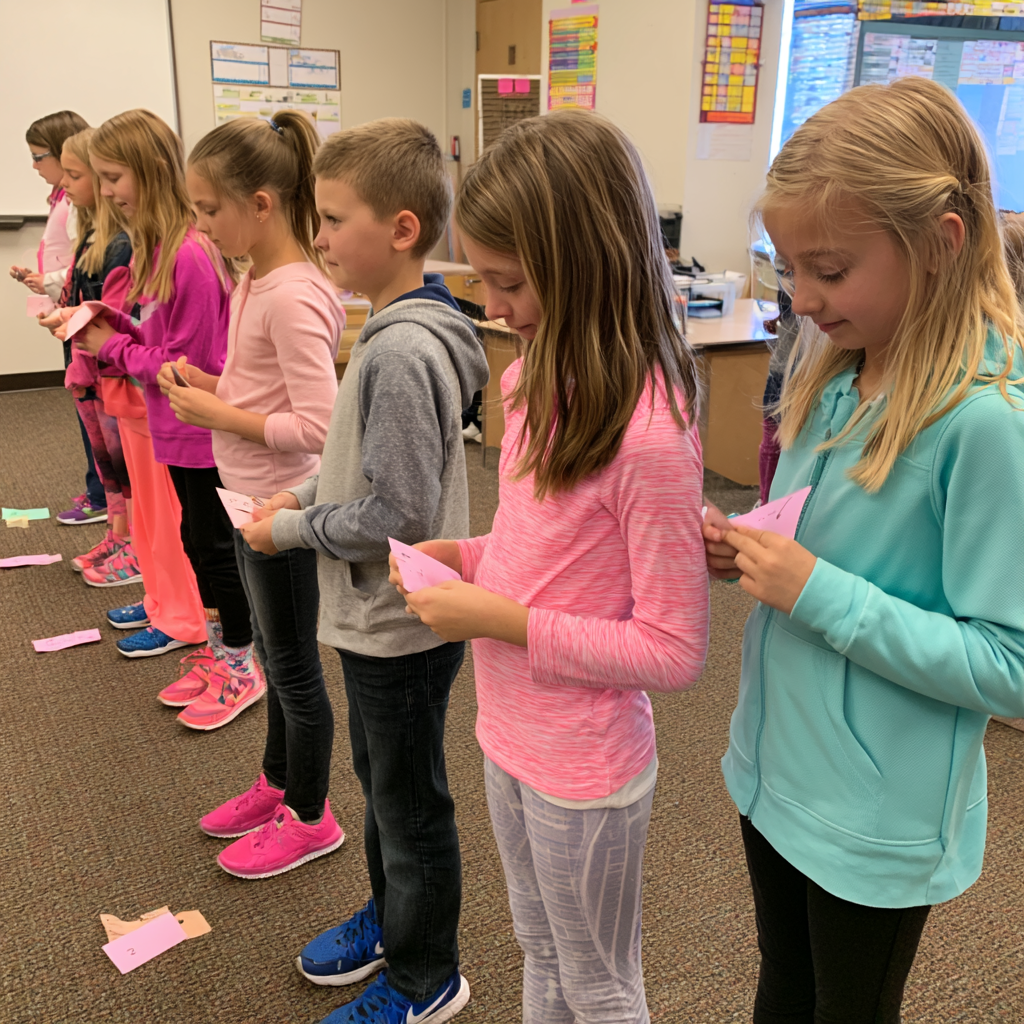
Hand out cards with words or numbers and have the students arrange themselves across the room in order. For fractions, have them arrange from smallest to largest. You could have them put events in order or the steps of a process in order. Nobody can hide in this one, and that matters in August when you’re still learning who your quiet students are.
Back-to-School Activities Group 2: Ten Minutes of Prep
These hands-on, back-to-school activities are worth the small setup. Most of these you can reuse all year once you’ve made them.
6. The Mystery Bag
Out of all the hands-on, back-to-school activities I’d try or use, this is the one I’d start with.
Grab a paper bag and any three objects. Put those three objects in a bag. They will need one connection to each other and to your content, but that connection should NOT be obvious. For example, a lesson on ecosystems could have a sponge, a paper clip, and a rubber band. For a unit on the American Revolution: a tea bag, a stamp, a toy soldier. For multiplication: an egg carton, a handful of beans, a ruler.
Pull the objects out one at a time. Do not explain them. Let students look. Tell students something along the lines of:
“I have three things in this bag. They’re connected to what we’re starting today, and they’re connected to each other. Your job is to figure out how. You get two minutes with your group before anybody says anything out loud.”
Then let them talk. Circle the room and listen, but don’t confirm or deny anything. When you call them back, take three or four guesses without telling anyone if they’re right. Then teach your lesson without saying anything more. Do not reveal the answer at the start of the lesson. Wait until the end.
Students spend the whole lesson trying to figure out if they were right. You’ve created a gap in their knowledge, and their brain wants it closed. That’s the entire reason curiosity hooks work. The wondering keeps them focused.
7. Clipboard Walk
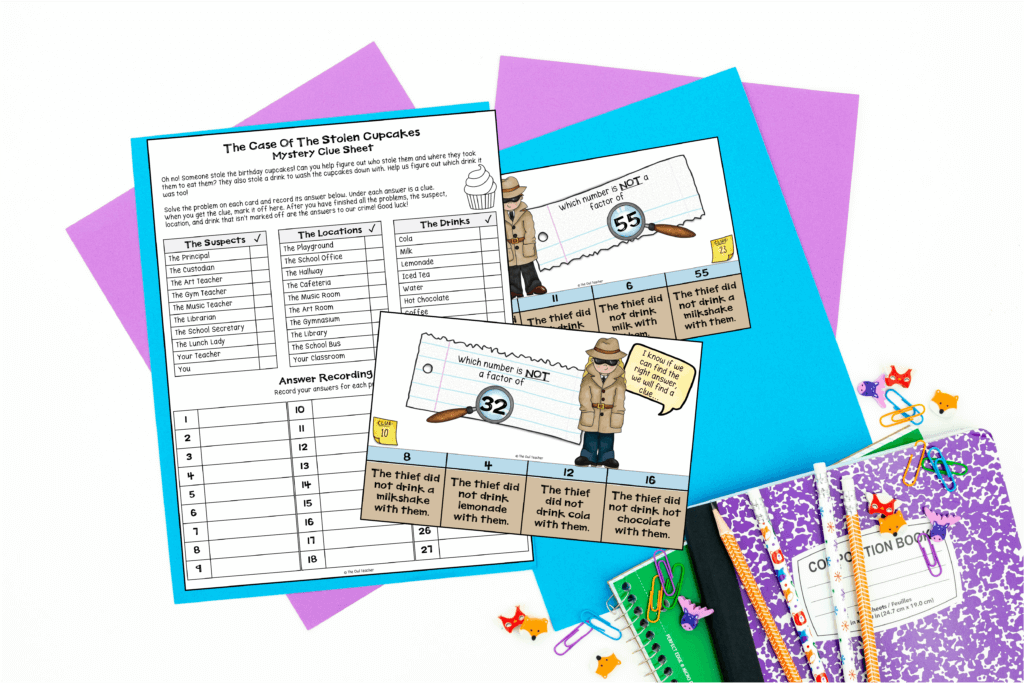
Tape 8 to 10 task cards around the room. Have students grab a clipboard and move around the room answering each one. Same content as a worksheet but completely different energy, and they’re standing up. This is perfect with my math mystery cards. Make the cards once, laminate them, and use them for years.
8. The Odd One Out
This hands-on activity is a card sort with a twist. You provide five cards; one doesn’t belong, and students have to defend which one it is. The best version has two answers you can argue for, so that groups end up disagreeing. That disagreement is what you want. It teaches them how to argue respectfully and how to think both sides. Also, let it run longer than feels comfortable.
9. Four-Flap Flip Book
I’m sure you’ve heard of this activity (and I never promised these were fresh ideas. Ha!), but it is still a great hands-on back-to-school activity that you can use. Provide a piece of paper, fold it, cut four flaps, and you’re done. Have students write one concept per flap with a picture on the outside and an explanation underneath. For example, four types of angles or four causes of an event. Now, here’s where the thinking comes in: keep the flaps small so students have to write less and think more. If they’re writing paragraphs under the flaps, the activity turned into a worksheet with folds.
10. The Not Sure Column
You know those things called Venn Diagrams, but instead of circles, we just do columns? Build a sorting mat just like it, with one column labeled ‘Yes,’ another ‘No,’ and the middle ‘Not sure.’ The middle column changes everything. Students stop guessing to look right and start telling you what they don’t know. Then you pull the not sure pile and teach into it.
Back-to-School Activities Group 3: Worth the Setup
These take real prep the first time. They also give you your best days of the month.
11. Model Build With a Limit
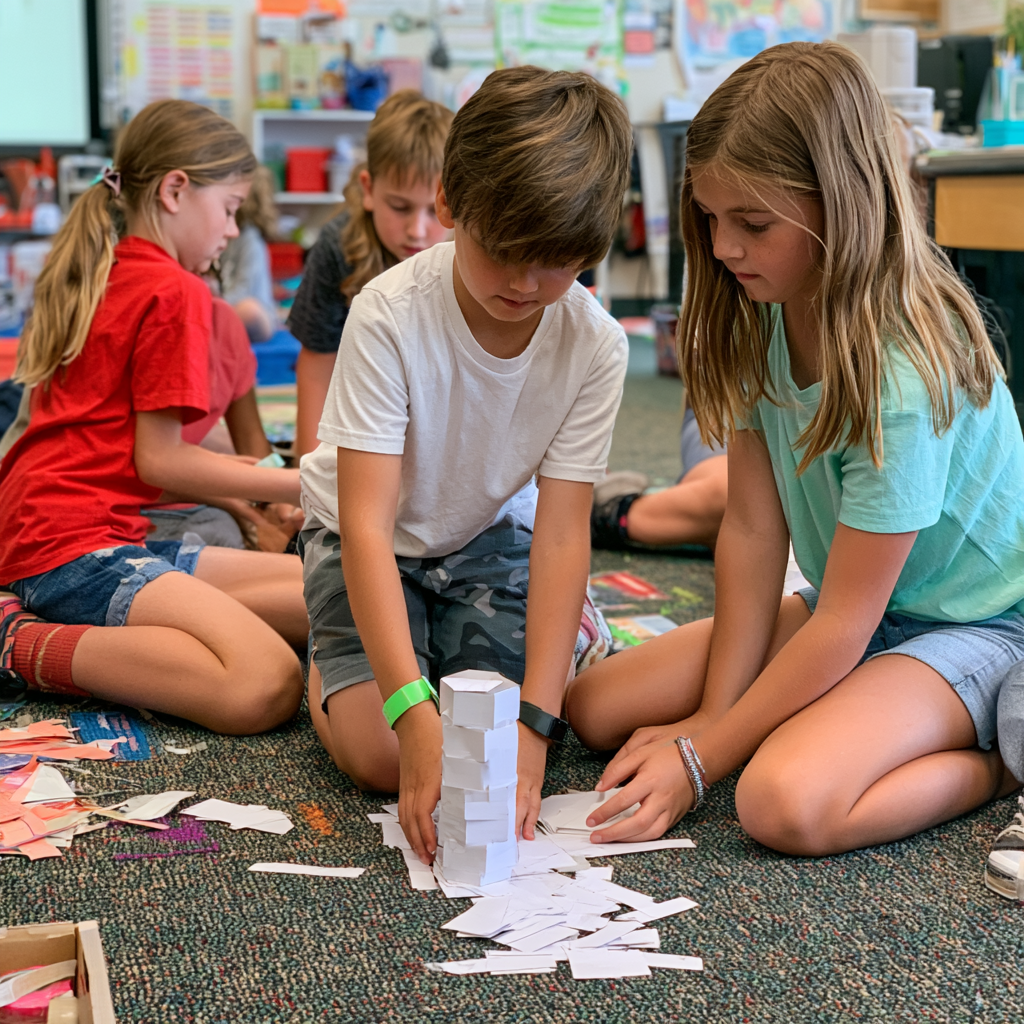
Groups build a model using only what you hand them. Ten index cards, one foot of tape, and nothing else.
The limit is what makes it work. Unlimited materials mean unlimited time and a mess. A hard rule forces them to plan, and planning is the thinking you wanted.
Build a structure that holds a textbook. Build a model of a cell. Build something that shows what 3/4 means without using numbers.
12. Gallery Walk With Feedback Rules
Students post work; everyone walks around and leaves sticky-note feedback.
Here’s the part most gallery walks skip. Teach the feedback rules first. One thing that worked, one question. Nobody writes “good job” and nobody writes “I like it.” Model a bad comment and a good comment before they move.
Without the rules, you get 26 sticky notes that say nice. With them, you get real peer feedback and a class that’s learning how to talk about work.
13. Stations With Roles
Set up four stations, a timer, and a role card at each table. Reader, recorder, timekeeper, checker.
The roles are what keep it from falling apart. Rotate them so the same student isn’t always recording, and print the job description right on the card so you’re not explaining it 12 times.
14. The Class-Built Anchor Chart
Start with blank chart paper. Every single student adds one thing before it goes on the wall.
That’s the rule that makes it different. Not the three students who always volunteer. Everyone. Hand out markers, set a timer, and let them add one word, one example, or one drawing.
They look at that chart differently all year because their handwriting is on it.
15. The One-Rule Challenge
Give a manipulative and one rule that makes it harder.
Show 3/4 four different ways. Make 24 using exactly three numbers. Build a rectangle with a perimeter of 20, then another. Show this word problem without writing a single number.
That one rule is doing the work here. Without it, students do the first thing that comes to mind and stop.
If You Want the Hands-on, Back-to-School Activities Prep Already Done
Everything above you can pull off with what’s in your room right now, which was the point.
I also built a full deck of hands-on strategies for exactly this reason. Each card includes the setup, timing, launch script, and variations, so you’re not reinventing the wheel at 9 pm on a Sunday. It lives inside The Owl’s Strategy Nest along with the rest of the strategy library.
If you’re not ready for that, head to my blog post about fresh, new teaching strategies.
Start Here
Don’t try five of these next week. Pick one from Group 1 and run it 3 times until your class no longer needs directions. Then add one from Group 2.
Hands-on isn’t about noise, mess, or glitter. It’s about their hands being busy while their brain works. Once you’ve seen a room full of students doing both at once, the crafts stop being tempting.
Which one are you trying first?