





If you’ve been teaching a while, you have likely sat through PD after PD waiting to learn something new and fresh you can return to your classroom with to try and use. The constant exposure to teaching strategies with a new costume and name doesn’t make them any less overused or boring (and I dare say lame for some), like “turn and talk.” (Despite that, they work. I’m not denying that.) That’s all the time you just don’t get back.
I would often get frustrated in the classroom because I got bored easily and desperately wanted to introduce my students to something different from what all the other teachers before me had. When I’d search for new ideas for classroom behavior or activities, I often found the same 20 activities I had already tried before.
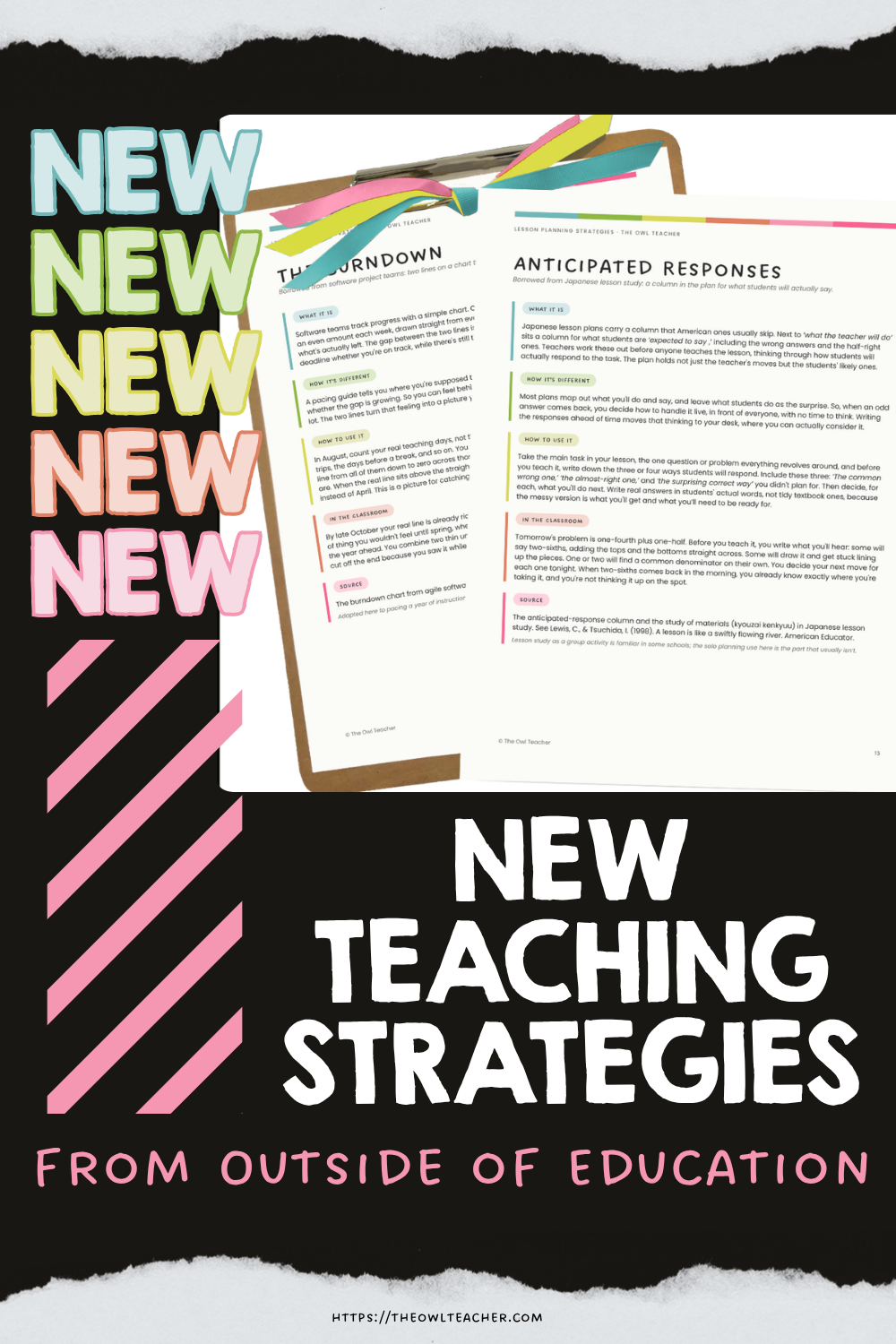
Over the last few years, I have spent time looking outside education for strategies to apply in the upper elementary classroom. Every strategy I looked at closely before I even began to think about telling you.
When something looked like it had potential, I would find the original source– a real source, no made-up citations- and read everything I could related to it to make sure I understood it well enough to make any further decisions. Next, I would make sure it held up, meaning that it has research to back it up or that it’s a practice a field has been running long enough to know how it works. (If I borrowed from a working practice rather than a research finding, I do tell you that.)
After collecting notebooks of ideas, I had to decide if it was really something that could be used in a real classroom. The first thing I did was compare it against anything that may already exist under a different name through a thorough, deep AI search. Then I made sure the teaching strategy was specific enough that any upper-elementary teacher could run it in their classroom without needing to adapt it.
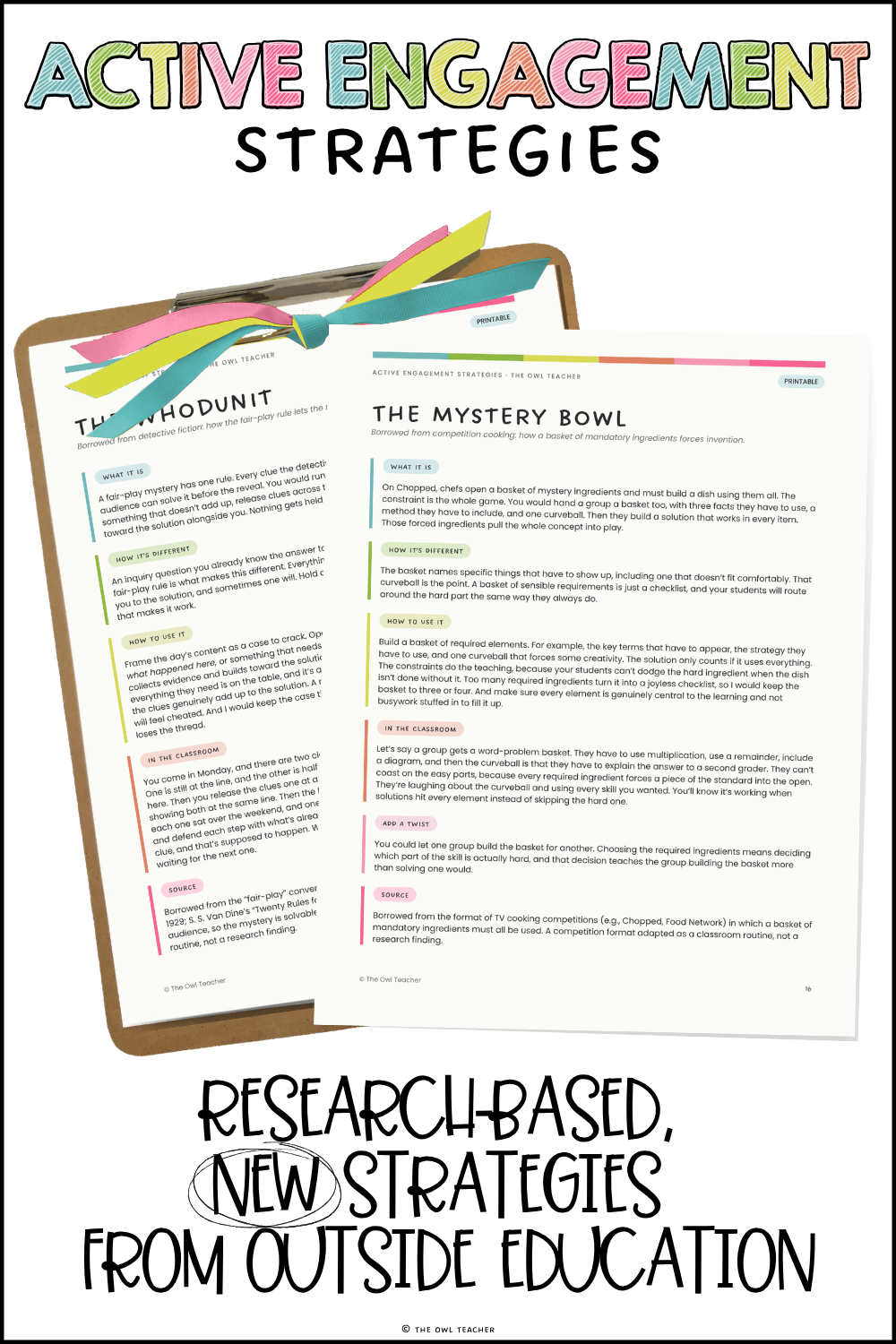
After coming up with a variety of strategies in a variety of topic areas, such as active engagement, differentiation, feedback, opening and closings, struggling readers, and more (Look through the carousel below), I created a monthly membership where you can explore these fresh, new teaching strategies.
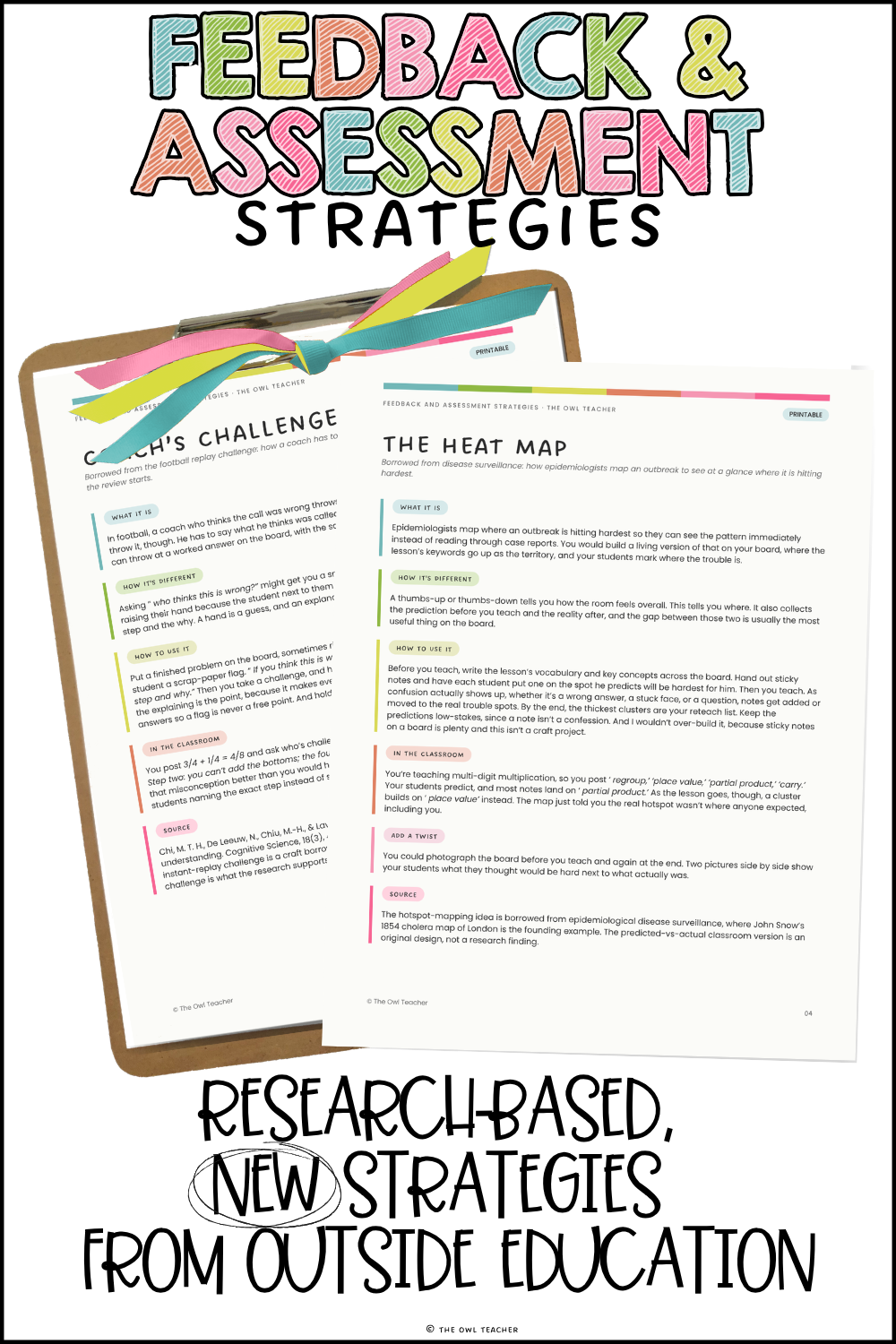
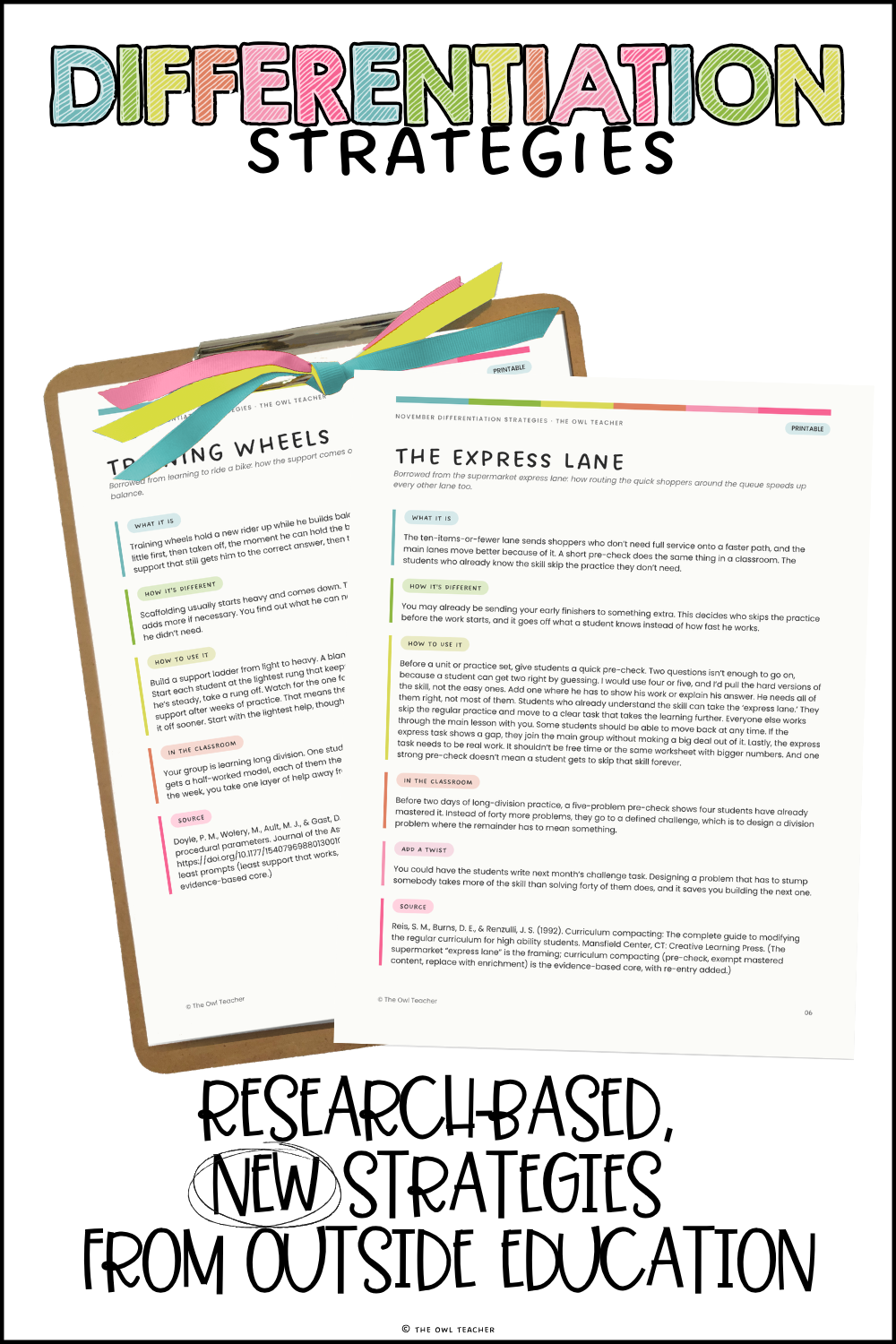
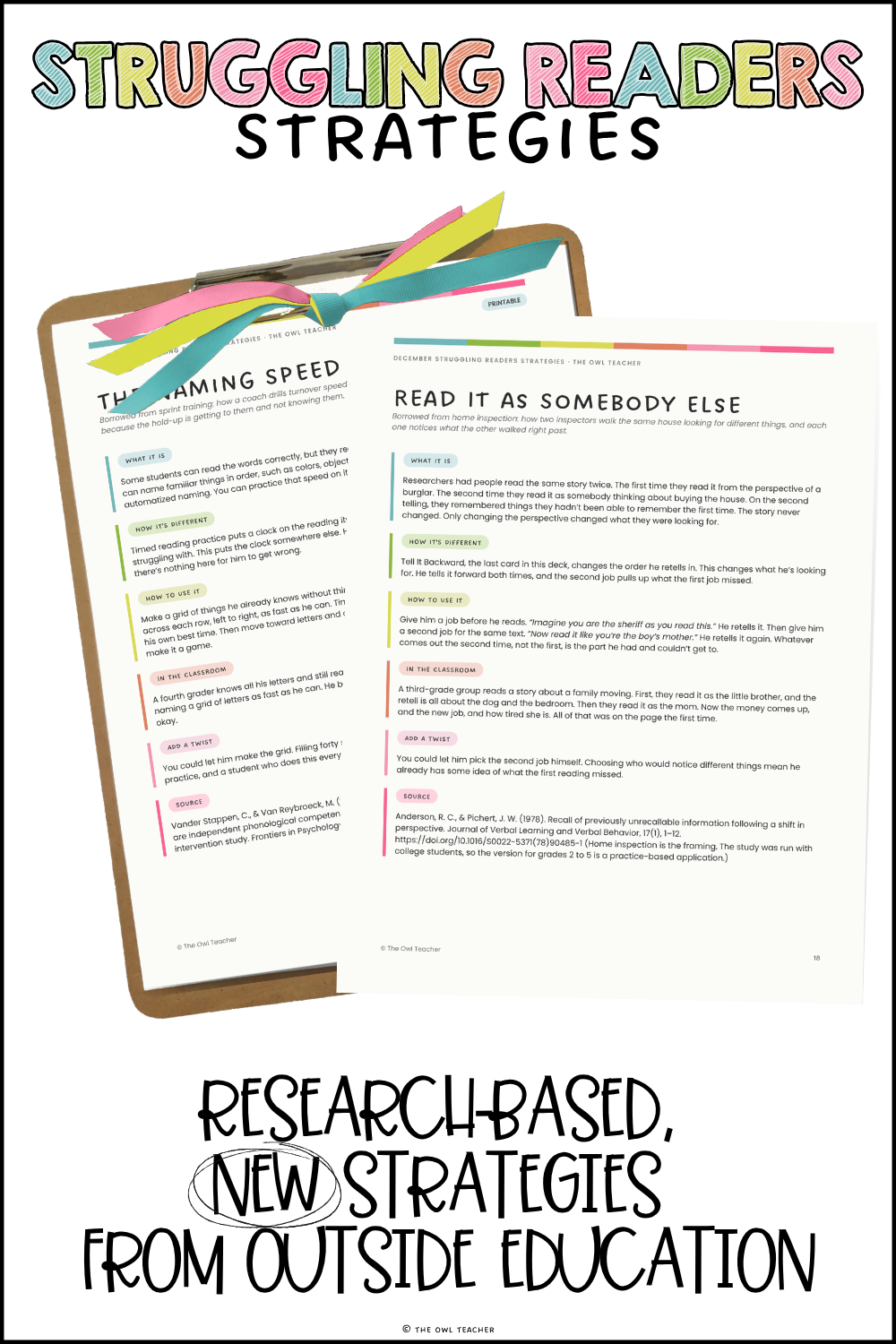
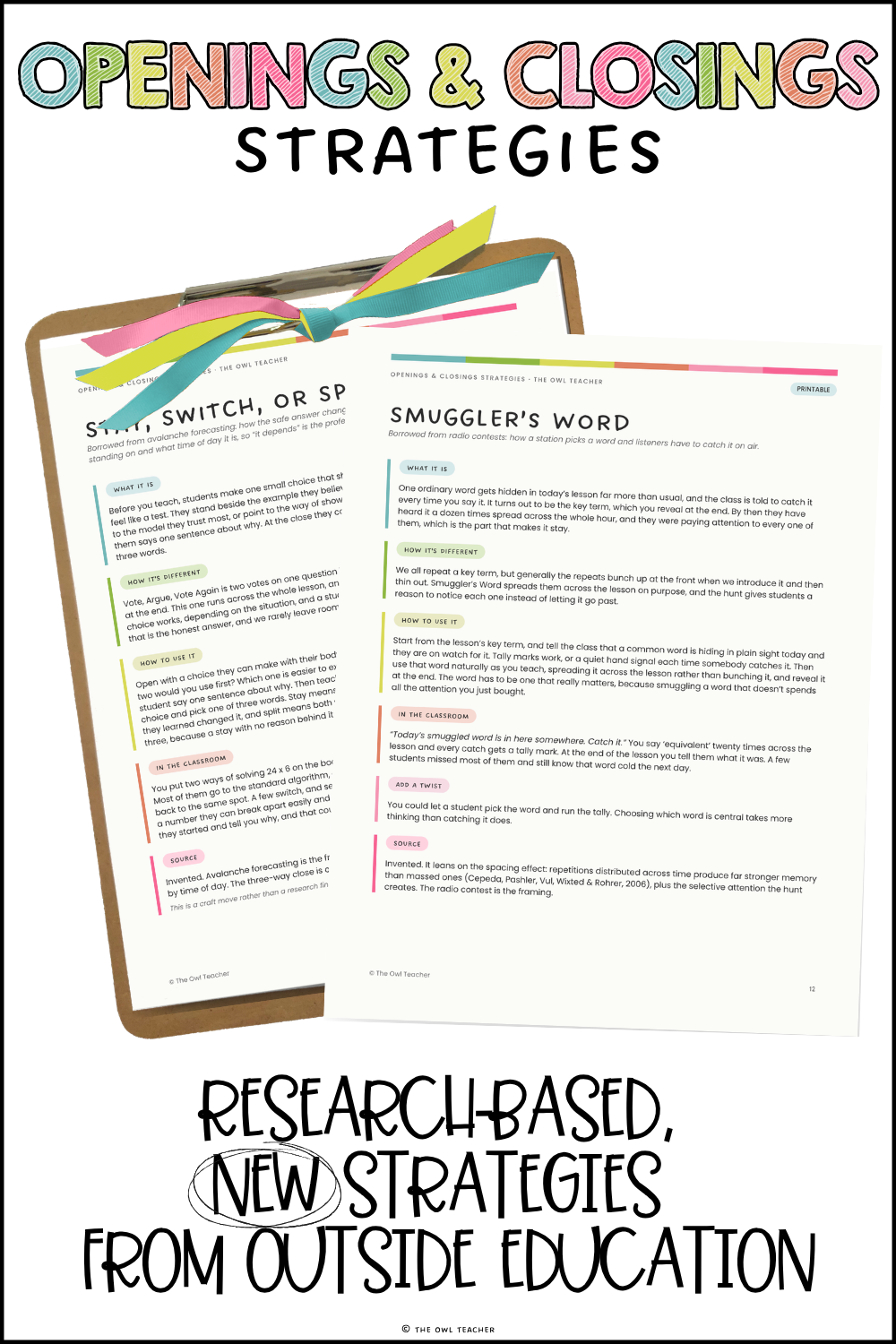
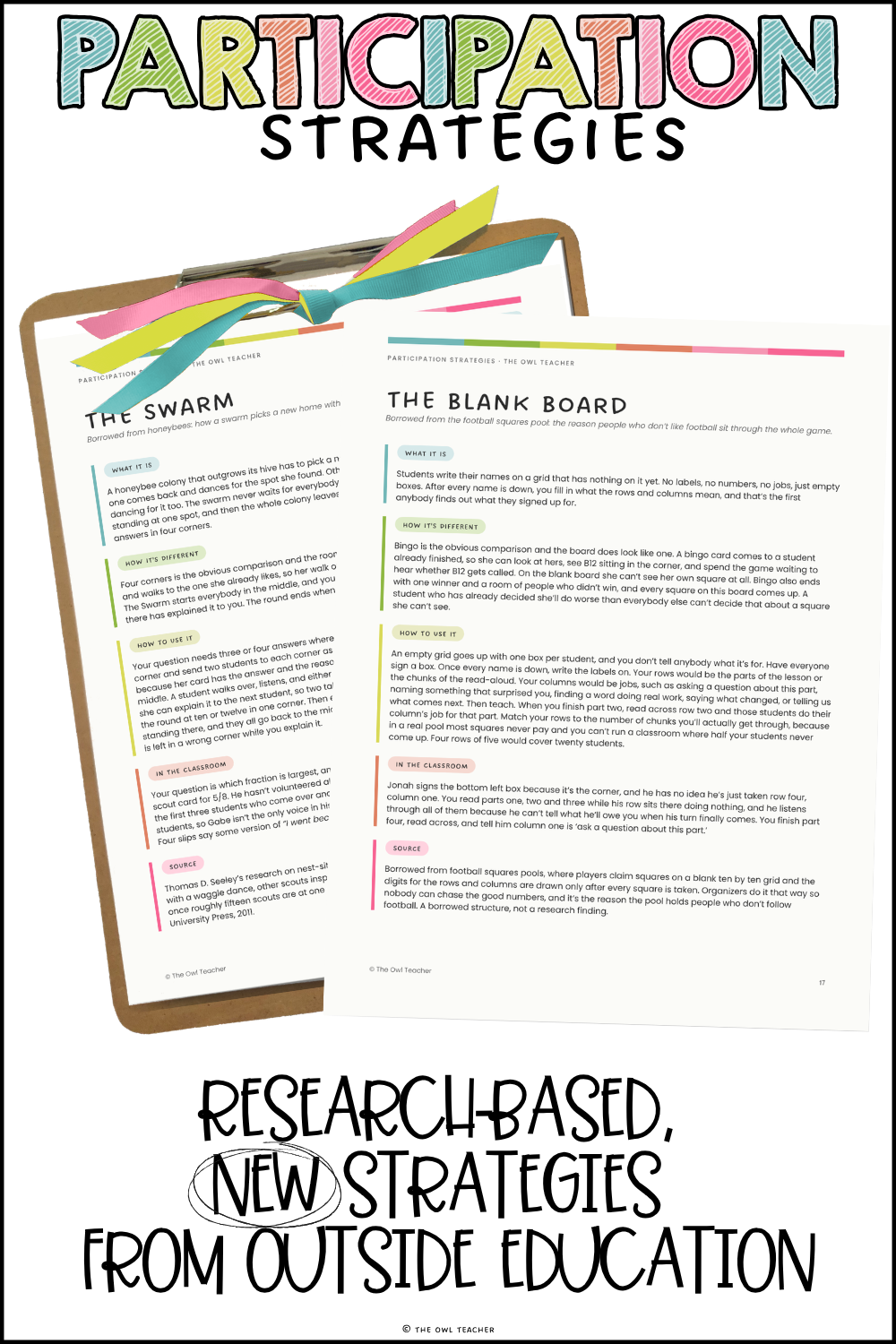
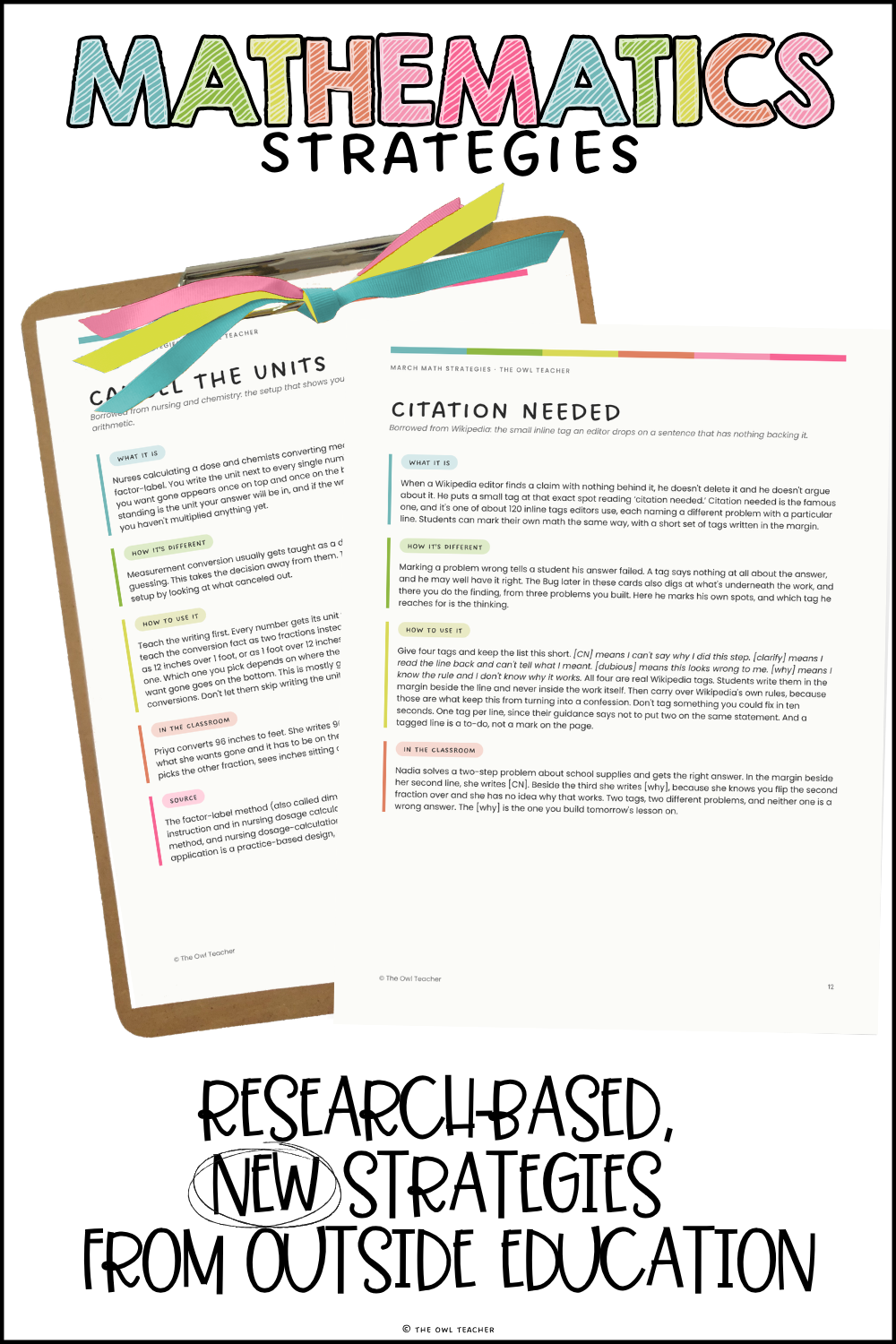
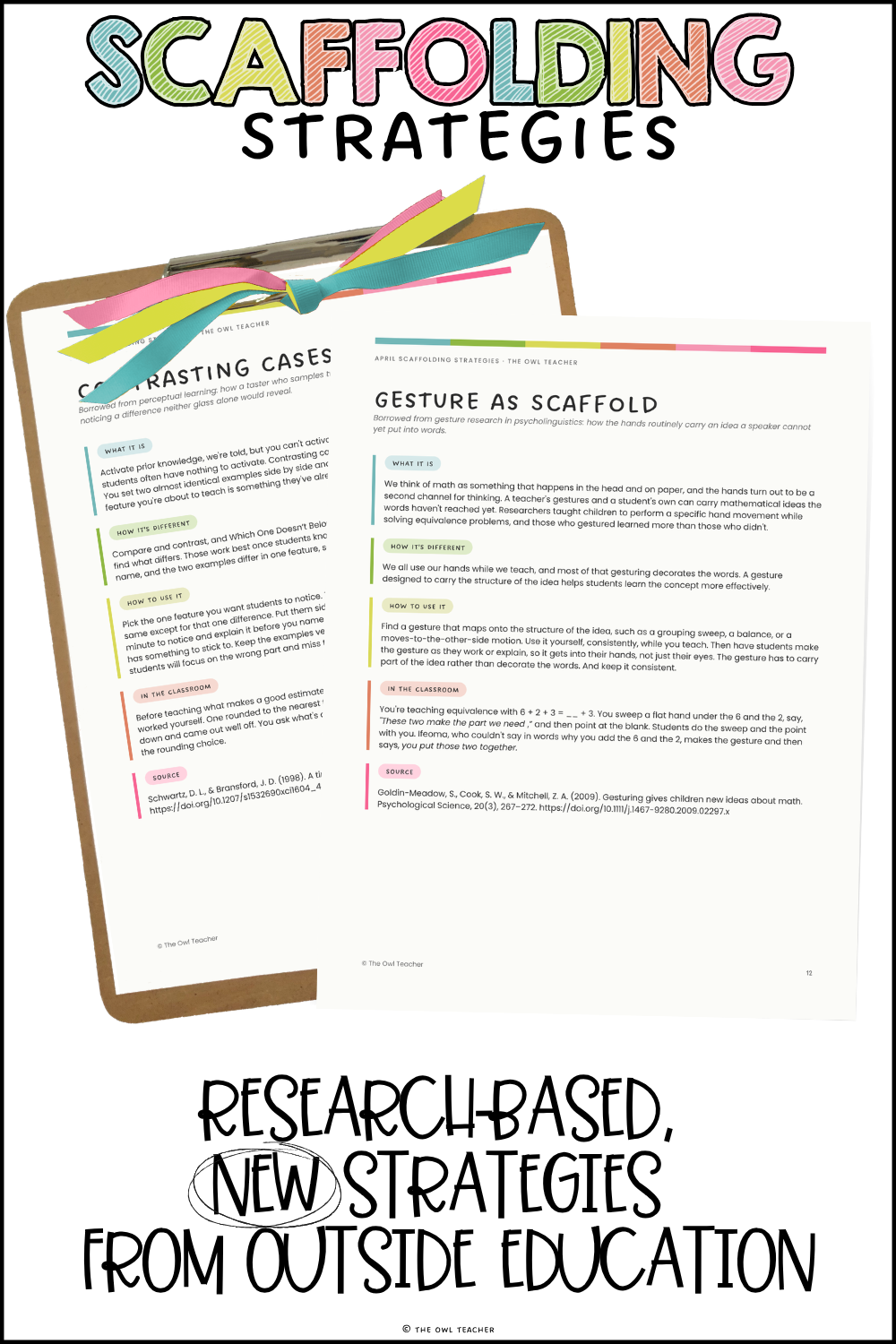
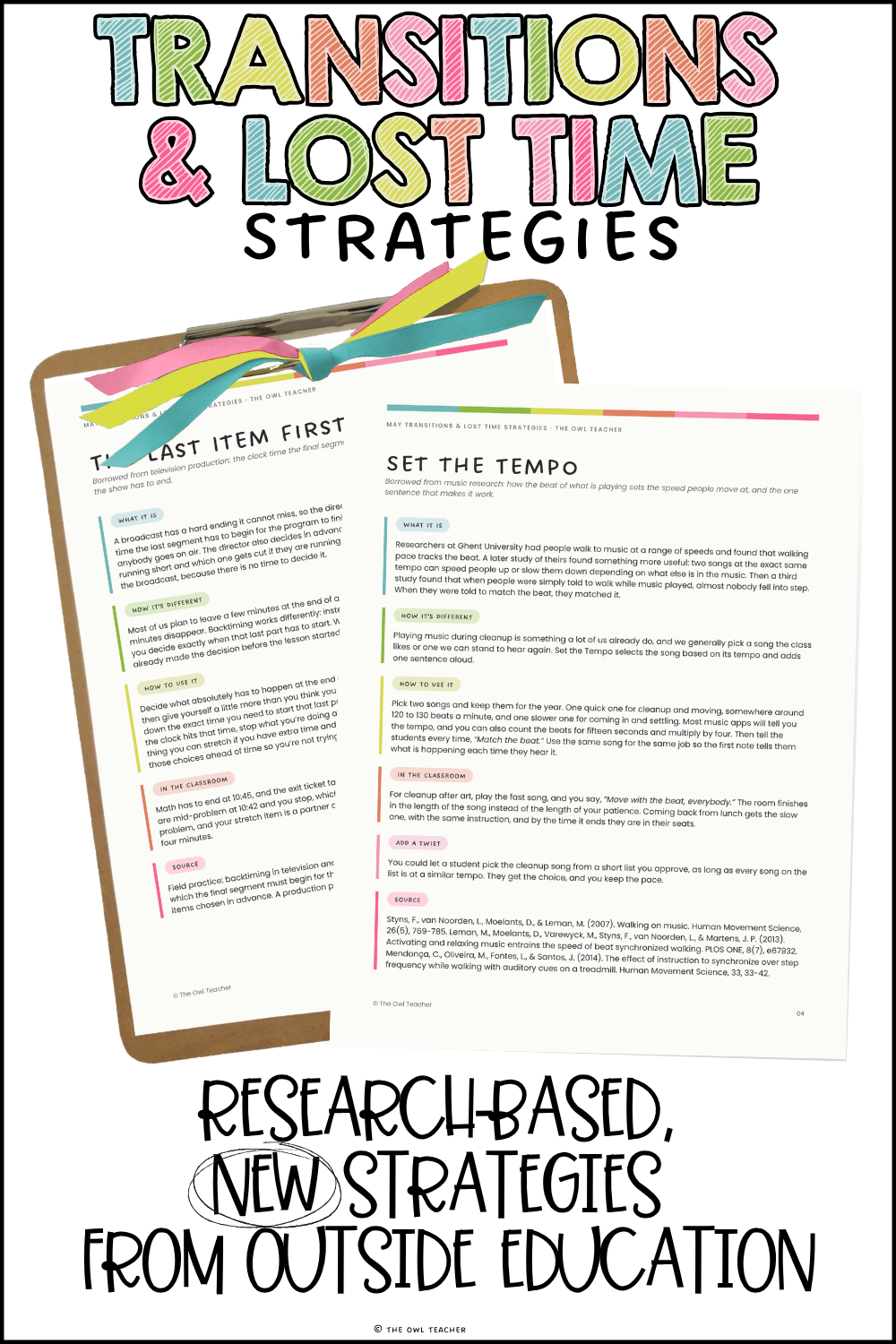
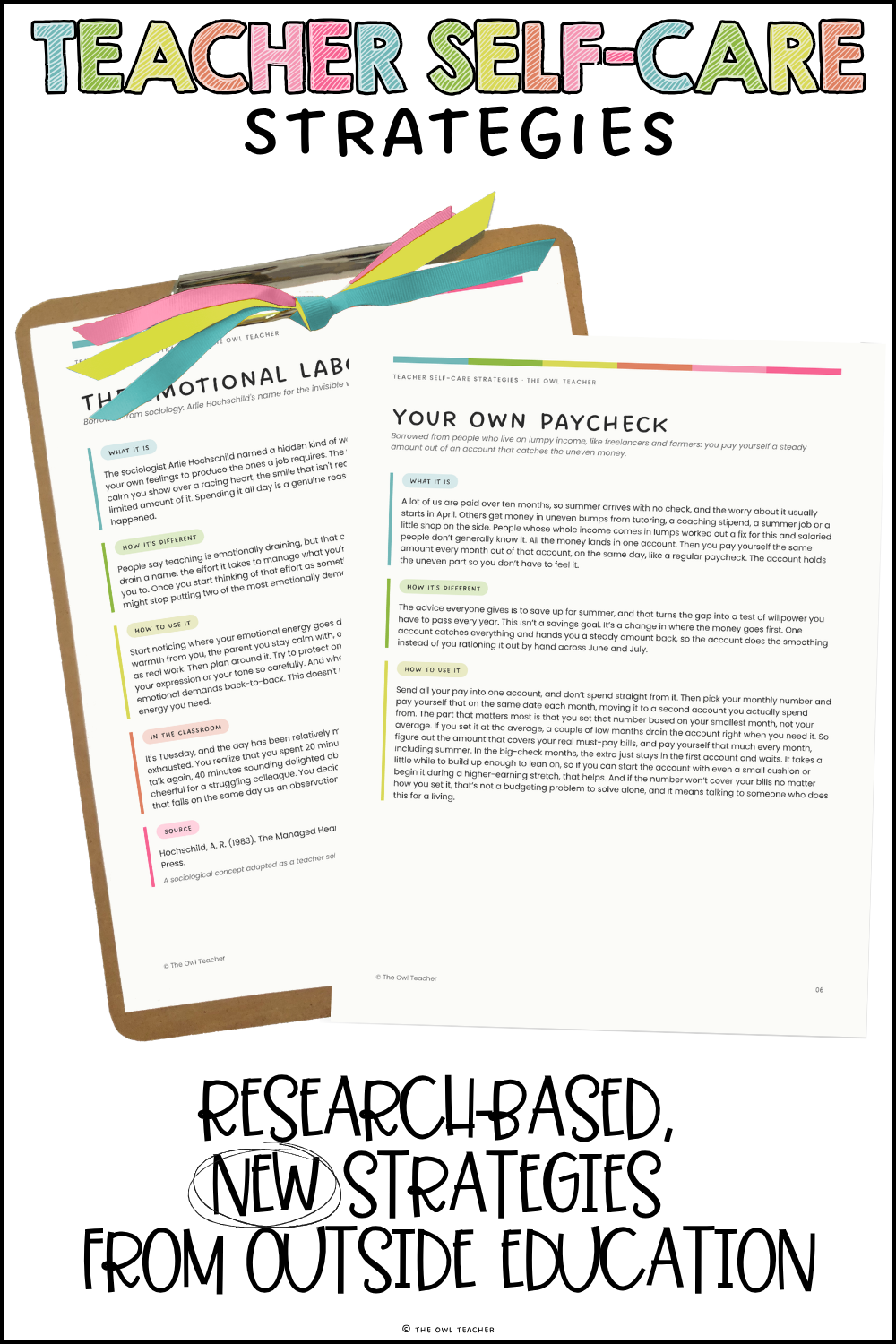
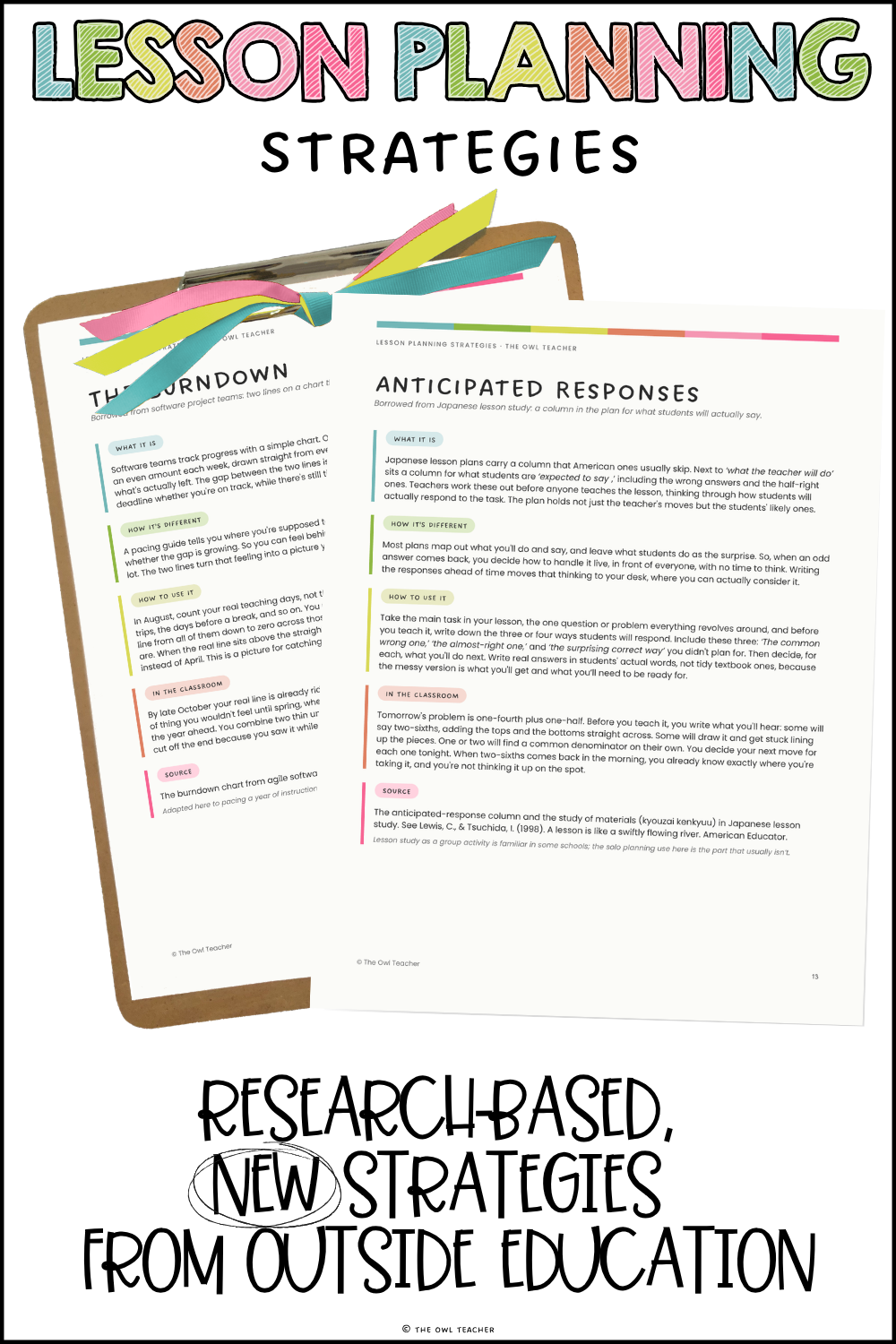
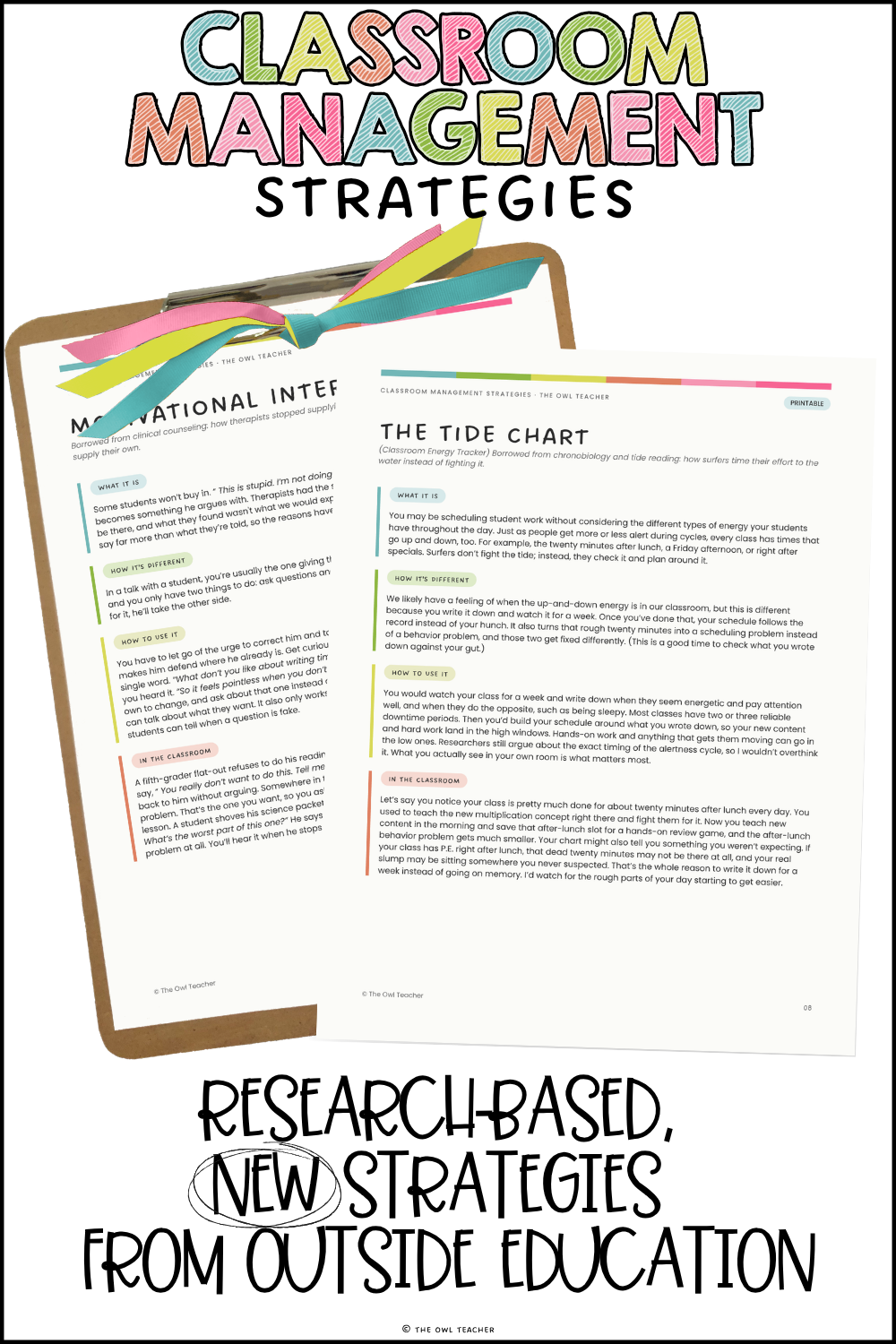
What Do You Get in the Teaching Strategies Membership?
Each month is centered on a theme, such as scaffolding. Within that theme, I provide you with a set of 15 strategies you can take back to your classroom right away. Each strategy comes from outside education and has been proven to work for you.
For instance, there’s a useful bookkeeping strategy on one of the cards. When the numbers don’t balance, one quick check is to divide the difference by nine. If it divides evenly, two digits may have been switched. You can use that same check while grading. It helps you quickly tell the difference between a copying mistake and a math mistake, so you know what kind of help the student actually needs.
There’s another teaching strategy from Wikipedia. When an editor isn’t sure about a line, they can tag it for another look instead of deleting it right away. Students can do something very similar with their math. They mark the part they’re unsure about and name what feels off. The tag they choose can tell you more about their thinking than the wrong answer alone.
Is the Teaching Strategy Truly New?
Every strategy card has a section called “How it’s Different.” I name the teaching strategy it might resemble, then show you where they differ. For example, one card may read “test corrections.”
“Test corrections ask students to fix the questions they missed. This strategy asks them to look for a pattern across those mistakes. Fixing question four helps with question four, but noticing that the last three were all rushed tells the student something bigger about how they work.“
But will every single card be 100% fresh and new? I can never guarantee that, given the many different experiences we all have, but I do strive to find ways to keep things fresh, including combining well-known strategies to create what I call “combo decks.”
The Strategy Cards Aren’t the Only Thing in the Box
Along with the teaching strategy cards, every month includes companion resources you can use the same week.
Each month, you’ll receive Wingbeats, Flight Patterns, A Combo Deck, Hands-On Sheets, and any extra supplementary materials needed to run the teaching strategies provided for the month.
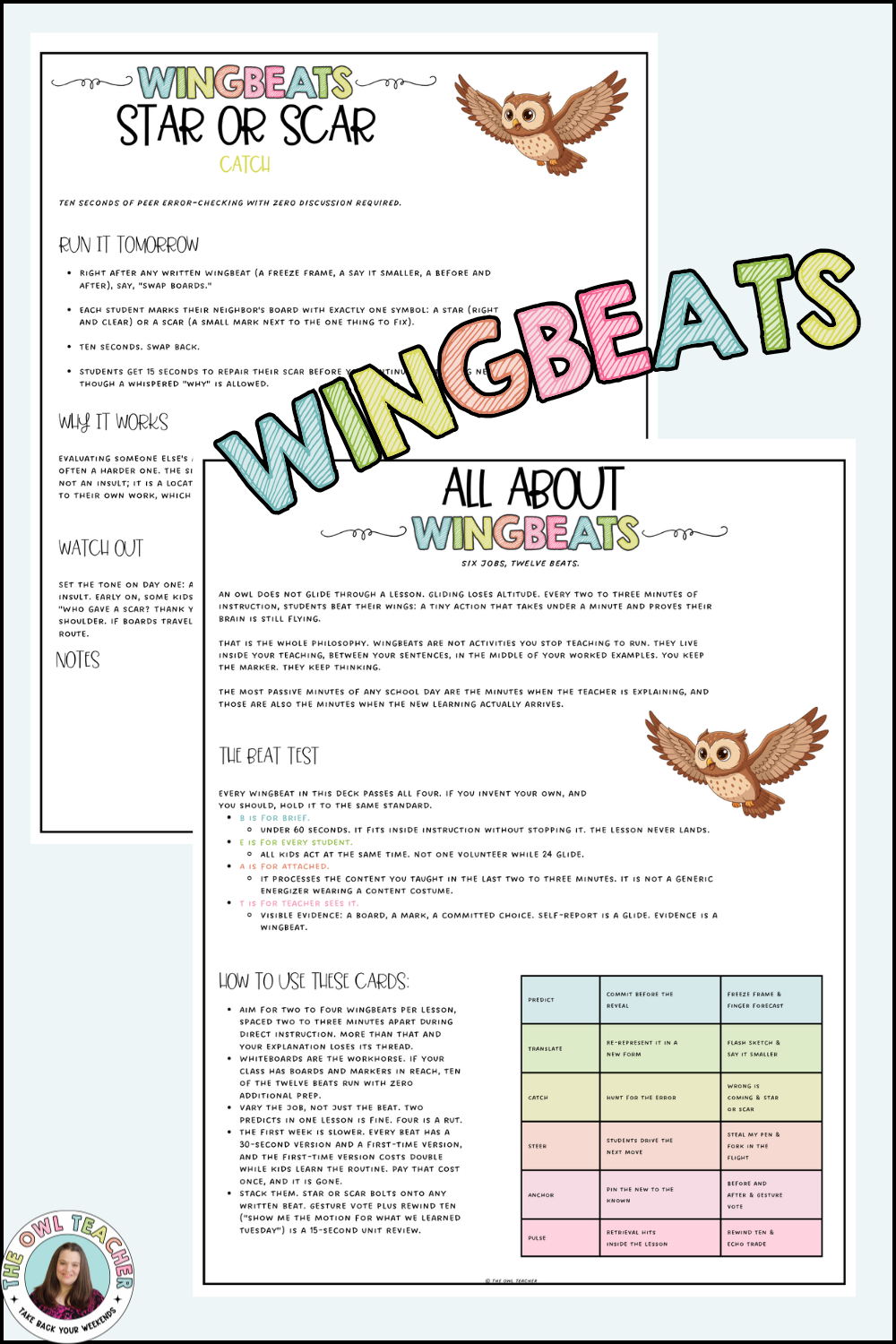
Wingbeats are tiny actions that take under a minute to make sure students’ brains are still active during passive minutes of your lesson. These are similar to short participation activities combined with checks for understanding. Each one belongs in one of six categories:
- predict (to commit before the reveal)
- translate (re-represent it in a new form)
- catch (hunt for the error)
- steer (students drive the next move)
- anchor (pin the new to the known)
- pulse (retrieval hits inside the lesson)
In the carousel example below, Star or Scar is from the group catch, meaning the students are hunting for an error in the activity. During an activity with an answer, have students swap boards with a partner. They each mark their neighbor’s board with one symbol: a star for right and clear, or a scar (a small mark next to the one thing to fix). Students get 15 seconds to repair their scar before you continue.
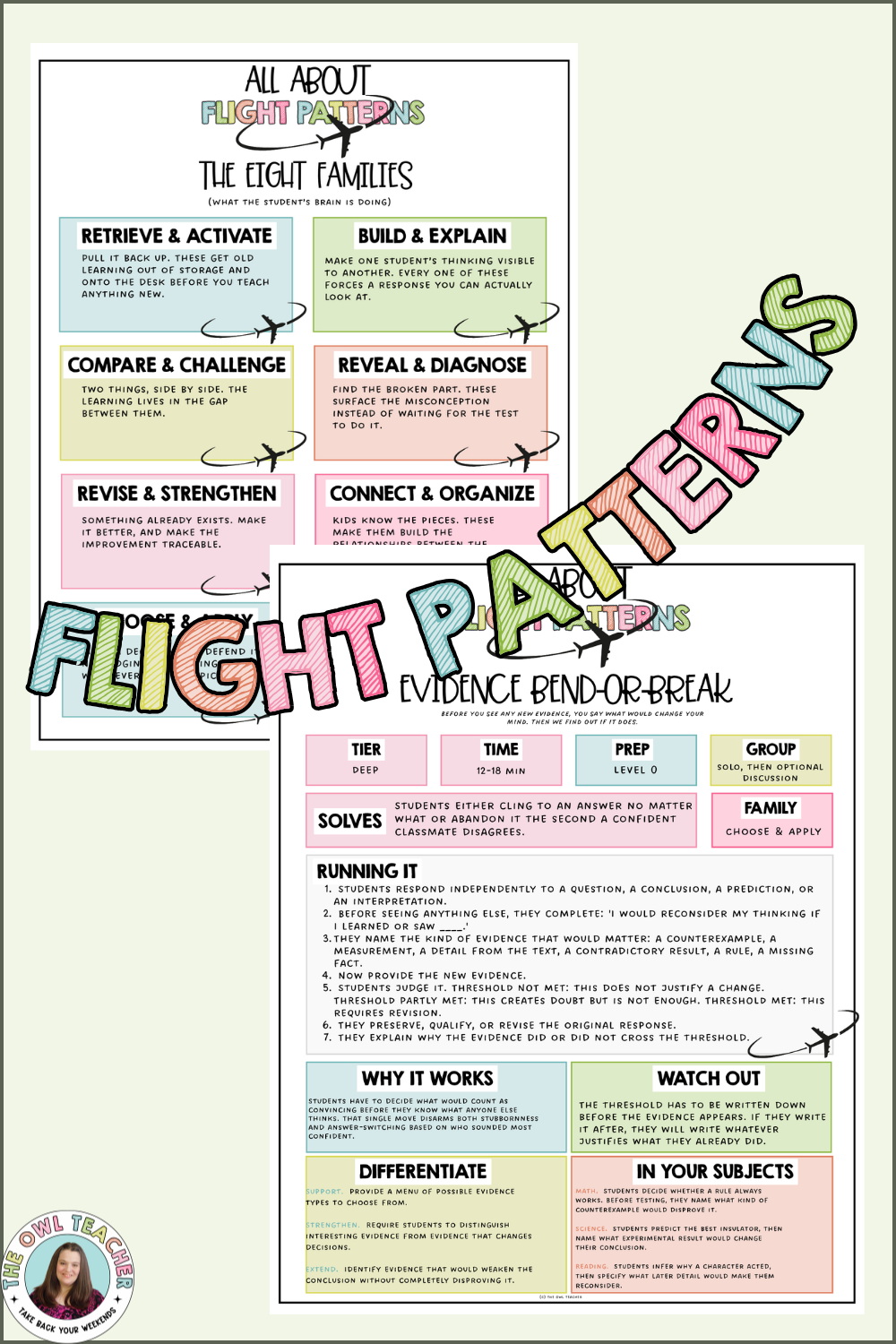
Flight Patterns are engaging activities that get students thinking. At least one of the eight thinking families is used in each flight pattern activity. These are based on what students are doing with the content and are:
- Retrieve & Activate
- Build & Explain
- Compare & Challenge
- Reveal & Diagnose
- Revise & Strengthen
- Connect & Organize
- Choose & Apply
- Reflect & Transfer
Each card tells you how long it takes, how much prep it needs, and the best group size for it. It also explains the problem it solves, outlines the steps, shows why it works, highlights what to watch for, and includes three ways to adjust it for different students. Each teaching strategy also includes an example in math, science, and reading.
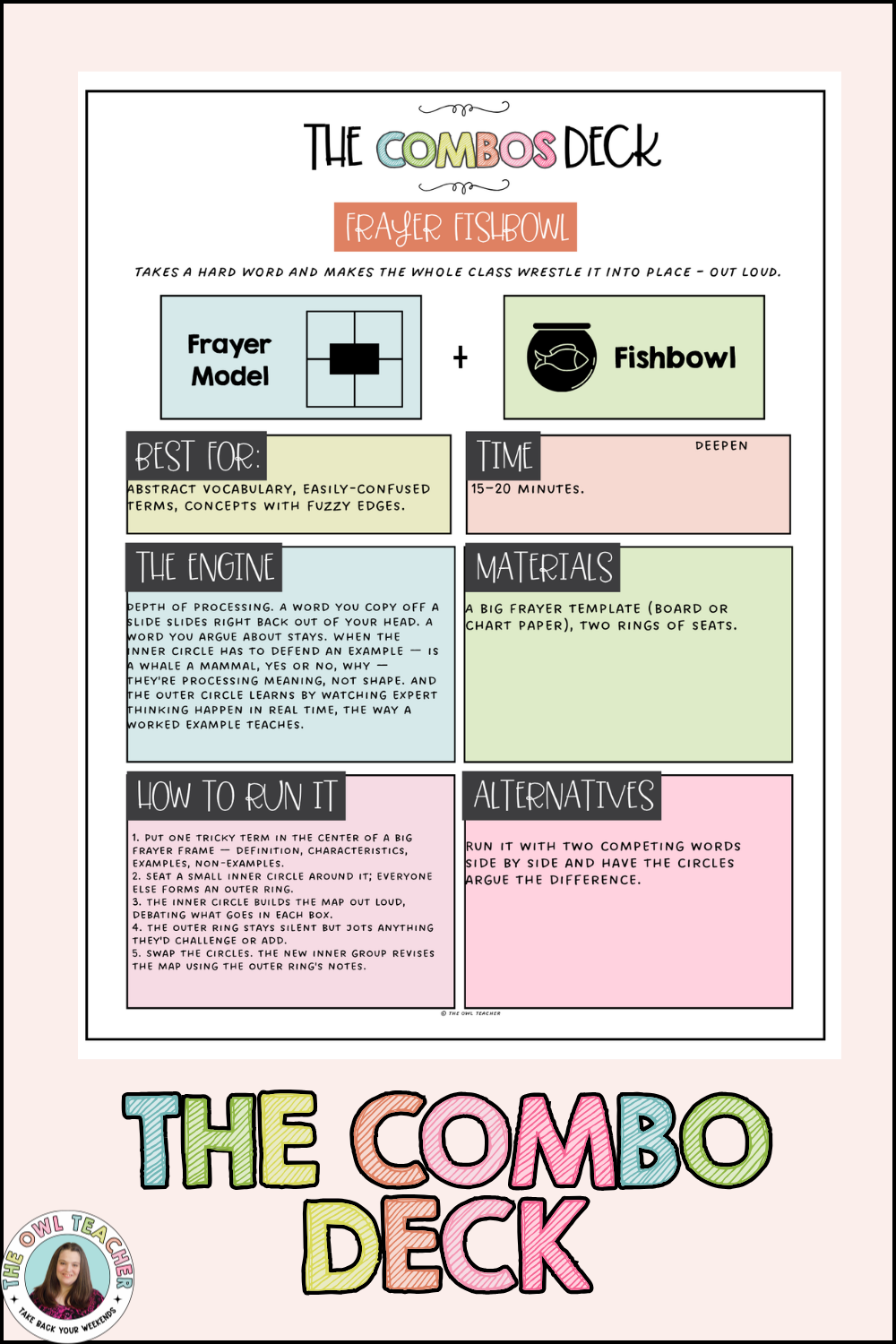
Combo deck cards pair two well-known strategies, such as the Frayer Model and Fishbowl, to create a twist. The two of them combined create a new teaching strategy that works better together than either does alone. You get the reason they work well together, the steps in order, and an easier version for the week when you need something with almost no prep.
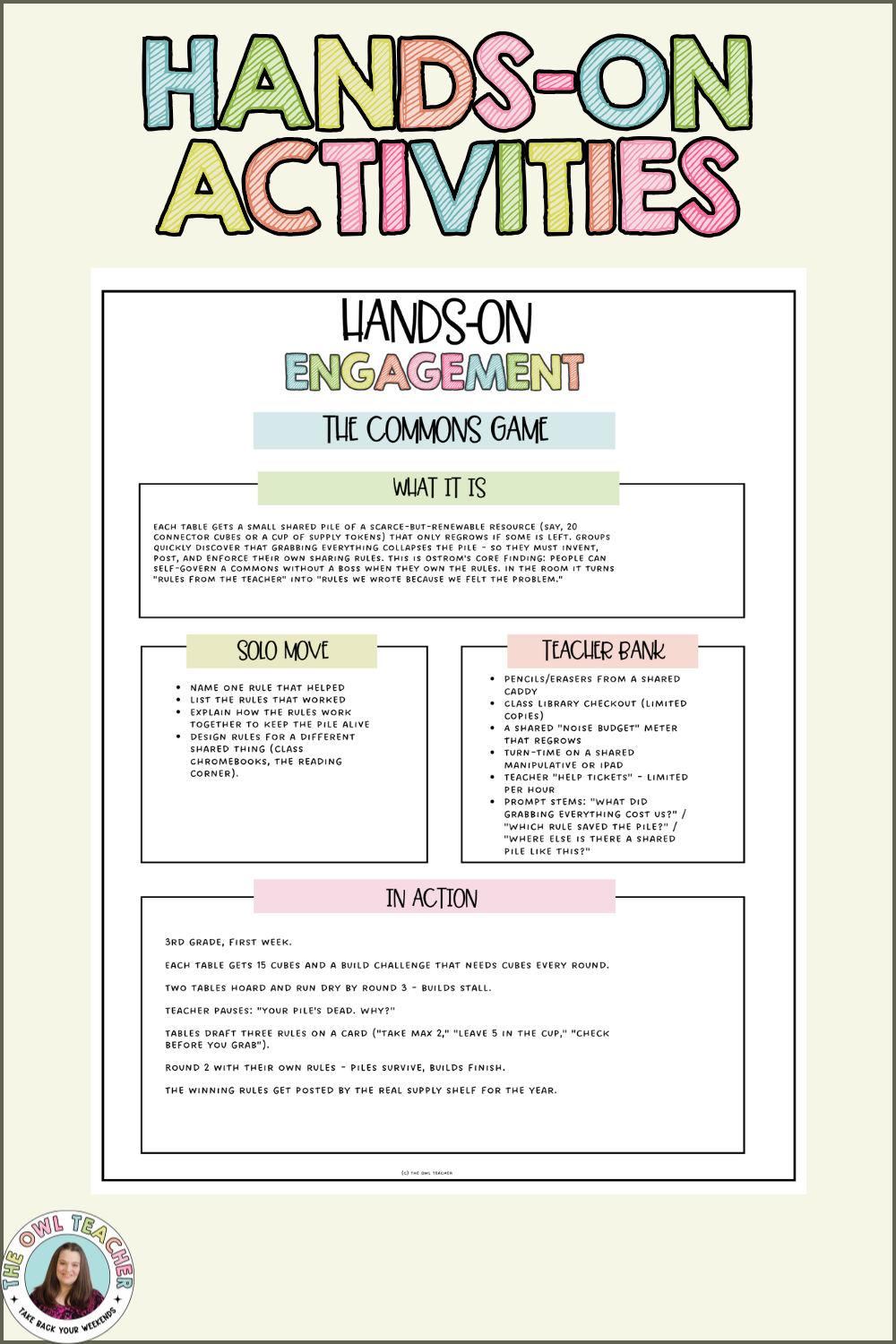
Hands-on Activities are provided to get students out of their seats and build something they can see and move. Each sheet explains the activity, provides a set of steps that lead from one simple idea to using it in a new way, and includes teacher prompts and easy variations. You also get a full classroom example from start to finish.
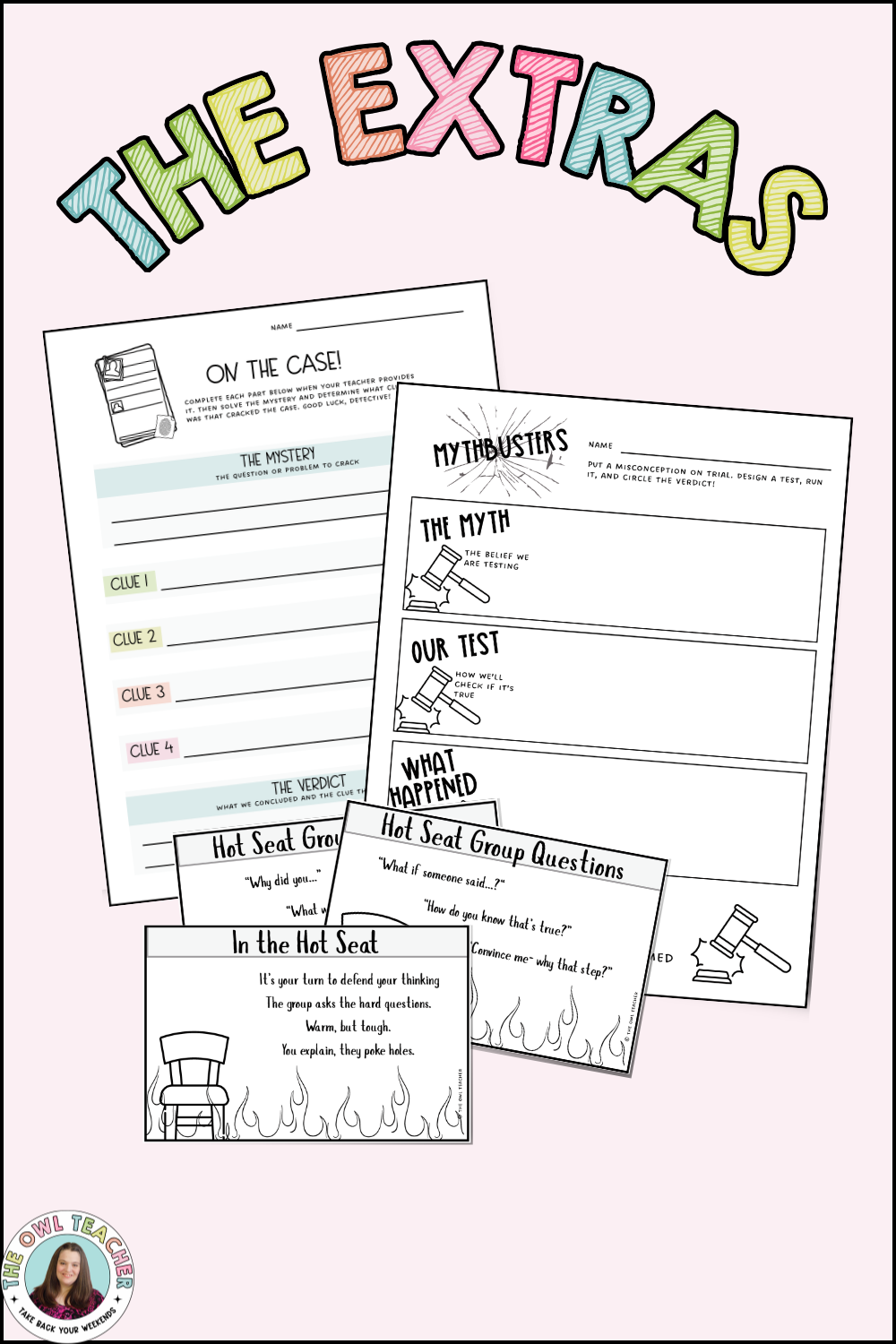
The Extras are the extra printables that go with any teaching strategies for the month or even any bonuses I may create. It also includes the group’s FB lives, where I walk through the teaching strategies in more detail, answer questions, and more.
Everything is Sourced
Every card tells you where it came from, with a real citation. I verify all of them before a card gets written, and if a card is a working practice from a field rather than a research finding, the card says that plainly instead of dressing it up as a study. Honesty is always the best policy. You can read the source, hand a card to your instructional coach, or cite it in an evaluation write-up. It’ll hold up.
Are You Ready for the Fresh, New Teaching Strategies?
You’d get your first set of cards the day you join, and then a new topic every month after that. Nothing to print unless you want to, nothing to plan around, and no course to work through.
I want this membership to finally hand you something you haven’t seen. I want you to finally not be bored in the classroom and feel refreshed. Join the membership to do just that!