






Instructional strategies are truly the backbone of classrooms. If you don’t have an array of solid strategies at your disposal, your lesson plans will be like icing with no cake. They may be super sweet and yummy, but there’s no real dessert-eating going on!
Okay, my metaphors aren’t great and I may have spent a bit too much time baking for my twins’ birthday party, but you get the point. Simply put, you need strong instructional strategies to truly make your lessons engaging and impactful. You want your upper elementary students to have their cake and eat it too, right?
However, with the plethora of research going into education (yay!), it can be hard to keep up with the latest and greatest trends in the instructional strategies arena, especially when you’re bogged down by lessons to plan and papers to grade. Good news, though: I’m here to share another round-up of modern, exciting ideas that you can implement in your classroom right away!
That’s right: another instructional strategies round-up! This post will be the second in a series of many, and in case you missed it, you can find the first post here. A bunch of my teacher-author pals chimed in with their bright ideas, and I think there’s even a freebie or two to pick up along the way!
But, hey: I’m not here to write you a novel about the intricacies of instructional strategies. Your free time is precious and limited, so let’s jump straight in to this week’s round-up featuring five engaging, exciting instructional strategies!
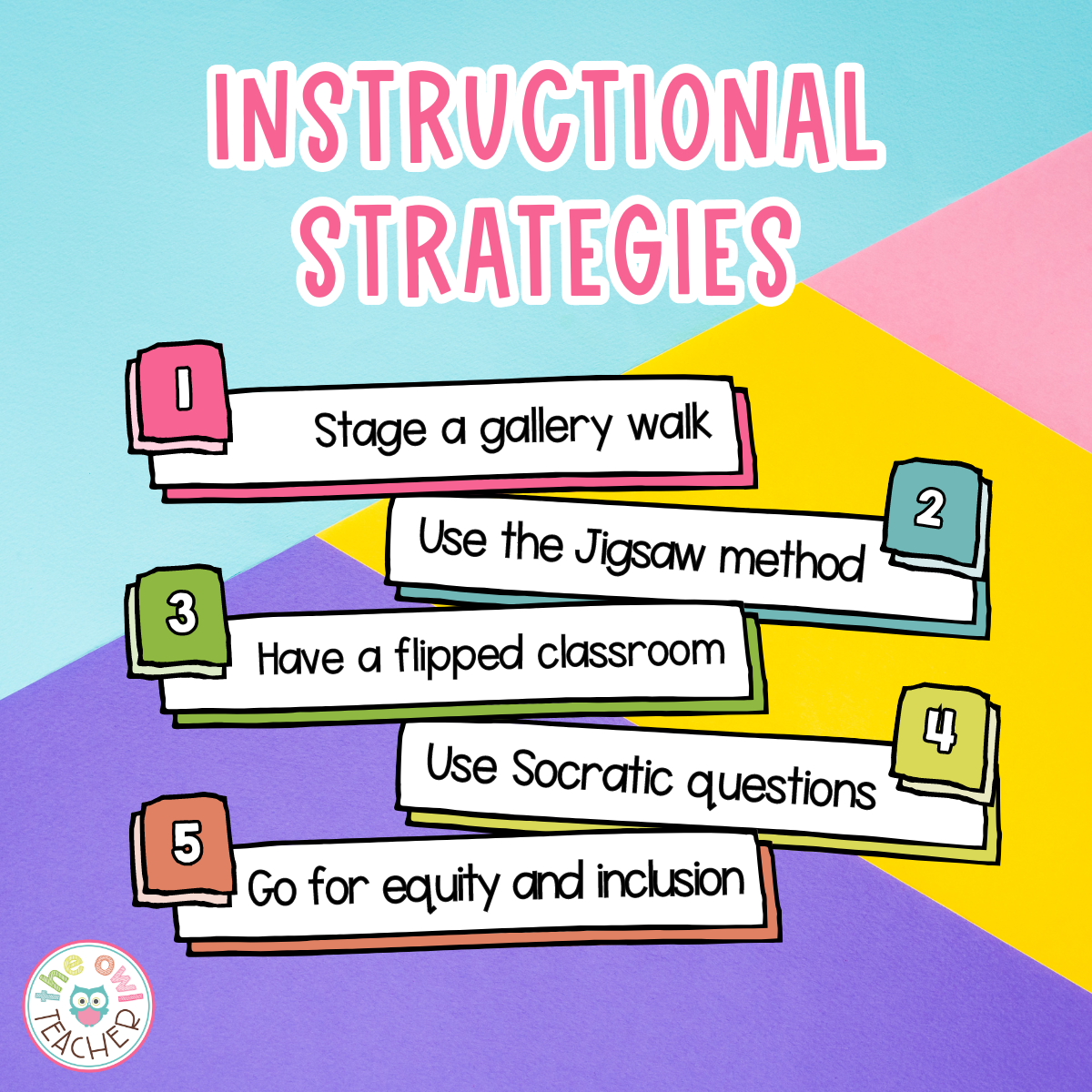
5 Instructional Strategies: Round-Up #2
1. Gallery Walk
If you’re anything like me, you LOVE museums. Seriously. When planning family vacations, it’s so difficult to limit myself to only choosing one museum to visit! Science, history, or art, I don’t mind; I just love soaking up all the new tidbits of knowledge.
Oh, but I’m getting off-track. Basically, since museums provide such a wealth of knowledge, they’re a wonderful way for your students to squeeze in some learning while staying engaged. However, I am well aware that museum field trips can range far out of classroom budgets… Instead, you can bring the museum to your kiddos with a “gallery walk!”
In a gallery walk, your classroom is transformed into a personalized museum where students can move around the classroom to explore a variety of visual materials related to your current (or past) lessons that have been put up on display. Diagrams, photographs, charts, student work (think peer teaching!), and even posters such as these Scientific Method & Process Skills Posters are all excellent choices and can be hung up on the wall or set out on display on desks!
Encourage collaboration via small groups or even partners, such as in think-pair-share. Once students are grouped up, they can begin the five-step gallery walk process:
- Observe and analyze the content at each “station” or display
- Discuss their observations and interpretations with their groups or partners
- Make connections between the visuals and prior knowledge (or current unit)
- Ask questions or make comments on the display
- Complete any assigned tasks from you (such as answering questions or solving problems)
And voila! That’s a gallery walk! Gallery walks encourage collaboration, active engagement, and critical thinking, as well as urging students to make connections in content. In addition, they’re a great way to show off student work, especially with unique solo projects such as the US States Research T-shirts.
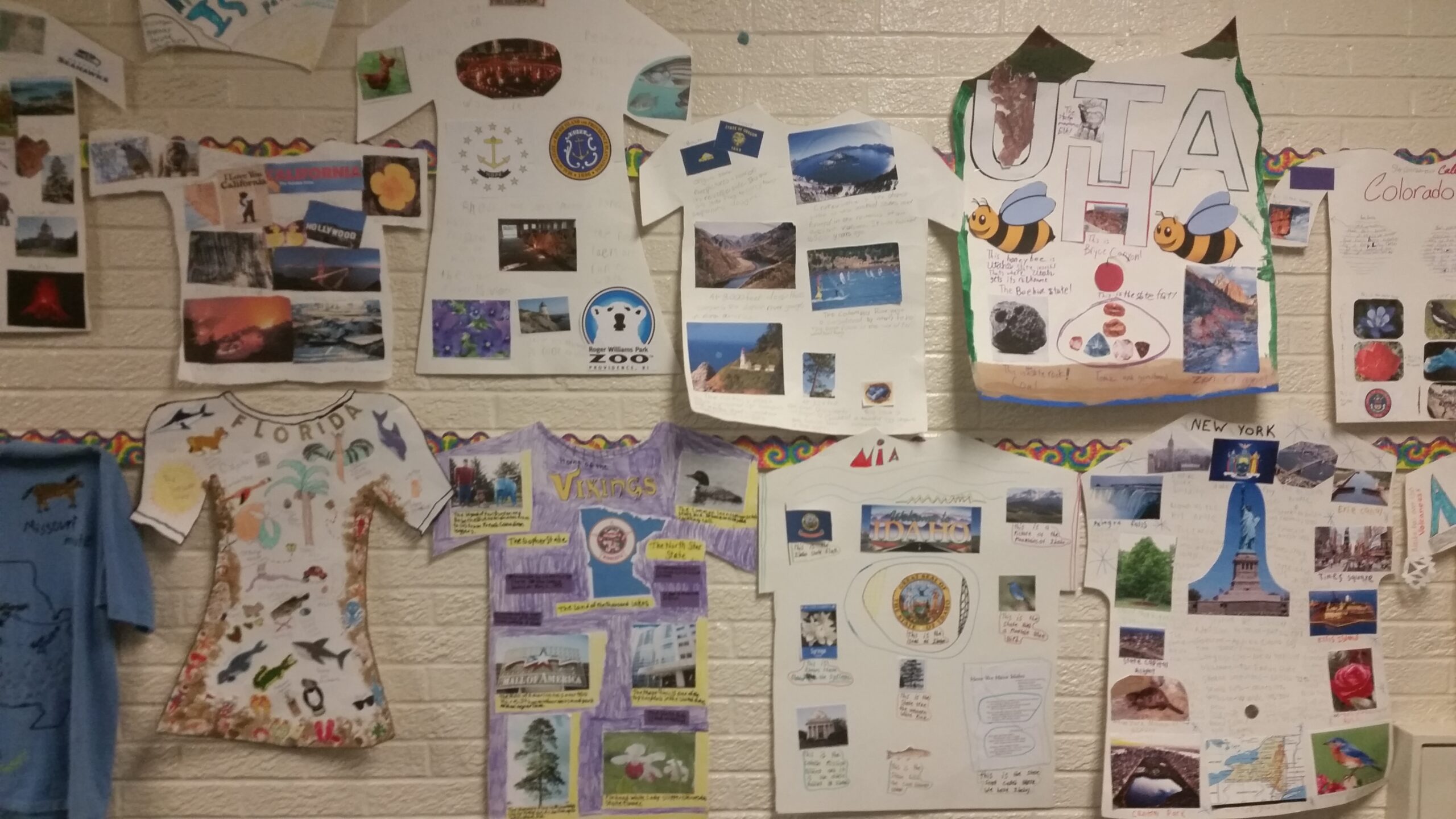
Besides, getting students up and moving around the room is always a win for engagement with instructional strategies!
2. The Jigsaw Method
Who doesn’t love a good jigsaw puzzle? It’s so satisfying when pieces click together perfectly! Each piece brings its own colors and shapes to create the bigger picture as a whole.
Too on the nose? Sorry. I told you my metaphors weren’t great!
Regardless, the “jigsaw method” works the same way as the puzzle. With the jigsaw method, a larger piece of content (such as the 50 US states) is broken up into smaller parts. Those smaller parts are then assigned to different students or groups of students. Then, these students become “experts” on their individual pieces who will then share their knowledge with others after thorough research.
There are six steps involved:
- Divide the class into groups
- Assign each group a different part of the content, such as sections of a reading, specific concepts within a broader umbrella topic, or different aspects of a problem
- Provide time for students to study and research their assigned portion via reading, technology (build those digital skills!), etc.
- Once students feel confident, they will meet with other students from different groups with the SAME assignment to create “expert groups” where they will discuss and clarify their understanding of the material.
- Step 4.5: If necessary, it may be a good idea for you to “check in” at each group to make sure the “experts” are on the right track. The last thing you want is for misconceptions to spread!
- Students then return to their original “home groups” and take turns teaching their assigned material to their peers
- Within their “home groups,” students will collaborate to put together all of their information like pieces of a jigsaw puzzle in order to complete tasks or assignments related to the broader overarching lesson at hand
While it may seem like a huge process, it’s really fairly simple, just super verbose! Or maybe I’m just really verbose? Who knows! Either way, as far as instructional strategies go, the jigsaw method is reliable! It encourages peer teaching, collaborative learning, and active participation. In addition, it also fosters responsibility and accountability while leading to a deeper understanding of the material.
3. Flipped Classroom
Yep. I’m bringing up the flipped classroom. Sorry, not sorry.
The pandemic may be over (right? Hopefully?), but that doesn’t mean we should abandon all the strides we made toward “digital” classrooms. I’m certainly not advocating for solely online learning; I’m simply trying to take advantage of the resources we developed and progress made in the name of instructional strategies for optimal learning!
If the idea of digital learning still leaves a pit in your stomach, or if you just need a refresher, read up on it over on my SAMR model blog post here. Digital learning doesn’t need to be overwhelming, and there are plenty of benefits, too! In fact, thanks to the pandemic, there are also a TON of digital resources that sprang up along the way for just about every lesson you can think of.
For instance, my Math Quests provide an easy, premade way to engage your students, practice technology skills, and review vital math concepts, all while increasing reading fluency and comprehension. They’re like the classic Choose Your Own Adventure novels, but with more learning! Resources like these are a streamlined way to ensure students are still grasping necessary concepts even when learning digitally in a flipped classroom.
In a flipped classroom format, students do the core of their “learning” at home via resources provided by the teacher. These resources may include pre-recorded lectures, readings, or other technology sources, like online textbooks or interactive simulations. Then, in class the next day, students can ask their questions and participate in engaging activities to foster deeper understanding.
You can also set up “stations!” At one station, students can learn concepts through videos that are either pre-recorded by you, or are simply educational (and engaging!) videos that you’ve found online. Then, at another station, you can meet with students to check for understanding. This also allows for one-on-one time!
Of course, for extremely difficult or complex concepts, it’s best to supply your kiddos with hands-on, concrete instruction while scaffolding where necessary.
And, hey, if you’re worried that your kiddos’ engagement will take a nosedive during online learning, no worries. Check out this blog post to foster online engagement!
Ultimately, the flipped classroom approach is one of several instructional strategies that allow students greater control over their learning pace. If they hit a pitfall along the way, students can take their time smoothing out the bumps compared to the classroom environment where you only have so much time for a mini lesson.
The best part is yet to come, though: in the flipped classroom, you have more time and opportunity for intervention and meeting with individuals or small groups to offer support and clarity. Boo-yah!
4. Socratic Questioning
It’s a given that our pal Socrates was a wise man. No one questions that! In fact, his wisdom was so great that we even coined a teaching technique based off of his splendor: the Socratic Questioning method! This strategy involves asking probing questions in order to stimulate critical thinking, encourage reflection, and facilitate deeper understanding of a topic.
So how do you implement it? Like my other favorite instructional strategies, quite easily! With Socratic questioning, the teacher poses open-ended questions to students rather than providing kiddos with all the answers. These questions should be styled in a way that encourages students to think critically as well as articulate their thoughts and reasoning. Instead of just answering your questions, they must also explain WHY they believe their answer to be true.
When you ask the right questions, you keep students engaged with active learning! In addition, providing this critical thinking environment also opens a dialogue between you and your kiddos. Rather than simply listening to you provide all the information, students are invited to participate in discussion.
Coming up with those thought-provoking questions doesn’t need to be difficult, either! Check out these easy examples of Socratic questions:
- What do you think about that?
- How did you arrive at that conclusion?
- What evidence can you provide to support your argument?
- What are some possible other explanations?
- How does this idea relate to what we’ve learned before?
Via Socratic questioning, students are empowered with more control over their learning. Similarly to student-led inquiry, students become active participants in their learning process and employ critical-thinking skills as well as foster intellectual curiosity. That’s what instructional strategies are all about!
5. Equity and Inclusion
Instructional strategies don’t need to be temporary installments. For instance, implementing equity and inclusion in your classroom can be done year-round. Equity and inclusion is the idea that all students should receive equal access to learning opportunities regardless of background, identity, abilities, or circumstances. The goal of any instructor should be to create an educational environment that respects and values diversity and encourages every student to feel a sense of belonging.
While this technique should be instituted throughout the entire school year rather than here-and-there instructional strategies, it’s still a good idea to review from time to time in order to reassess the educational and social climate in your classroom and make changes as necessary.
There are several key principles related to equity and inclusion:
- Use culturally responsive teaching as well as culturally relevant curriculum
- Recognize and integrate students’ cultural backgrounds to make learning more relevant (and thus more meaningful!) for them
- Recognize and address social issues and inequities in meaningful ways
- Use differentiated instruction, specifically when it comes to those with disabilities as well as English-language learners!
- Employ collaborative learning as well as flexible grouping to allow students to share their diverse array of unique experiences
- Opt for explicit teaching of social-emotional skills, including empathy, communication, conflict resolution, and self-regulation; in addition, ensure you’re promoting positive relationships and a supportive classroom climate.
- Provide responsive feedback! Aim for real-time, specific, constructive feedback that supports kiddos’ learning and growth while also considering individual needs and circumstances
- Encourage community and family engagement—establish those vital partnerships with students’ support network in order to support learning and well-being as well as ensure those all-important educational decisions are made in collaboration with guardians
As a teacher, I have no doubts that your goal is to create an inclusive, equitable learning environment where all students feel valued, supported, and empowered to succeed. Instructional strategies can help you achieve those goals, too—they don’t need to be used for the sole purpose of exploring a tough science concept.
Using the right instructional strategies that truly resonate with your unique classroom climate is key to making a lasting impact on students’ educational careers. Building that strong foundation is paramount to nurturing successful individuals!
Due to the sheer multitude of instructional strategies and the fact that new methods emerge on a near-daily basis, I have no doubt that I will return in the future to share new, exciting activities to employ in your upper elementary classroom. In fact, your best bet is to go ahead and sign up for my email list while you’re here so you don’t miss the next installment of Instructional Strategies Round-Up!
Share your fave instructional strategies below!