


COPYRIGHT © 2016-2026. The Owl Teacher | Privacy page | Disclosure Page | Shipping | Returns/Refunds
As the crisp, cold air of November rolled in, I would always dread Thanksgiving classroom activities. Years ago, when I first started teaching, it wasn’t about making sure our classrooms were culturally responsive. In fact, if you taught long ago, you likely remember all the pilgrims, Indian feathers, and turkeys galore. I still have photos of my children wearing the feather hats. Even before the culturally responsive classroom, the idea of creating turkeys with colorful feathers felt a bit like busy work.
Like many of us, you are likely here because you want meaningful, engaging activities that will not only save you time but also meet your students where they are while still keeping the learning engine running. This year, instead of leaning on the construction paper for your Thanksgiving classroom activities, let’s do something richer: culture, community, gratitude, choice, and higher-order thinking. Let’s go beyond the usual craft turkey and walk through 10 creative and rigorous ideas you can use in your classroom.
Why Thanksgiving + Gratitude Matter
Before I get to the ideas, I want to discuss why it matters that students focus on gratitude and the underlying benefits, especially when we are more intentional about it.
- According to Upper Elementary Snapshots, when students engage in gratitude practices, such as reflecting on what they’re thankful for, they show improved mood, increased school satisfaction, and a greater sense of connectedness.
- Upper-elementary students are at a key stage: they’re old enough to think beyond themselves, yet still benefit from concrete, structured opportunities to reflect, collaborate, and act, according to Chalk and Apples.
- Holiday-themed learning, according to The Friendly Teacher, can actually boost engagement and give you a “hook” to accelerate deeper rigor rather than play.
- Integrating these ideas helps you build community, manage behavior (students feel valued and connected), and differentiate meaningfully without reinventing the wheel.
10 Thanksgiving Classroom Activities You Can Implement
Here are some Thanksgiving classroom activities you can implement with minimal extra prep, high student engagement, and multiple disciplines (ELA, math, social studies, SEL, etc). Below you’ll find brief implementation tips, how to differentiate, and how to save your time.
1. Gratitude Wall or “Thankful Tree” Built by Students
Transform one corner of your classroom into a Gratitude Wall or Thankful Tree. Each day, students can add a leaf or sticky note with something specific they’re grateful for, not just “family” or “friends,” but the real stuff, like “Mrs. Taylor helping me understand long division” or “the smell of crayons after lunch.”
Use simple sentence frames (“I’m thankful for ______ because ______.”) to scaffold. Emerging students can draw and label, while advanced students can write a mini reflection. This builds vocabulary, writing stamina, and community.
As the display grows, it becomes a beautiful visual of your class community. Toward the end of November, take time to read some aloud or have students reflect on patterns they notice. You could use it for an SEL discussion on “unexpected things we’re thankful for.” You’ll be amazed at how much this simple habit boosts classroom morale and empathy.
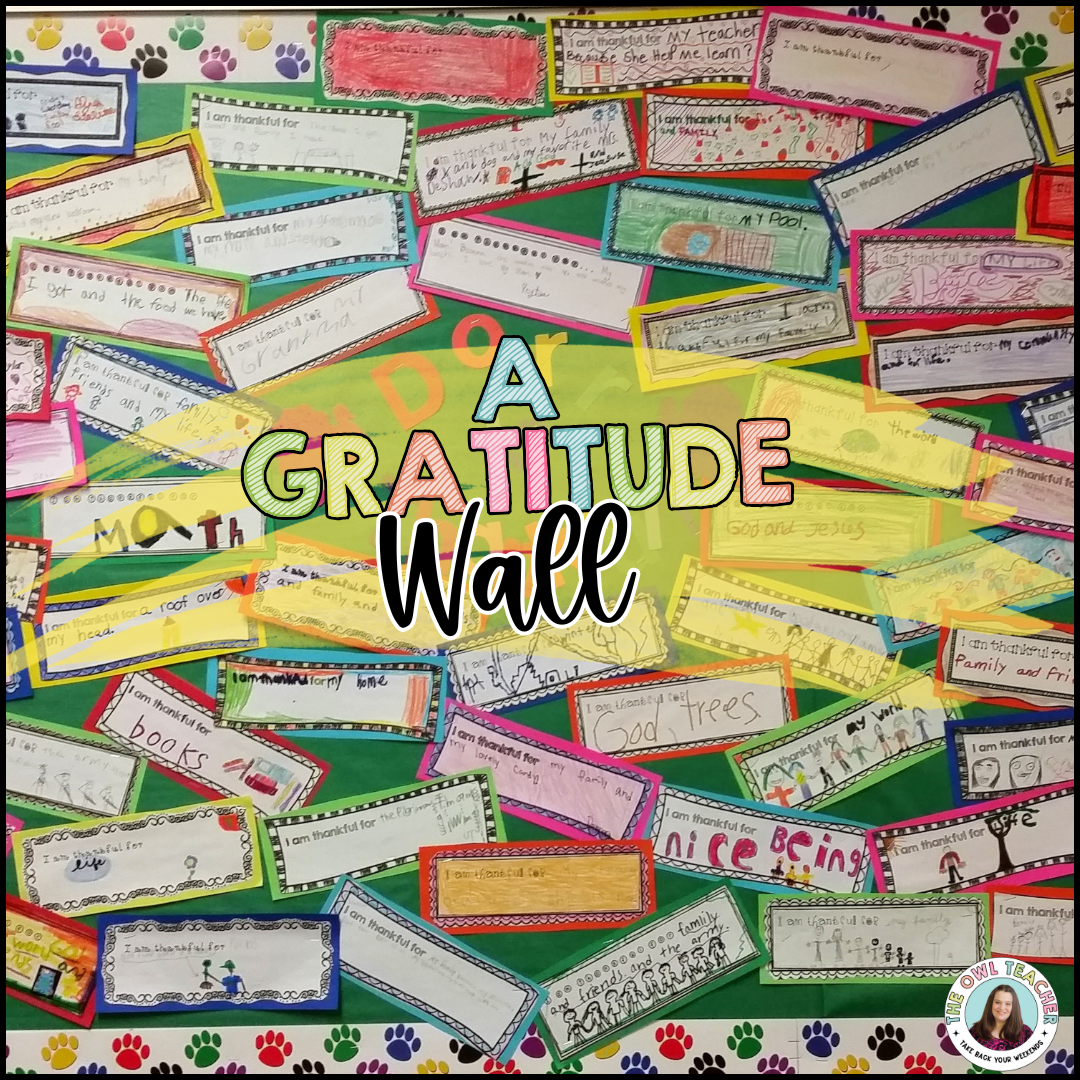
Of course, it doesn’t have to be that detailed. It can also be something as simple as the display above that we did a few years ago. Of course, there are always some students who like to keep it to a minimum. Either way, research supports that tangible gratitude displays support for class culture and social-emotional growth.
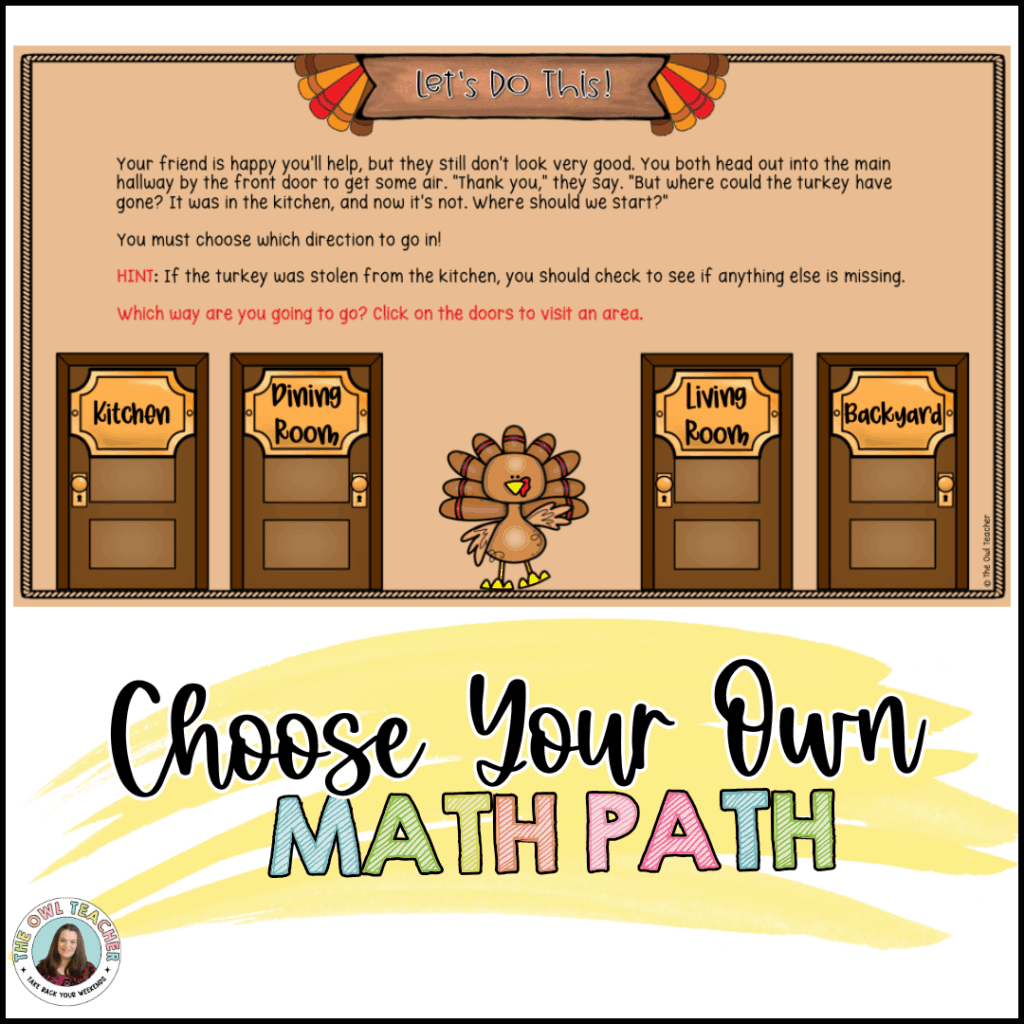
2. “Choose Your Own Math Path” Multiplication Digital Dinner Dash Adventure
Need a way to keep students engaged when everyone’s already dreaming of mashed potatoes? Try a little friendly competition with a digital math feast! In this game, students practice multiplication facts as they race to find the missing turkey and prepare a Thanksgiving meal before time runs out. Each correct product “earns” an ingredient—potatoes, stuffing, pumpkin pie—and brings them one step closer to finishing the feast. Wrong answers? Uh-oh… the oven cools down, and they have to work faster to save dinner!
Because it’s self-checking and paper-free, you can use it as a math-center rotation, independent review, or Friday reward activity without adding to your grading pile. The “choose your own path-like” structure and visuals make it feel like a game, but every click reinforces automaticity and fact fluency.
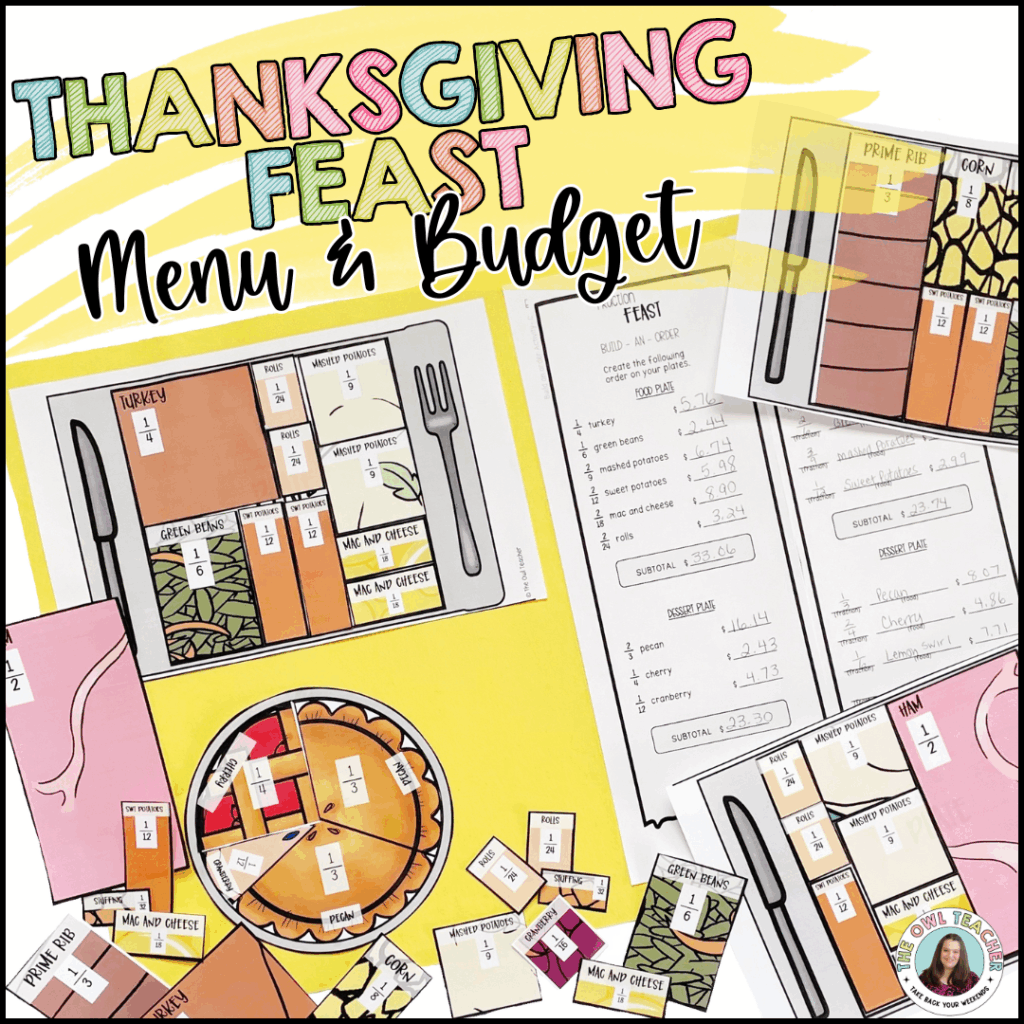
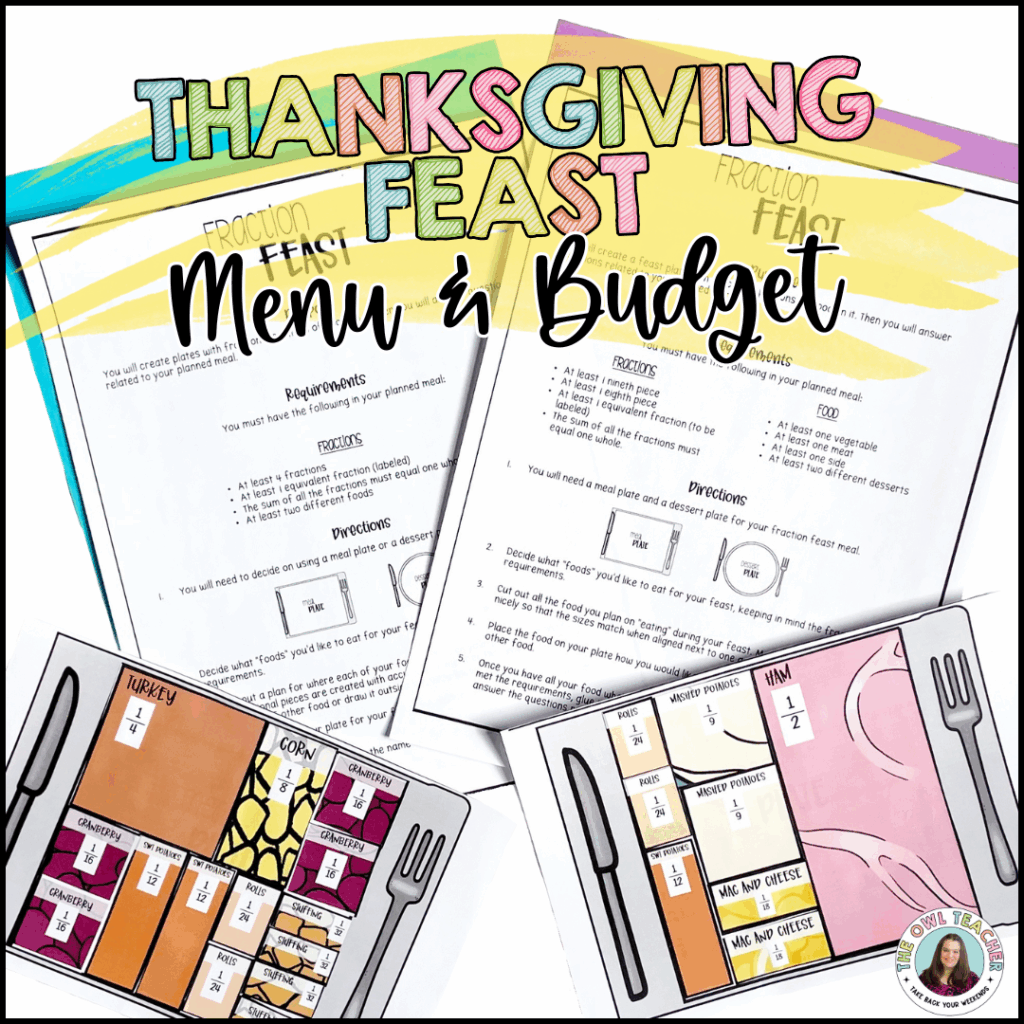
3. Math “Thanksgiving Feast” Menu & Budget Activity
Turn Thanksgiving into a real-world math moment. Give your students a “budget” and a list of menu items with prices, then challenge them to plan a Thanksgiving feast that stays within their spending limit. Some groups might choose turkey and sides, while others splurge on dessert. This naturally opens the door to addition, subtraction, decimals, and percentages — all while students work collaboratively and problem-solve. Extend it by having students adjust the budget mid-way (“You just got 10 more guests — now what?”) or compute fractions of the costs. It’s a great way to make math feel alive.
To differentiate, provide basic groups with whole-dollar items; enrichment groups with decimals, percentages, or fraction parts (e.g., “⅓ of students prefer vegan side dish”). This provides a fun holiday hook while still integrating standards. This idea echoes upper-elementary math themes during Thanksgiving.
Save time with this activity by picking up my fraction feast PBL Thanksgiving classroom activity here.
4. Non-Fiction “Native American Voices” Reading & Discussion
Move beyond the Pilgrim-and-Indian story and help students explore the real history behind Thanksgiving. Students can learn about influential Indigenous figures, discuss their contributions, and see how Native American voices continue to be heard today, using the Native American Heritage Month Biography Puzzles. Provide a mini-lesson on background vocabulary (colonial era, reservation, treaty, culture), then students pick a figure from the biography puzzles, research further, and present.
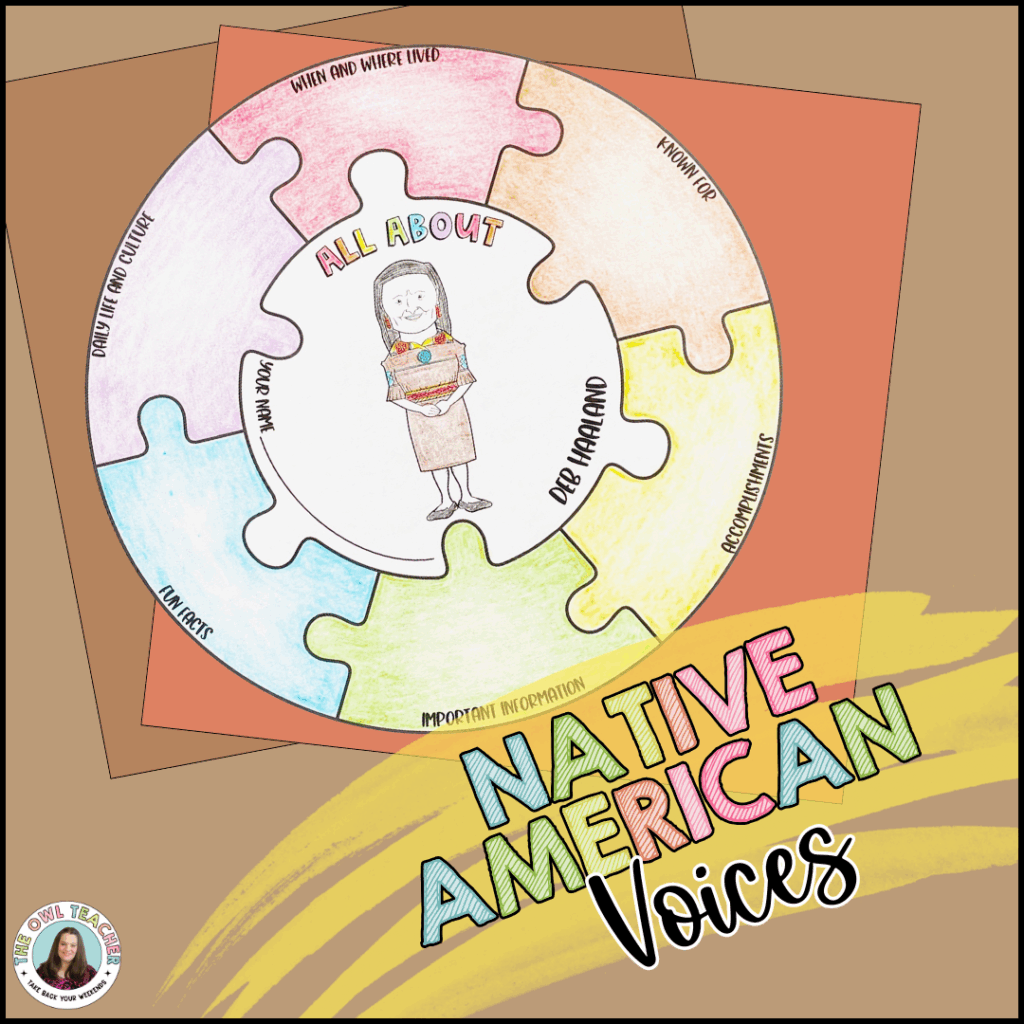
Pair it with informational reading passages, the school library, or digital PDFs for short research projects, and end with a class reflection on what “gratitude” means from multiple cultural perspectives. The goal is growth and understanding.
Afterward, if time, extend to “How would you design a museum exhibit for this person?” Emerging students can fill out a graphic organizer with facts and reflections. This builds historical thinking, social studies literacy, and cultural awareness—an essential part of your classroom culture.
5. The Clean Chemistry of Thanksgiving: Soap on a Rope
After a feast, there’s always a mess to clean up. So why not turn that idea into a science experiment your students will love? Soap-on-a-Rope Science explores density, buoyancy, and balance using soap, water, and everyday liquids like oil, syrup, or saltwater.
Begin by showing students a bar of soap in a clear cup of water. Ask, does it sink or float? Then challenge them to mix in other liquids to make the soap “hover” in the middle. As they experiment, they’ll discover how density changes when different materials are added, helping them visualize why butter floats to the top of gravy or why cream rises to the surface of milk.
Skip the writing and go for movement! Have students race to “balance the bar. In small teams, they must create a mixture that keeps their soap hovering at the midpoint of the water. The first group to achieve neutral buoyancy (where the soap neither sinks nor floats) wins the Golden Sponge Award. Once everyone’s succeeded, gather the class to reflect verbally: “What helped your soap float in the middle?” and “How does this connect to things we see in cooking?”
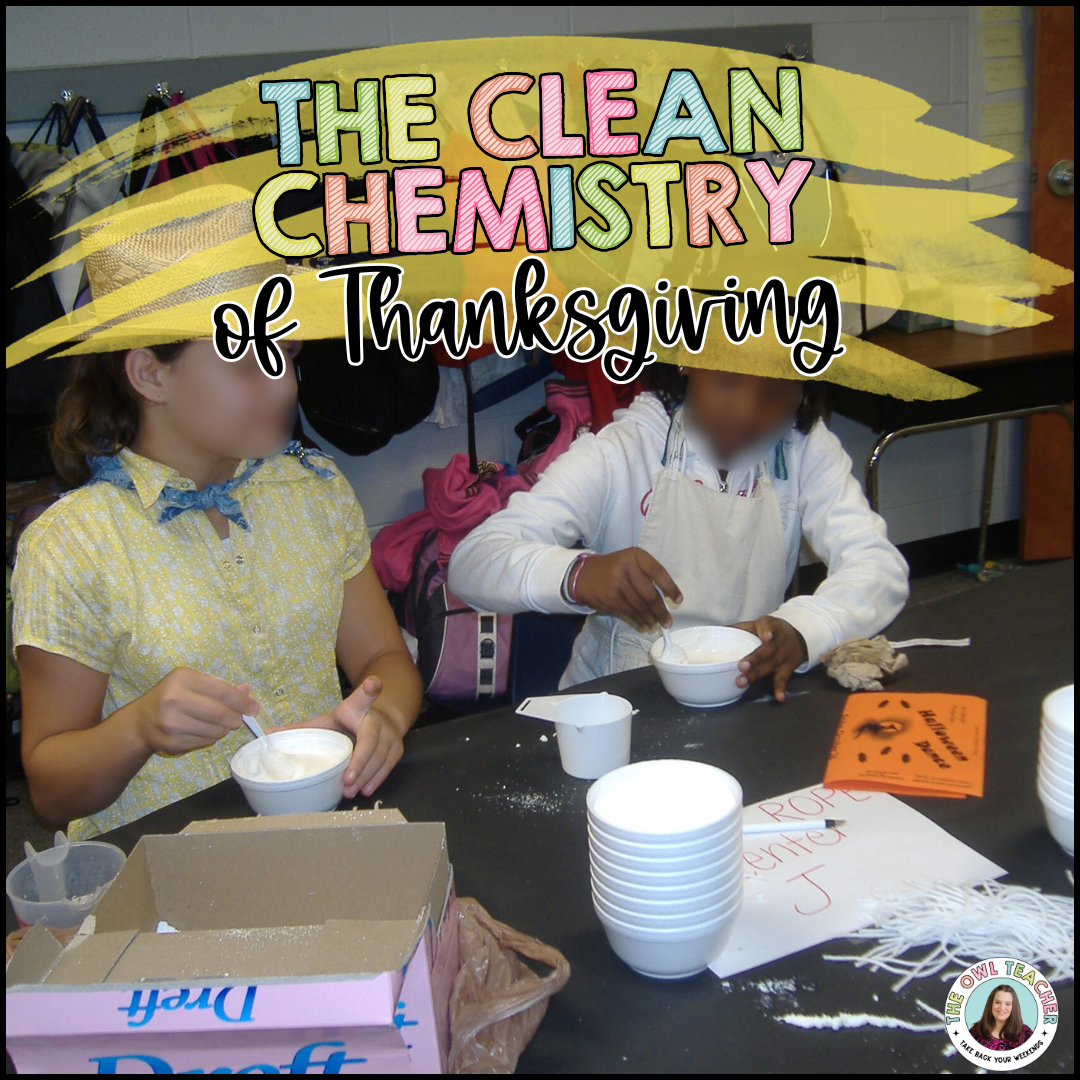
As a side note, when we did this in my classroom years ago as a center, we actually made soap from detergent. While generally mild, they still contain enzymes, surfactants, and fragrances that can irritate skin, eyes, or lungs if handled dry or inhaled during mixing, especially for students with allergies or asthma. Because of that, most schools would classify powdered detergent as a chemical substance that shouldn’t be handled directly by students (particularly in grades 3–5), and therefore, the activity has been modified to reflect that.
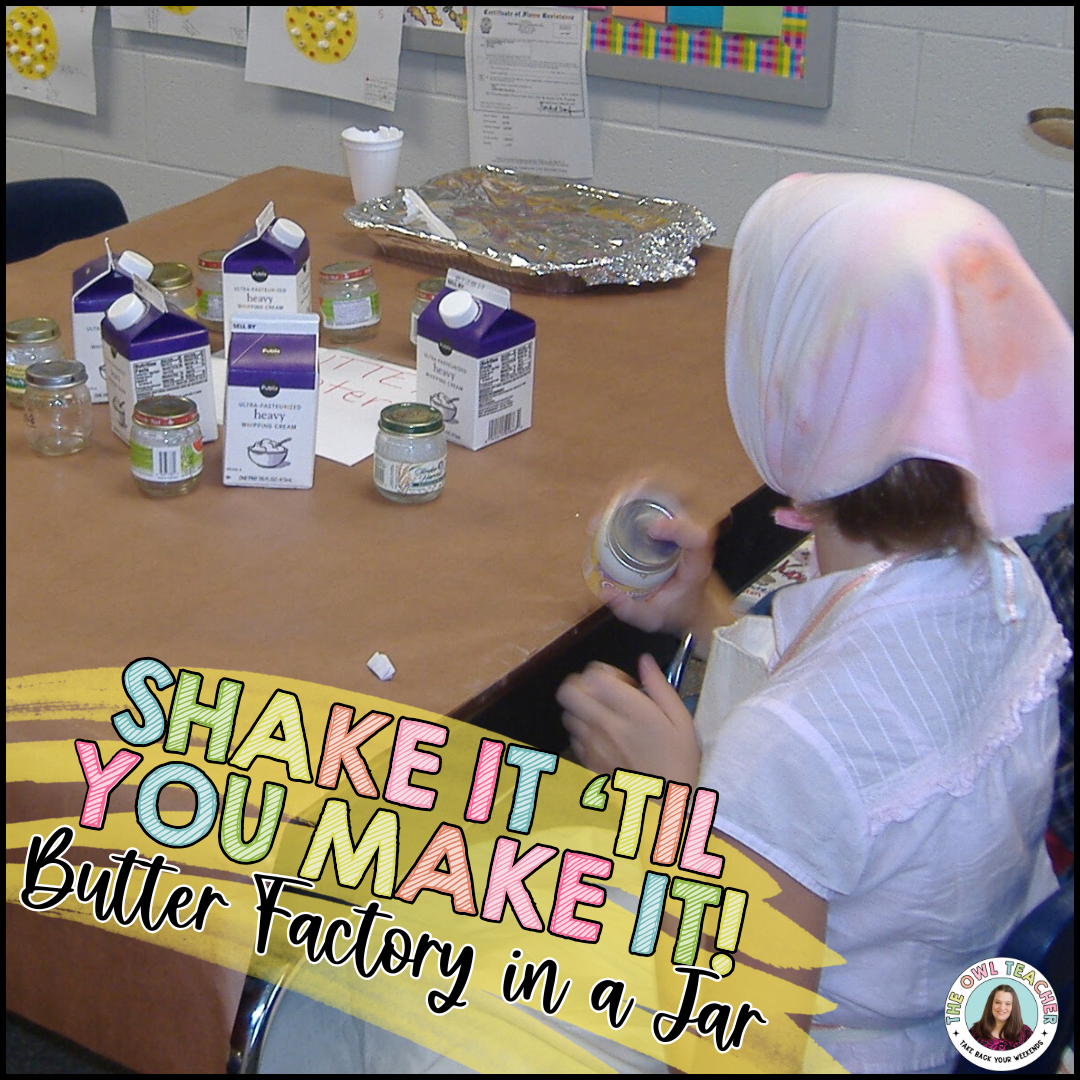
6. “Shake it ‘Til You Make It!” Butter Factory in a Jar
For a Thanksgiving activity that is hands-on and secretly packed with science, try making butter! All you need is heavy cream, a small jar with a tight lid, and some muscle power. Students take turns shaking the jar to transform liquid cream into solid butter. It’s not magic, just molecules in motion!
As students shake, the fat molecules collide and clump together, separating from the liquid (that’s buttermilk!). After a few minutes, they’ll feel the butter lump forming inside. To connect it to Thanksgiving, talk about how people in early America made butter by hand and how this process mirrors what cooks still do today: separating, mixing, and changing matter.
Instead of writing reflections, have students do a butter taste & texture test. Give them three samples (store-bought butter, their homemade butter, and margarine) and let them compare by sight, smell, and texture. Using sticky notes or oral discussion, ask:
- Which looks most natural?
- Which spreads easiest?
- What might cause the differences?
Tie it back to science by highlighting physical changes. They’ll realize they didn’t “make” new matter; they just rearranged it!
It’s quick, messy in the best way, and teaches chemistry through motion. Students experience how energy transforms substances while connecting with traditional tasks that kept early families busy during harvest season. It’s gratitude, history, and science — all in one jar.
7. “Voices of the Land” Native American Presentation
Thanksgiving offers a perfect opportunity to move beyond the myths and include authentic voices that help students see the holiday through a wider lens. One powerful way to do this is to invite a local Native American speaker, such as a tribal educator, storyteller, or cultural liaison, to share stories, traditions, or teachings from their community.
Start by contacting your district’s diversity coordinator, a nearby tribal council, or a local historical society to ask whether they have an outreach educator who speaks in schools. Many Indigenous presenters focus on themes such as community, gratitude, nature stewardship, or storytelling—topics that connect beautifully with what we want students to understand during this season. Before the visit, prepare students by discussing respectful listening: how to sit quietly, what questions are appropriate, and how to thank someone who shares personal history.
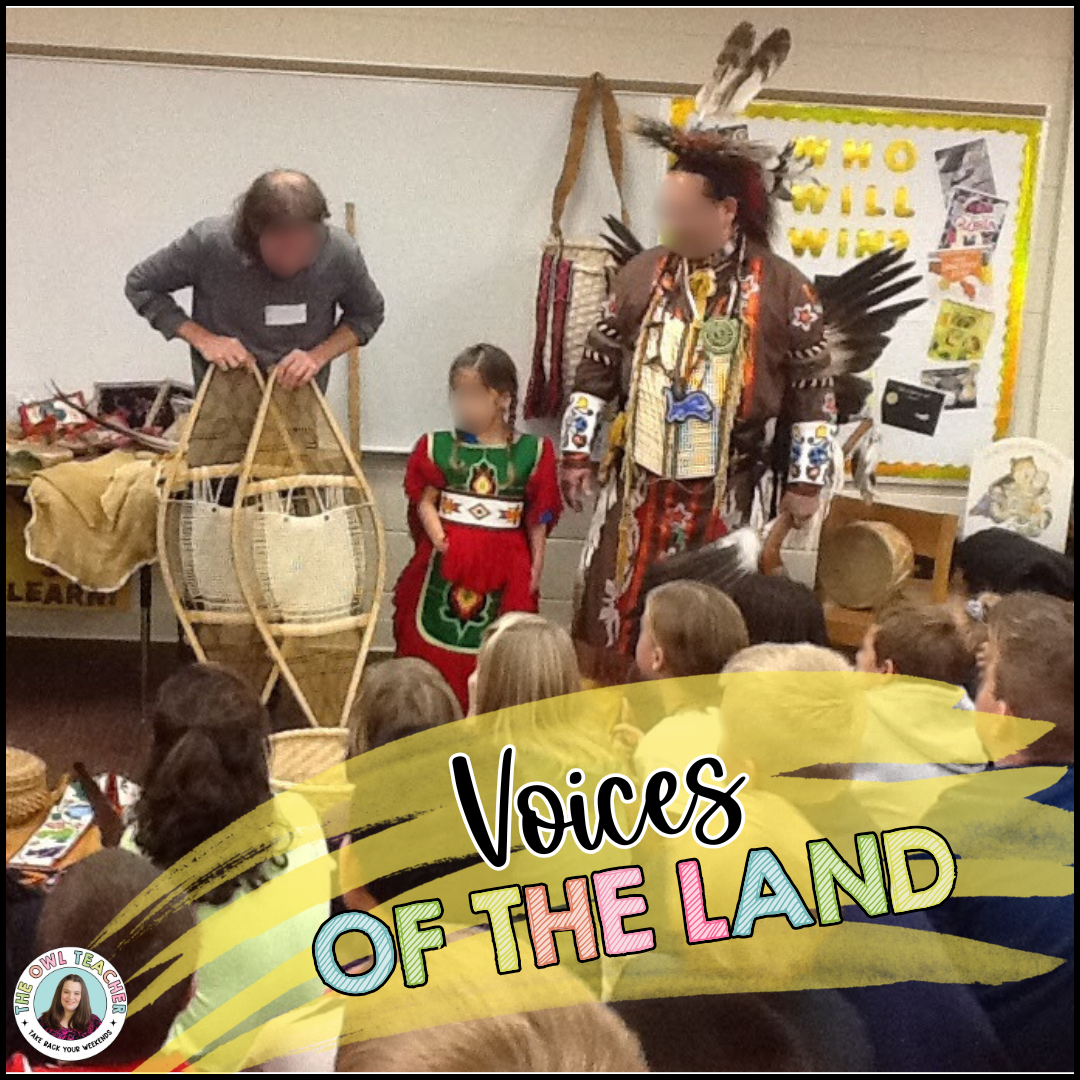
Instead of writing essays or reflection paragraphs, invite students to join in a Circle of Gratitude. This is an oral tradition that celebrates storytelling and community. After your guest’s visit, gather the class in a circle (or around a paper “campfire” centerpiece). Pass around a smooth “talking stone” or small object that represents gratitude. When students hold the object, they share aloud one thing they learned or appreciated, and one way they can carry that value forward.
If your speaker discussed cultural respect or nature, students might say things like, “I learned that gratitude can be shown by how we take care of the earth,” or “I’m thankful for stories that help us understand where we come from.” When finished, create a Community Gratitude Quilt or a visual collage made from colored squares, where each child draws or uses symbols to express their gratitude rather than writing it.
8. “Talking Turkey” Narrative Writing
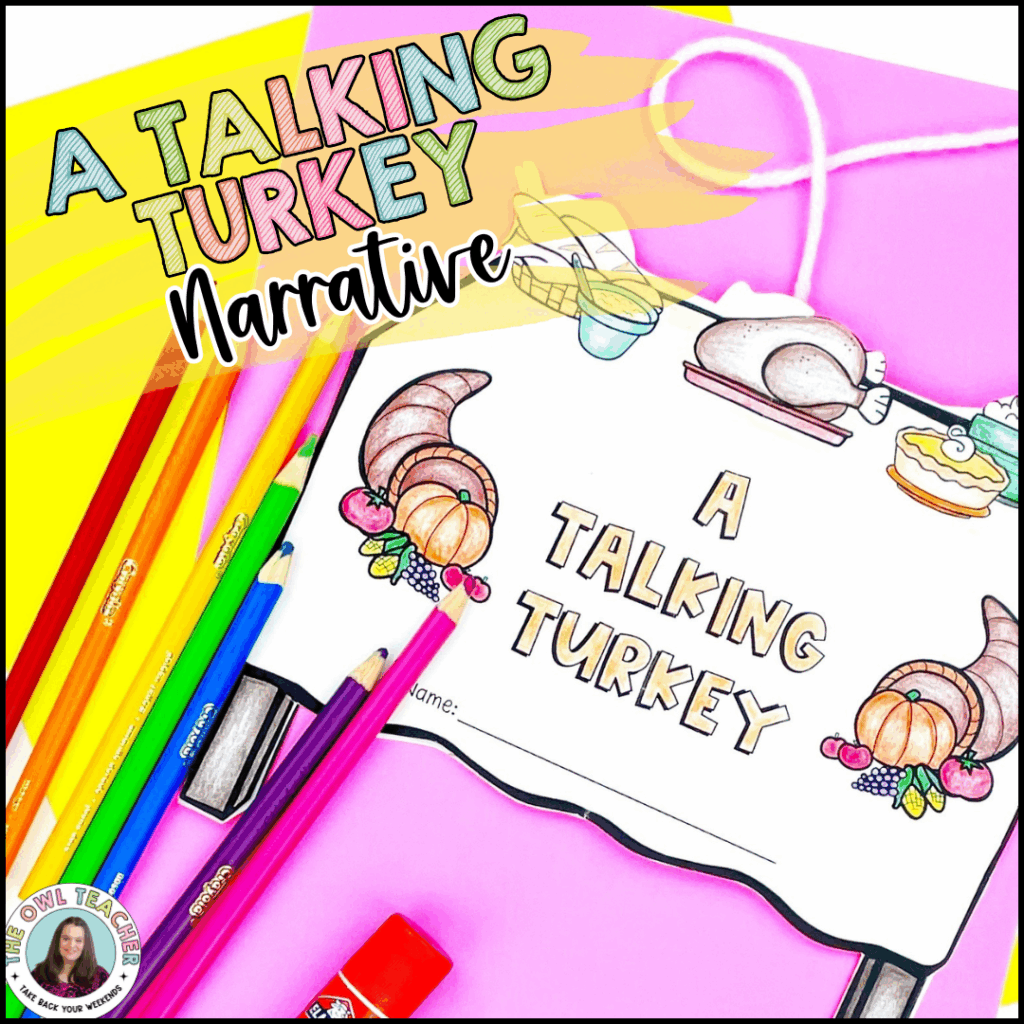
Bring writing to life with a short narrative called “A Talking Turkey.” Introduce with a mini-lesson on narrative structure (beginning, middle, end), then move to independent writing. Have students write it from either the turkey’s point of view or another character’s point of view (such as the farmer, another animal on the farm, the turkey’s mom, etc.). Include graphic organizers with sentence starters for those who need it, and have advanced writers add a theme or moral to the story. Students can work on their writing skills along with storytelling or sequencing. Students need more opportunities to use their imaginations.
9. A Cornucopia Lab
If you want to sneak in some hands-on learning before the holiday, set up a simple Cornucopia Lab or another fall/Thanksgiving lab. Bring in real or plastic items (or visually model using photos if you can’t bring them in) like pumpkins, squash, and beans. You can collect these items in advance or ask families to donate.
Students measure volumes, compare weights, convert units, or explore fraction relationships (⅓ of a pumpkin pie, ¼ of the class gets carrots). For example: “If each pumpkin pie serves eight people and there are twenty-four students, how many pies are needed?” It’s a fun blend of math, science, and sensory learning.
Have small groups rotate through various stations, such as:
- Weigh this squash, convert to ounces and kilograms.
- Measure the volume of beans in a cup, then predict how many cups are needed for 12 students.
- If each student eats ⅙ of the apple-cider jug, how many students can drink it?
10. Service Learning / Thankful Acts Challenge
End the week before break with something that stays with them. Challenge each student to perform one act of kindness for someone in or outside the school. They can write about what they did, how it felt, and why it mattered. Share a few aloud at morning meeting or post them on a “Thankful Acts” board. If desired, partner students up and provide the sentence prompt: “I helped ___ by ___ and this made me feel ___.”
This activity builds empathy, leadership, and classroom community. It positions you, the teacher, as the guide of meaningful, rather than superficial, holiday activities.
Pedagogical benefit:
This time of year can feel chaotic, but it’s also one of the most meaningful seasons to teach. When we shift Thanksgiving lessons from “craft time” to “connection time,” students walk away with more than just a turkey they traced. They walk away with gratitude, awareness, and a sense of belonging. Whether you use one or all of these ideas, you’ll find that little sparks of thankfulness go a long way in keeping your classroom calm, kind, and focused.
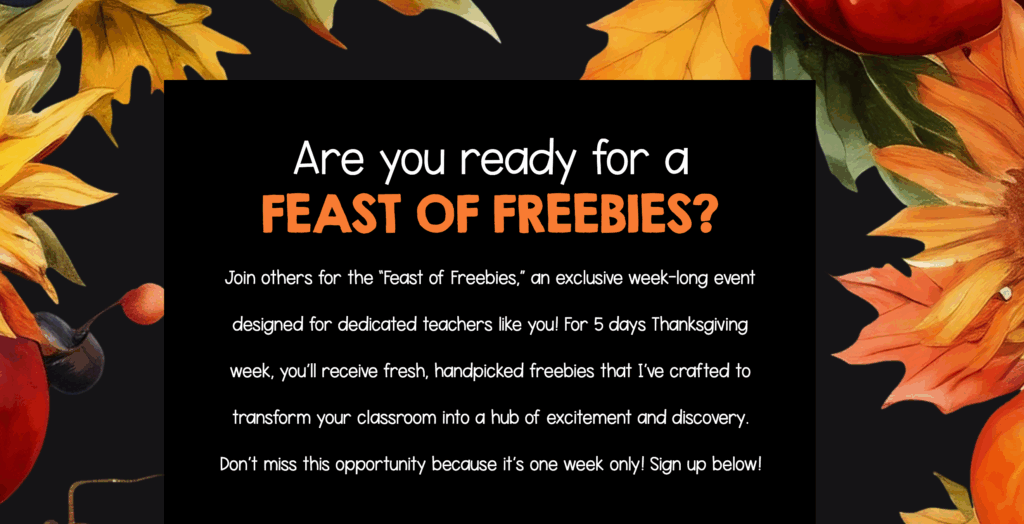
Join the Yearly Feast of Freebies:
Have a great Thanksgiving!