









All right, so we have spent the last few blog posts talking about what math workshop is (see post here), using math warm ups in math workshop as an opener, and the math tools every math workshop needs. Today, we are going to talk about the nitty-gritty! We are going to talk about math workshop in action.
What You Need to Know About Math Workshop
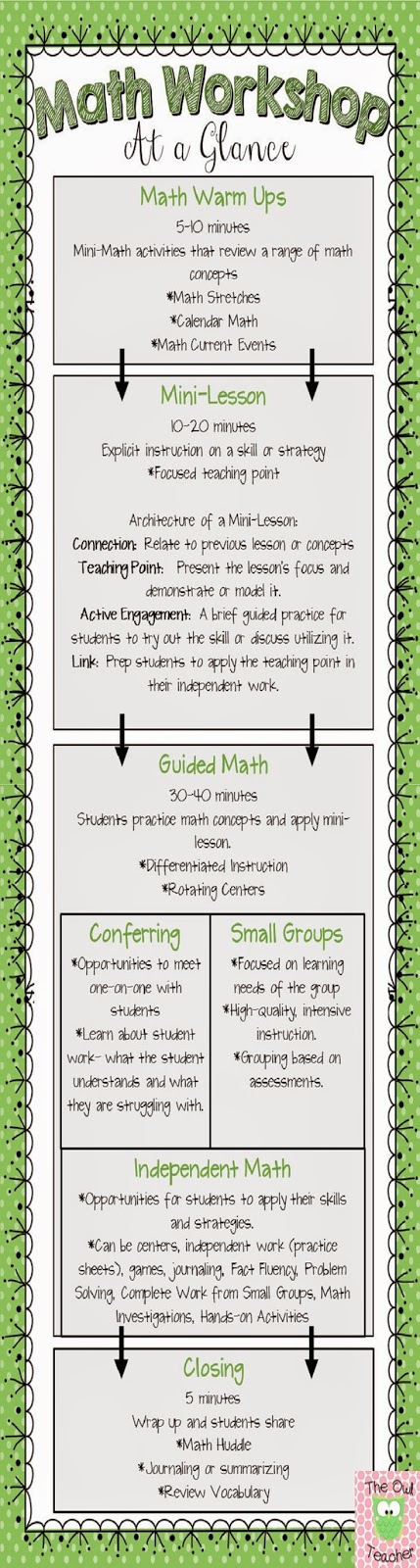
During my math period, I start off each math session with a ten minute warm-up. This varies based on my students’ needs and my mood. Sometimes it is just a simple math stretcher (see a previous post about these here) or we practice fact fluency. Other times we may review the previous day’s lesson.

After my mini-lesson, I review where students are going and what they will be doing. Then I send them off. I used to have a rotation chart on chart paper that was pretty simple. This year I’m not using it. Instead, I just printed off where they were going during each rotation and gave that information to students. Some groups find all that information in the chart paper too distracting.
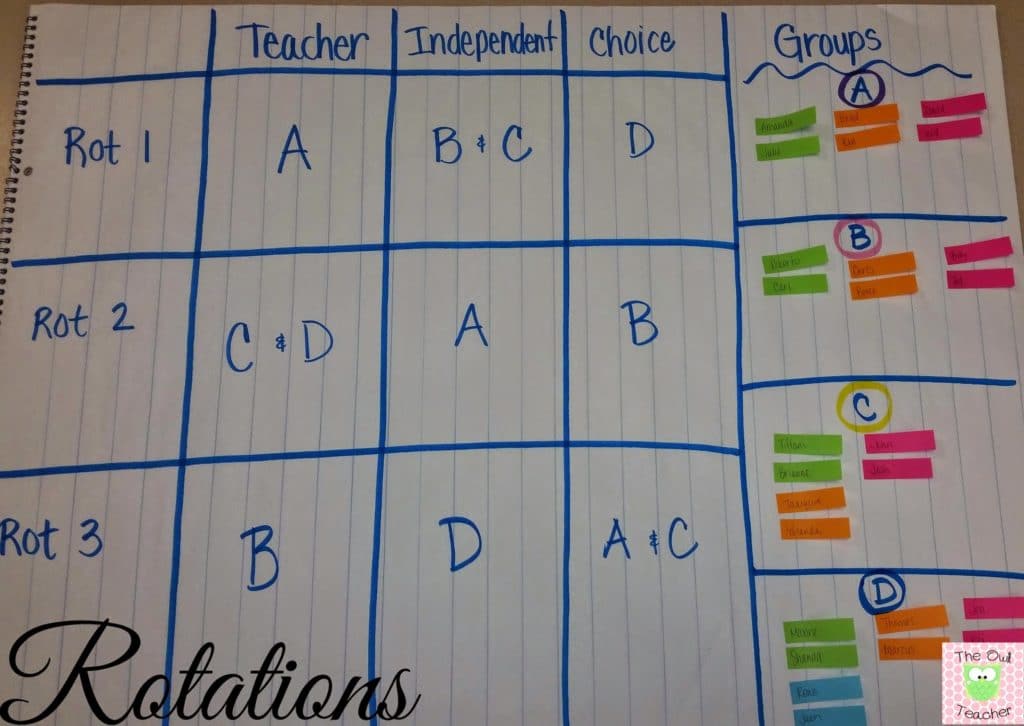
Some students will go to the independent station where they will practice skills from the mini-lesson I just presented. Since this station focuses on the lesson I just presented, my high group will go here first. All the other students in my class attend this station AFTER they have met with me in small groups. Usually my high flyers just need to see how to do something once or twice and they are good to go. This gives them an opportunity to get on it right away and frees up their group time for more enrichment. I do have a few rules for them if they aren’t sure of something. If there is anything they don’t know, they must first try it on their own. If they still can’t get it, they may quietly ask a neighbor to help. Finally, if they are still struggling, they will circle the problem to ask about in small group. When this group comes to me later in small group, the first thing we do is check the work they did independently so I can decide if we need extra practice or if we can move on to something deeper.
While some students are in the independent station, other students are working with me. During the first rotation, I always have my lowest group meet with me first. I like to make sure I get a chance to work with them right away to reinforce anything they may need or fill in any gaps to understand the lesson. I also do this because if I feel any of them need to sit in on my next guided group rotation they can. I also like to make sure they get to practice the skill right away after meeting with me (instead of a gap between learning and practicing).
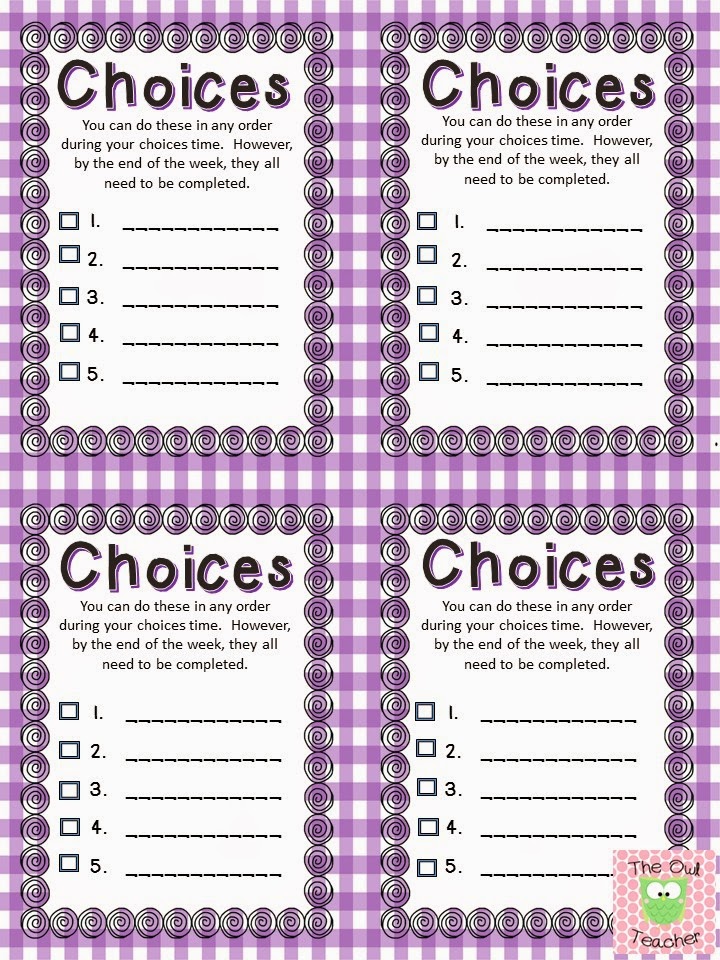
The final station that students have is the choice station. I like to give my students choices to give them some control, and it engages them more. At the beginning of the week, I provide students with a choice slip (click HERE to download it FREE!) of five different items that they have to have completed by the end of the week. They will work on these activities during this station. On this list, I add things that review previous concepts, such as games or practice sheets. I also include a fact fluency activity of some sort. Sometimes it will be a journal entry or hands-on activity. I have also left it open for students to write in an idea of their own. This is completely up to you.
You can find my guided math workshop lesson plan units in my store. I’m constantly adding new units, so be sure to follow my store to receive the newest updates of new releases. You will also get the opportunity to buy my units half off for the first 48 hours after they are posted! Click here to download an information guide about my workshop units in complete detail. I currently have 3rd grade completed and am in progress with 4th and 5th grade. (You’ll have to visit my store to see which units are currently completed for those grade levels.)
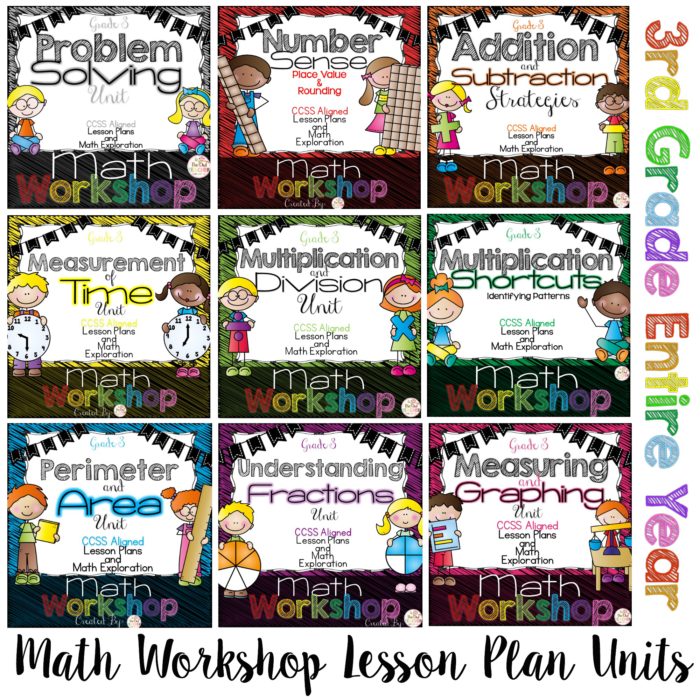
You can also download my FREE Sampler from the Multiplication and Division Math Workshop Unit to get an idea if this is a product for you.




26 Responses
Thank you for such a detailed post – I can visualize exactly what happens in your classroom during math rotations, and I have a better understanding of what guided math "looks like".
Thank you Deb! I want to continue writing more detailed posts about it. There is just so much about Math Workshop that I love!
Hi! I really like how you do your math workshop. For your choices station, do you provide them with a packet each week of the different tasks they need to complete? If they are games, how do you hold them accountable for playing them? Thanks!
For the choices station, I was giving them a packet every two weeks. Sometimes I would just put out different numbered bins with games in them. The only accountability that I had was to turn in the choices sheet each week for a participation grade and if they didn't do as they should during that time, they would lose the privilege and sit next to me. I monitored from afar.
Do they fill out the choices sheet? When do they have to sit out?
Do they fill out the choices sheet? When do they have to sit out?
Lots of food for thought! WOW!
It can be overwhelming at first- but it's similar to reading workshop. Definitely start small and work into it. Maybe even tweak it to your style. I'm going to keep adding to it later!
I can see from your rotation chart that A must be your lowest group. Are B and C your two highest and D your middle?
Correct. 🙂
Do you go over homework problems (from the previous day) with your students? If so, when?
We usually don't. We may go over something in small group with me, but other than that no. But you can always work that in if it's important to you. Workshop is flexible.
Is there a way I can print all of this?
Most browsers offer a way to print. It would depend on which browser you have. I'm sorry I couldn't help more.
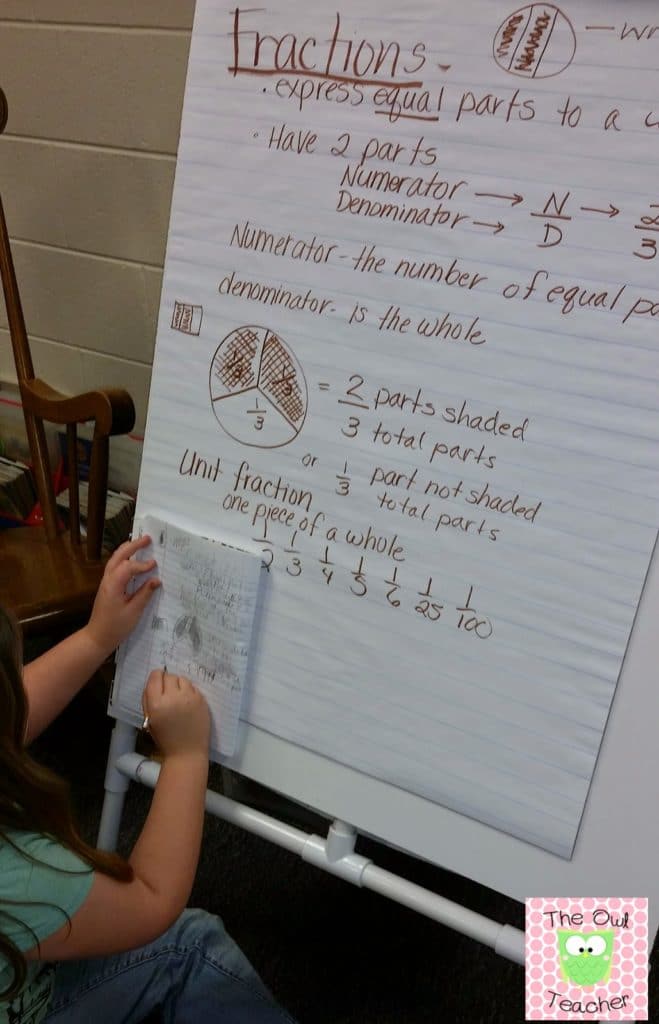
Are the students are copying your mini lesson notes in the notebook? How do you deal withthe students that need extra time to write the notes?
Oh yes! There are always some students who lag behind. Depending on the reason for lagging will determine how I handle it. If it's a student who just naturally moves slow, I might make copies of notes from another student's notebook and give to him/her. If it's due to wasting time, I may change his/her seat to closer to me so I can redirect him/her frequently. If I notice a pattern, I may also decide which choice can they miss without too many effects and just make sure that's what they finish doing during that choice. I hope that makes sense.
I am a first year teacher trying to make my math workshop work. So far, I have been trying to have students do independent/partner work for independent practice and a small group with my low groups and an activity if they early finishers. I'm a little bored with it, and I also want a way to meet with all my students in small groups besides just my low students. I think this could be a great way for me to figure out how to do Math Workshop. How do you suggest managing choice time if I don't have too many resources as a first year teacher.
Does your school use a specific textbook? We use Singapore Math. How do you determine what you are teaching in small group?
Does your school use a specific textbook? We use Singapore Math. How do you determine what you are teaching in small group?
I am searching for the posts for Week 1 Structure of the Math Workshop and Week 2 Learning Tools for Workshop. Can you help, please. I've found 3 and 4 but nothing with week 1 and 2 labels.
Thank you.
Hi. You are a no-reply blogger, so I hope you see my reply here. Here is week one: https://theowlteacher.com/2015/01/guided-math-blog-series.html. Here is week 2: https://theowlteacher.com/2015/01/math-stretchers-week-2-of-guided-math.html Here is week 2 part 2: https://theowlteacher.com/2015/01/learning-tools-for-math-workshop-blog.html. You are on week 3 and here is week 4: https://theowlteacher.com/2015/01/math-workshop-week-4.html. They were embedded within the post, but weren't labeled as week 1 and 2 anymore. I'm not sure why. Interesting. I should fix that. Anyway, thanks for letting me know. I hope that was helpful! 🙂
In your post, you stated guided math was for 30-40 mins, but how long are each rotation within the guided math?
Thank you for your time!
…how long IS each rotation… ***
Well, honestly, even though it says guided math is for 30-40 minutes, I’m positive we spent about 15 minutes in each rotation, so that was 45 minutes (give or take with transitions) total. I know that there has been years that we spent 10 minutes in each rotation, but for the most part, I have had my students complete 15 min. in each center. I think it really depends on how much time you have available and what your students need. Hope that helps! 🙂
This is super helpful! Can you please tell me what the different colord of papers with your students’ names on them on your rotation page mean, and why you use sticky notes rather than just writing the names down?
I’d also love to see yoyr graphic organizers, but the link didn’t work for me. Do you have a different one?
Hi! I know this will sound strange, but the different colors didn’t mean anything related to math. It was the groups they were in related to something else. The reason I place them on sticky notes is because during each unit I switch their groups based on the pretest results. My groups are always changing based on what they know before the unit. For instance, some students may know a lot about identifying fractions and need to be in a higher group for that particular focus but need to be in a lower group for equivalent fractions. This helps me differentiate my small groups (meeting with teacher). I hope that makes sense. I am sorry about the confusion with the colors. 🙂